



How to Decorate Your Home: Start With a Simple Plan
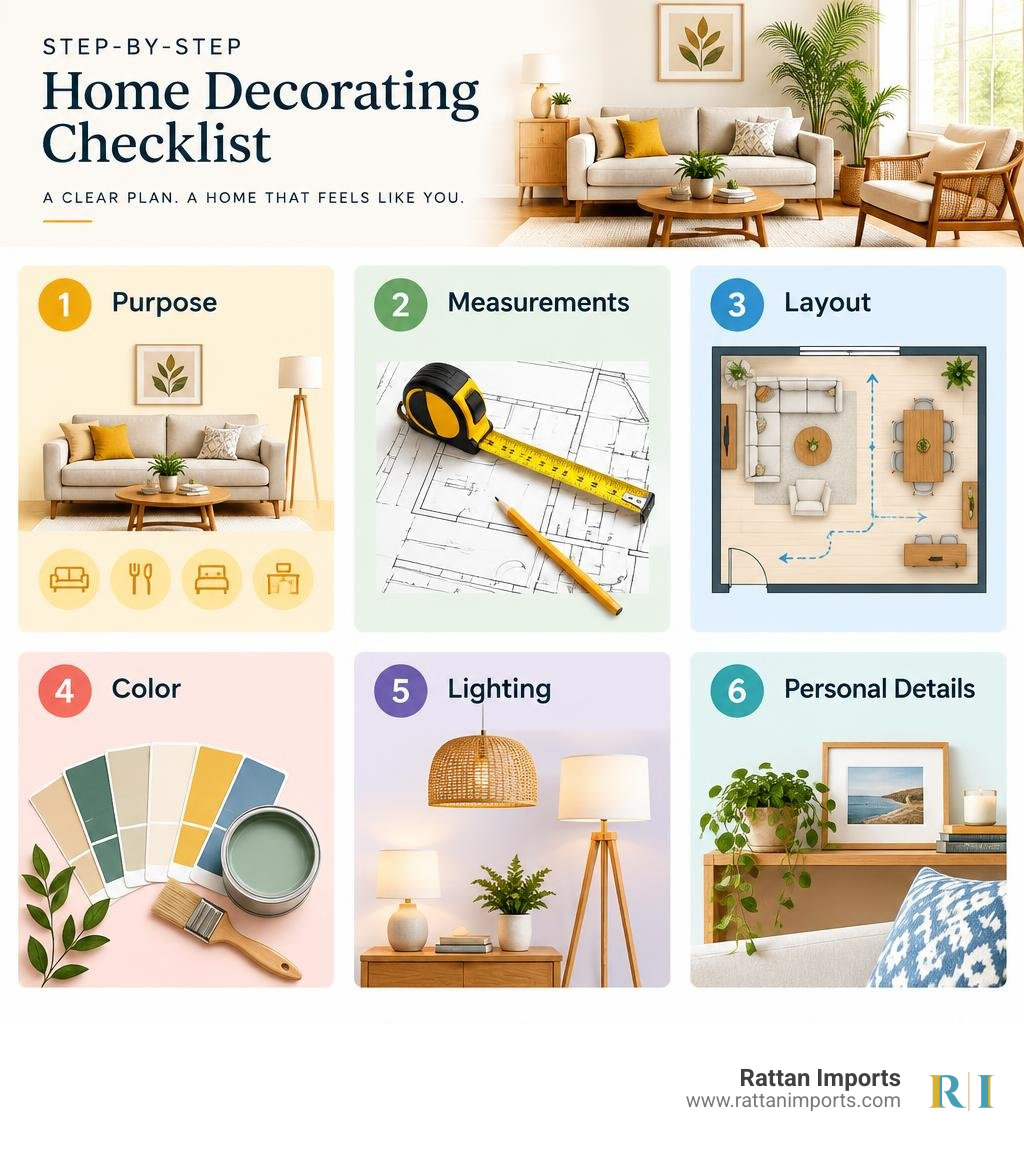
Start with what the room needs to do. Measure the space, mark doors and walking paths, then place your largest furniture first. Choose a color palette, add lighting for both daily tasks and a welcoming mood, and finish with a few personal pieces. If something blocks movement or adds clutter, edit it out.
You can use this approach in any room. A small living room may need compact seating and hidden storage, while exploring fresh dining room ideas and apartment dining room ideas requires ensuring enough space around dining room tables to pull out chairs and move freely.
I'm Nino Russo Alesi, founder of Rattan Imports, and I help customers answer a practical question: How to decorate a home that fits the way they live. My Sicilian roots and 10 years in UK hospitality shape my focus on welcoming spaces and helpful, personal guidance.
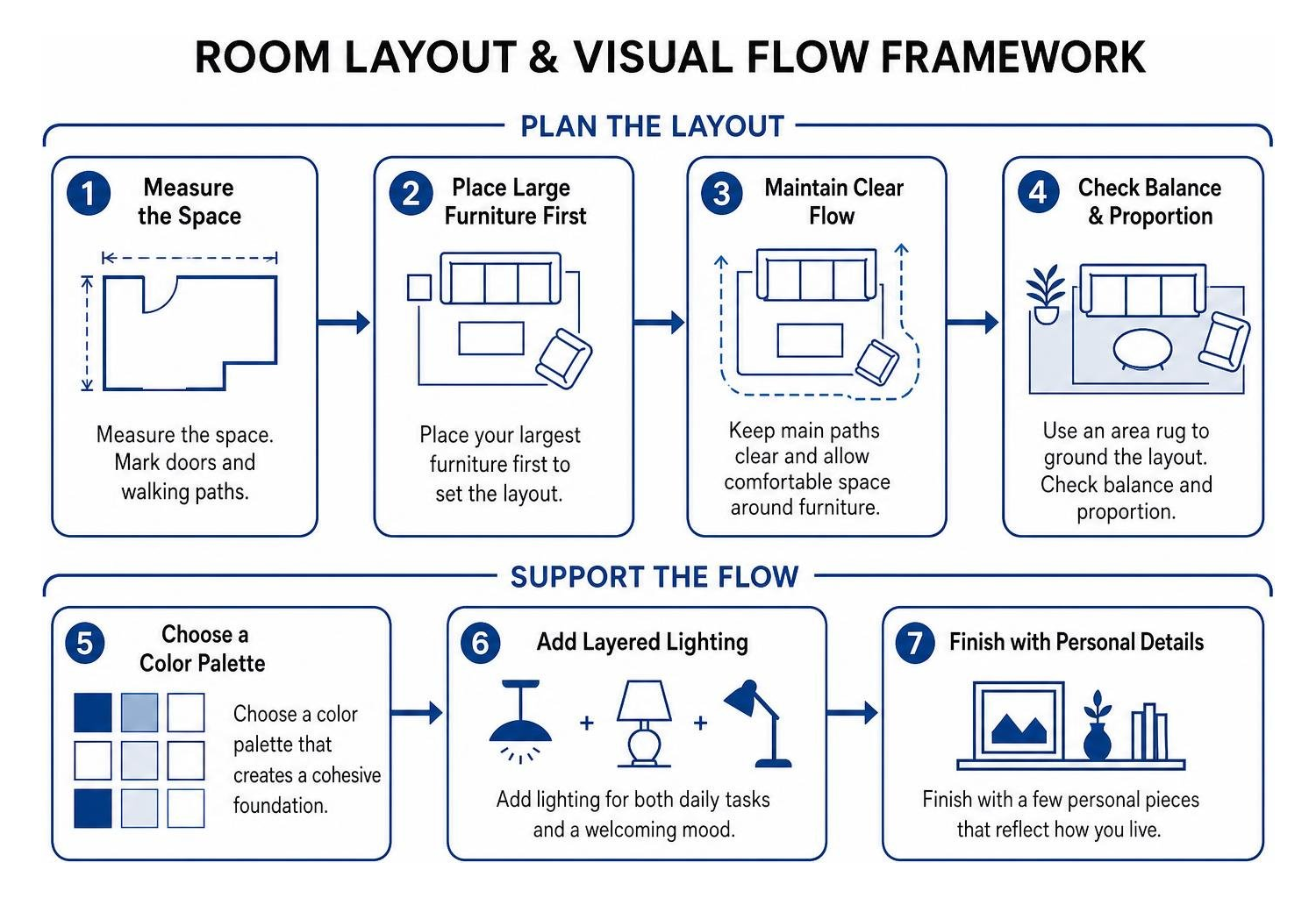
Core Principles: How to Decorate Any Space with Balance and Flow
Decorating a room is a lot like learning the grammar of a language. Once you master the baseline rules of spatial flow, clearance, and proportion, you gain the freedom to express your style without running into awkward dead ends or cluttered corners. Beautiful rooms are rarely happy accidents; they stem from deliberate planning that harmonizes human scale with visual weight.
To maintain effortless movement through any space, follow proven clearance standards:
- Main Traffic Pathways: Keep 30 to 36 inches of unobstructed clearance along major walkways to prevent bottlenecks.
- Coffee Table Spacing: Allow 14 to 18 inches between your sofa and the coffee table. This leaves ample legroom while keeping drinks within easy reach.
- Conversation Distance: Position primary seating pieces so faces are no more than 8 feet apart, ensuring natural conversation without raising voices.
An essential foundation for visual cohesion is grounding your layout with an appropriately sized area rug. As noted in The Guardian's guide on anchoring with rugs, a rug serves as the physical and visual anchor that ties disparate furniture pieces together into a unified conversation zone. For optimal balance, all front legs of your seating pieces should rest comfortably on the rug.
A functional space also relies on layered illumination. Relying solely on a single overhead fixture creates harsh shadows and a flat atmosphere. According to a 2025 ASID design review, spaces that integrate function-first layouts and layered lighting consistently score highest for occupant satisfaction.
| Lighting Layer | Primary Fixture Types | Purpose & Placement | Target Kelvin Range |
|---|---|---|---|
| Ambient | Chandeliers, flush-mounts, recessed | Provides overall general illumination for safety and visibility | 2700K – 3000K |
| Task | Desk lamps, reading sconces, under-cabinet | Delivers focused, glare-free light for specific activities | 3000K – 4000K |
| Accent | Wall uplights, picture lights, table lamps | Highlights architectural details, art, or natural textures | 2400K – 2700K |
How to Decorate Around a Defined Focal Point
Every successful room requires a single dominant visual anchor that draws the eye upon entering. This can be an architectural asset—such as a fireplace, a bay window with a scenic view, or an exposed brick wall—or an introduced element like a curated gallery wall or a statement credenza.
When hanging artwork or mirrors over furniture, aim for the piece to span roughly two-thirds the width of the furniture below it. Position the center of your art at standard gallery eye level, which is 57 to 60 inches from the floor. Establishing this proportion creates immediate harmony, helping you succeed in elevating your home aesthetic while preventing the room from feeling disjointed or bottom-heavy.
The 60-30-10 Color and Texture Formulation
To achieve a balanced palette, professional decorators rely on the 60-30-10 formula:
- 60% Dominant Base: This encompasses your main wall paint, foundational large-scale rugs, and anchor architecture.
- 30% Secondary Shade: Applied to primary upholstery, drapery, and accent furniture to add depth.
- 10% Accent Hue: Reserved for throw pillows, art highlights, ceramics, and small accessories.
Color is only half the equation; texture brings depth to the palette. A room decorated entirely in flat, smooth surfaces feels sterile, regardless of the paint color. Aim for at least five distinct textures across the space—such as woven wicker, slubby linen, warm hardwoods, matte ceramics, and soft wool. When introducing natural finishes alongside wall colors, explore choosing complementary paint colors to highlight earthy undertones and create a warm, inviting environment.
Mastering Room Layouts and Furniture Selection

Furniture layout sets the rhythm for how you live in a room. A common mistake is pushing every sofa and chair flat against the walls—a habit that often creates a stark "waiting room" atmosphere. Pulling seating a few inches away from walls creates breathing room, casting soft shadows that make the boundaries of the room feel more expansive.
When purchasing furniture, scale is paramount. A massive deep-seated sectional can overwhelm a modest living area, while delicate, spindly pieces get lost in expansive open-concept layouts. Incorporating multifunctional furnishings—such as storage ottomans, nesting tables, and lift-top coffee tables—provides adaptable utility without cluttering your floor plan. For additional layout strategies, consult designer advice on living room decorating.
How to Decorate a Small Room Using Smart Layouts and Lighting
Designing compact footprints requires making every square inch work harder. The global small space furniture market was valued at $23.4 billion in 2023 and is expected to hit $41.2 billion by 2032, reflecting a broader movement toward intentional, smaller-footprint living.
To maximize a small space:
- Choose Legged Furniture: Pieces with slender, raised legs allow light and sightlines to travel underneath, creating the perception of open floor area.
- Utilize Vertical Real Estate: Install tall, slender shelving and hang window drapery near the ceiling line to draw the eye upward.
- Position Mirrors Across from Windows: Bouncing natural sunlight deep into the room doubles the perceived depth of the walls.
- Maintain a Light, Warm Palette: 52% of people with smaller homes choose neutral tones specifically because they make rooms appear larger and brighter.
For tailored approaches to smaller layouts, explore small space rattan living room decor to discover how woven pieces introduce organic lightness without visual heaviness.
Selecting High-Impact Anchor and Seating Pieces
Your primary seating serves as the anchor for the entire space, so prioritizing high-grade craftsmanship and durable framing pays long-term dividends. We curate natural materials like sustainable rattan and solid timber because they introduce organic warmth that synthetic materials cannot match.
If you are outfitting a full room from scratch, coordinating with complete wicker living room furniture sets ensures harmonious scale and material consistency across your sofa, lounge chairs, and accents. Pair these seating arrangements with versatile rattan coffee tables to add functional surface area and tactile richness to the center of your gathering zone.
Styling and Layering by Room: Living, Dining, and Entertaining Areas
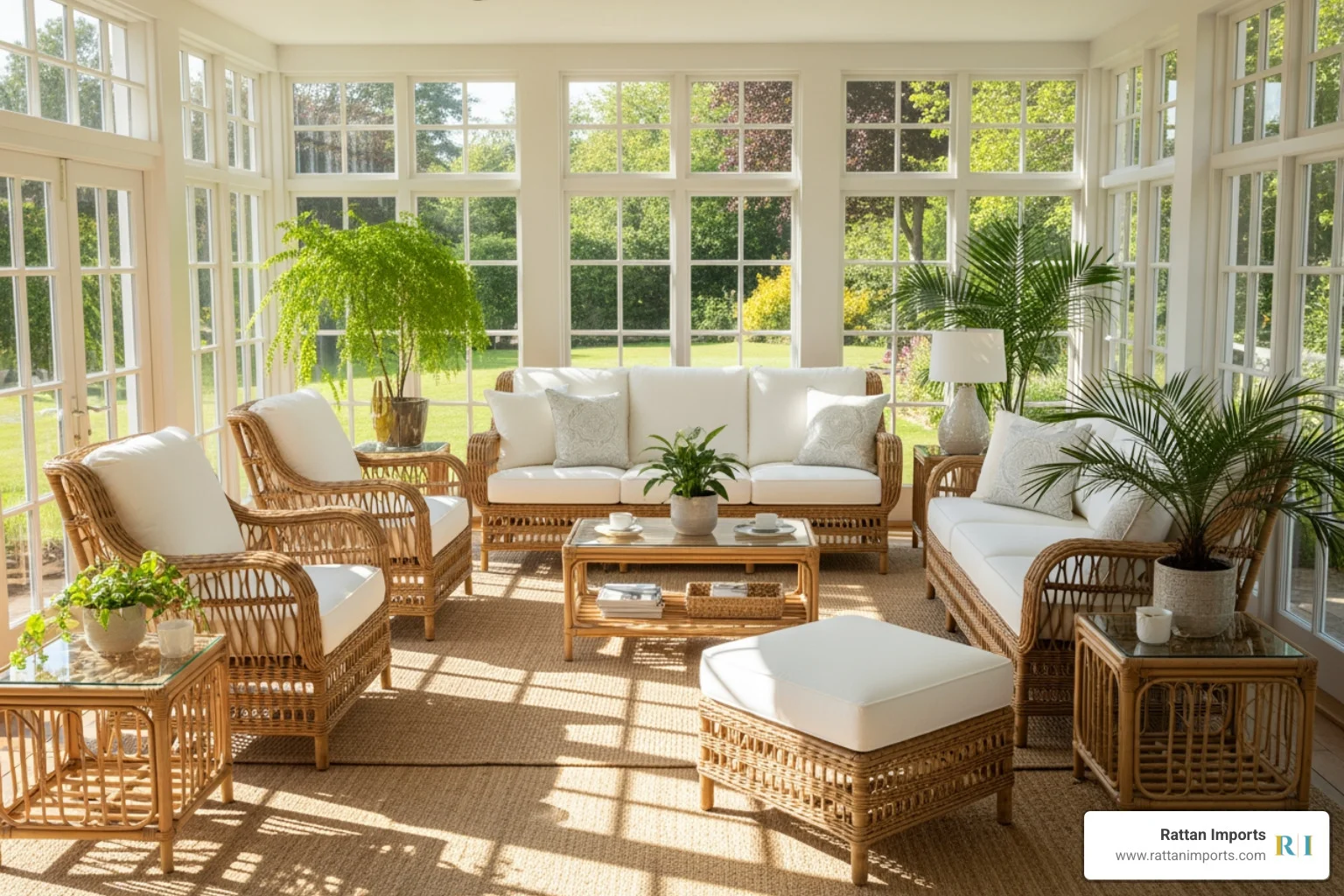
Styling transforms an assembled collection of furniture into a layered, lived-in home. The worldwide furniture industry is worth more than $330 billion, yet the most enduring interiors do not rely on endless purchasing—they rely on thoughtful coordination across functional zones.
| Space | Primary Focus | Anchor Pieces | Essential Layering Elements |
|---|---|---|---|
| Living Room | Relaxation, gathering, media | Sofa, accent armchairs, coffee table | Textured wool/jute rug, 2700K floor lamps, woven throws, indoor plants |
| Dining Area | Entertaining, conversation, meals | Dining table, ergonomic chairs, credenza | Low centerpiece bowls, dimmable pendant lighting, textured table runners |
Living Room Layering: Lighting, Textiles, and Organic Elements
A welcoming living room balances soft goods, warm lighting, and natural materials. Start by establishing your base illumination with dimmable fixtures, then scatter table lamps with warm 2700K bulbs at varying heights around the perimeter.
Next, introduce textiles that invite touch. Pair smooth cotton or leather upholstery with nubby boucle, woven rattan, and textured wool throws. Finish the space with live botanicals; a single large floor plant—like a fiddle-leaf fig or bird of paradise—provides an organic focal point that softens corners. For step-by-step inspiration, review our guides on styling cozy wicker living rooms and exploring graceful luxury living room decor ideas.
Dining Spaces: Centerpieces and Seating Arrangements
Dining spaces require a careful balance of proportions. Round tables excel in compact rooms and encourage communal conversation, while rectangular silhouettes suit longer, formal layouts. Allow at least 36 inches between the table edge and the wall so diners can slide chairs back comfortably.
Anchor your table with comfortable, well-crafted seating like our modern dining room chairs. For tabletops, keep centerpieces under 12 inches in height so sightlines across the table remain clear. Whether you are browsing creative dining table decor ideas for daily indoor meals or styling outdoor dining tables for open-air gatherings, low ceramic vessels, woven placemats, and linen runners add instant texture without getting in the way of dinnerware.
Avoiding Common Decorating Pitfalls and Knowing When a Room Is Finished
One of the most frequent decorating missteps is overfilling every flat surface. 59% of Americans prefer clean, uncluttered interiors, yet many homes suffer from visual fatigue caused by too many small knick-knacks scattered across shelves and consoles.
Embrace the power of negative space—the empty areas around furniture and art that allow the eye to rest. Practice the "one-in, one-out" rule: when you bring a new decorative object home, retire an older piece to keep surfaces uncluttered.
A thoughtful interior reflects personality while exercising restraint. As detailed in Homenumental's decoration framework on intention and restraint, successful decorating is defined by how well a space supports its intended feeling rather than how many items it holds. When a room flows naturally, accommodates your daily routines, and provides visual comfort without physical clutter, the design is complete.
Frequently Asked Questions About Decorating Your Home
What is the 60-30-10 decorating rule and how is it applied?
The 60-30-10 rule is a classic interior design guideline for creating a balanced color scheme:
- 60% Dominant Color: The foundation of the room, typically seen on primary walls, large rugs, and architectural elements.
- 30% Secondary Color: The supporting shade, applied to primary seating, drapery, and accent furniture to add contrast.
- 10% Accent Color: The vibrant splash, used sparingly across throw pillows, artwork, ceramics, and small accessories.
How do I decorate a room without buying everything new?
You can dramatically transform a room using what you already own:
- Rearrange the Layout: Pull furniture away from the walls and create a tighter conversation zone around a clear focal point.
- Swap Textiles Between Rooms: Move rugs, throw blankets, and decorative pillows from one space to another for an instant refresh.
- Repaint or Restyle Surfaces: Apply a fresh coat of paint to an accent table, restyle your bookshelves using the rule of threes, or propagate houseplant cuttings into glass jars for natural decor.
How do I know when a room is complete?
A room is complete when every item serves a clear purpose—functional or aesthetic—without obstructing movement or visual rest. If you can move through the room freely, perform daily activities effortlessly, and feel a sense of calm when entering, your room has reached a balanced finish.
Conclusion
Decorating a home is a rewarding journey of aligning your living space with your lifestyle. By prioritizing functional floor plans, mastering the balance of light and scale, and incorporating enduring, natural materials, you create rooms that feel curated, comfortable, and distinctly personal.
At Rattan Imports, we help you bring timeless elegance and sustainable craftsmanship into every corner of your home. Explore our handcrafted South Sea Rattan collections and curated Spice Islands furniture to find investment-grade pieces backed by our transparent price guarantee, complimentary mainland U.S. shipping, and dedicated customer support.