



Why Getting Your Apartment Dining Room Right Actually Matters
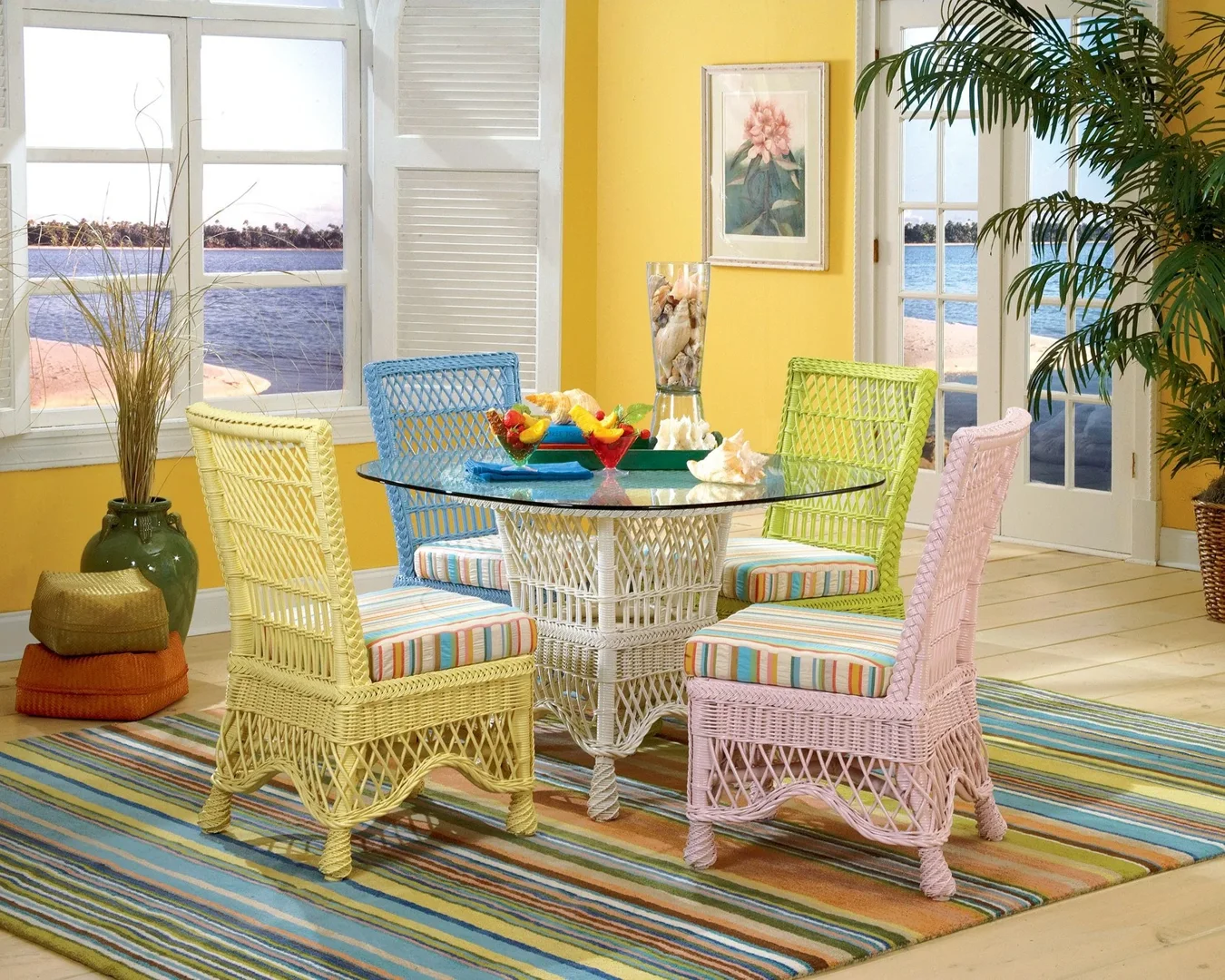
The best apartment dining room ideas don't just make a space look good — they make it work for real life, every single day.
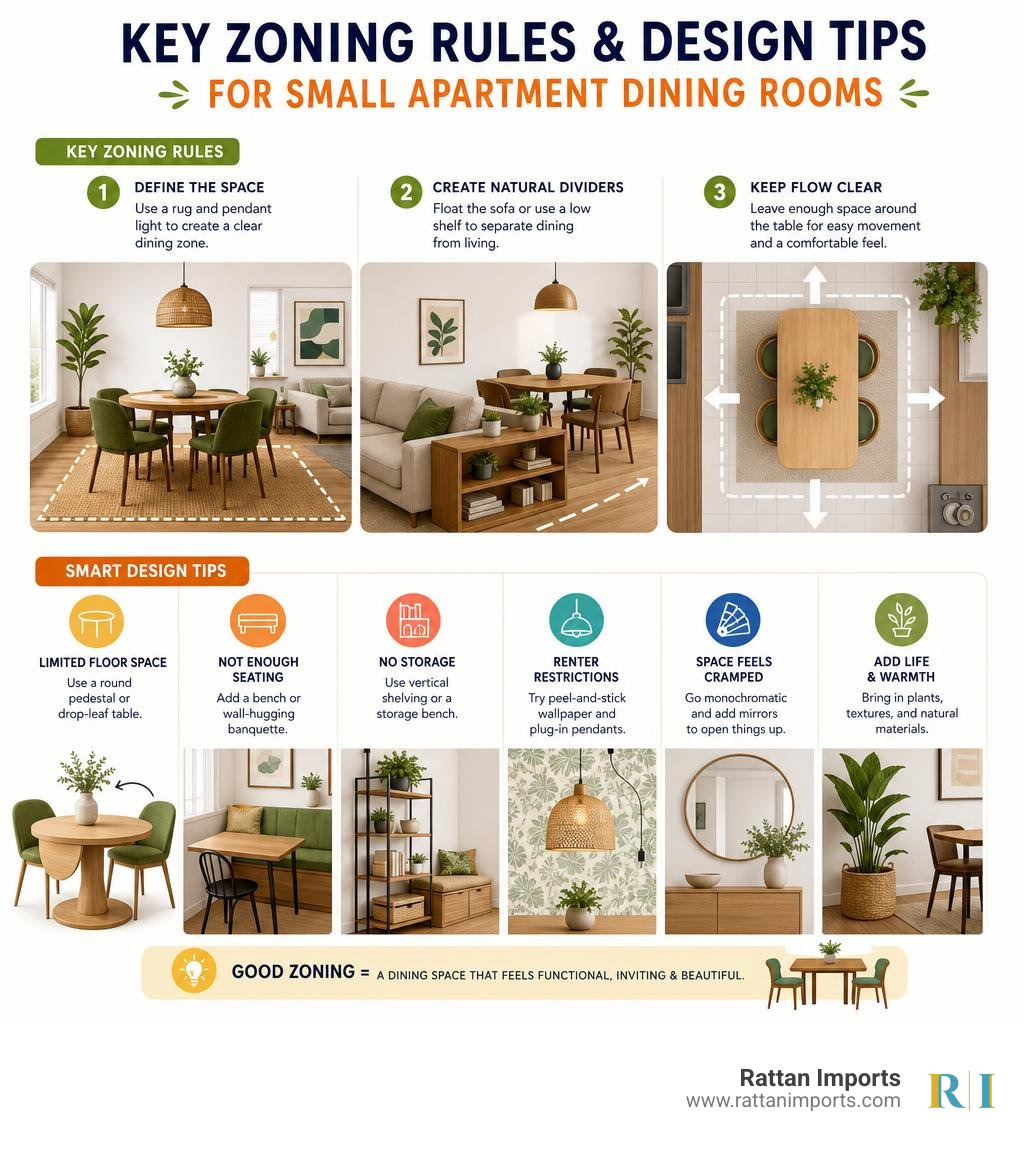
Here's a quick look at the top strategies designers use to make small apartment dining areas shine:
| Challenge | Best Solution |
|---|---|
| No dedicated dining room | Define a zone with a rug and pendant light |
| Open-concept layout | Float the sofa to create a natural divider |
| Limited floor space | Use a round pedestal or drop-leaf table |
| Not enough seating | Add a bench or wall-hugging banquette |
| No storage | Use vertical shelving or a storage bench |
| Renter restrictions | Try peel-and-stick wallpaper and plug-in pendants |
| Space feels cramped | Go monochromatic and add mirrors |
Whether you're working with a 400-square-foot studio or a narrow open-concept layout where the kitchen is barely 10 feet from the sofa, carving out a proper dining area can feel like an impossible puzzle. And yet — with the right furniture choices, zoning tricks, and a few smart styling moves — even the most awkward corner can become a genuinely inviting place to gather.
Think of it this way: the dining table is one of the most important pieces of furniture in any home. It's where meals happen, where conversations linger, where everyday moments become memories. Getting it right is worth the effort.
I'm Nino Russo Alesi, founder of Rattan Imports, and my background in hospitality and home décor has given me a deep appreciation for how thoughtfully curated apartment dining room ideas can transform even the smallest space into something that feels intentional and beautiful. In this guide, I'll walk you through the layouts, furniture choices, and styling strategies that actually work in compact apartments.
Smart Layouts and Apartment Dining Room Ideas for Open-Concept Spaces
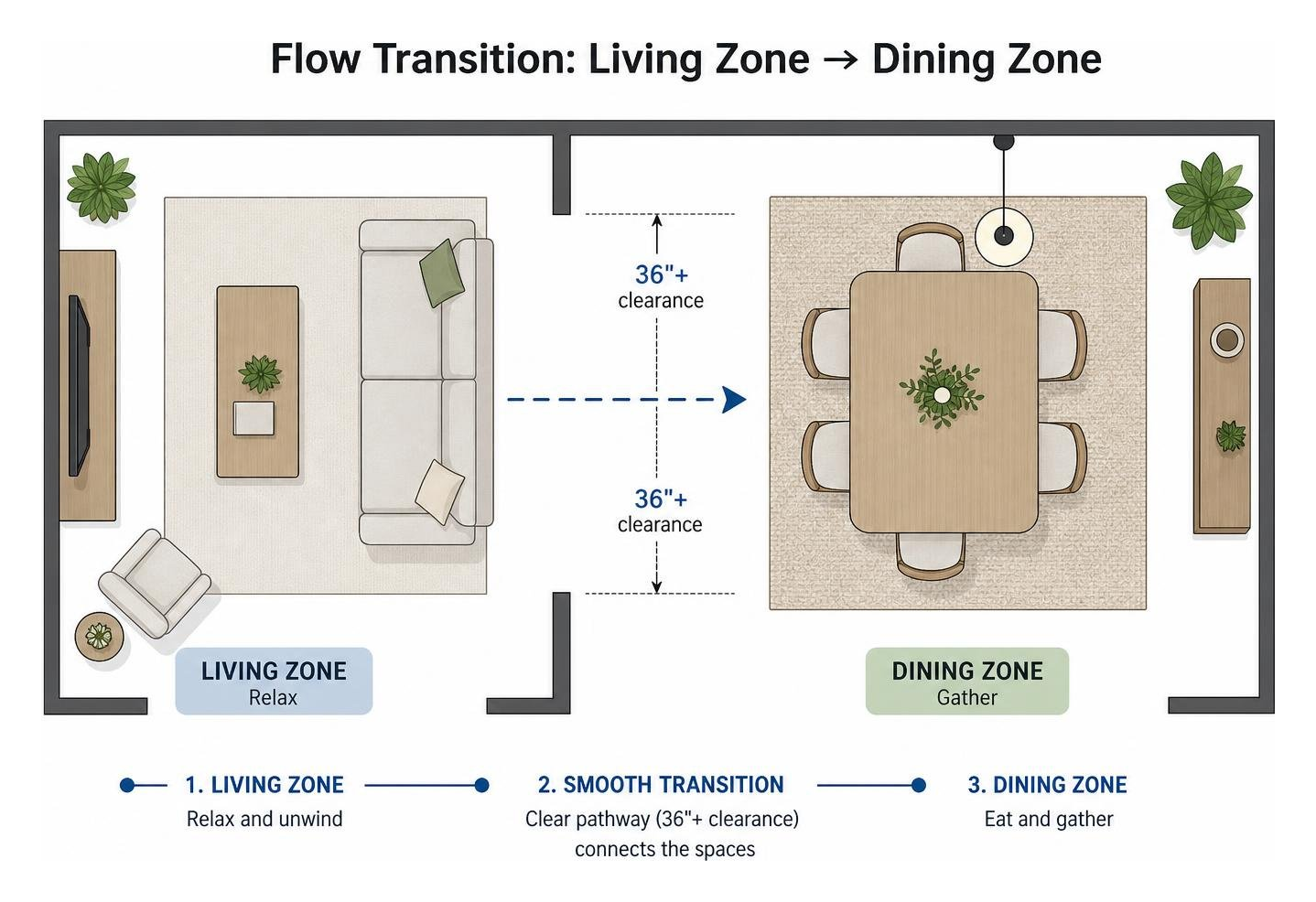
When you live in an apartment, you rarely have the luxury of a closed-off, formal dining room. Instead, you are usually dealing with a multi-functional, open-concept living area. The challenge here is making the transition between your lounging zone and your eating zone feel seamless yet distinct. If you don't plan your layout carefully, your apartment can quickly feel like a chaotic furniture showroom where the sofa and the dining table are constantly fighting for dominance.
To solve this, start by mapping out your room's natural traffic paths. You want to leave at least 36 inches of clearance space around your dining set so people can pull out chairs and walk past comfortably without having to squeeze or shuffle sideways. If space is incredibly tight, you can occasionally break the traditional rules and reduce this clearance to about 30 inches, but keeping walkways clear is essential for a relaxed atmosphere.
One of the most effective layout tricks is "floating" your sofa. Instead of pushing your couch flat against the wall, pull it out a few inches or place it directly in the center of the room. The back of the sofa acts as a low-profile, natural divider that separates the living zone from the dining area.
Another brilliant approach is to position your dining table perpendicular (at a right angle) to your sofa or a main wall. This creates clear, structured zones while keeping the overall layout feeling open and airy. For more inspiration on arranging multi-use spaces, explore these 10 Stylish Apartment Decorating Dining Room Ideas You’ll Love - Daneila Bright to see how other apartment dwellers have successfully balanced style and functionality.
Zoning Your Living-Dining Combo with Rugs and Lighting
Once you have established your furniture layout, you need visual anchors to define each territory. Without these anchors, your dining table can look like it was accidentally left in the middle of your living room.
The most powerful tool for defining a zone is a high-quality area rug. A rug acts as a visual boundary, grouping the dining table and chairs into their own cohesive "room." When choosing a rug for your dining area, size is everything. A common mistake is buying a rug that is too small, which causes the chairs to catch on the outer edge when pulled back. As a rule of thumb, choose a rug that extends at least 24 to 36 inches beyond the table on all sides. For small spaces, a round jute rug works beautifully under a circular table, adding organic texture without taking up unnecessary visual weight.
Lighting is your other secret weapon for zoning. Centering a statement light fixture directly over the tabletop instantly anchors the space. If you are a renter and cannot hardwire a new chandelier, don't worry. You can easily use a plug-in pendant light with a ceiling hook, swagging the cord neatly down the wall to a nearby outlet. Another fantastic space-saving option is an articulating wall sconce. These adjustable fixtures can swing out over the table during dinner to create a warm, intimate pool of light, and then fold back flat against the wall when not in use.
To find the perfect organic furniture pieces to pair with your layered lighting and rugs, browse through our collections at Rattan Imports to discover high-quality, sustainably sourced designs that bring warmth to any open layout.
Creative Apartment Dining Room Ideas for Awkward Corners
Every apartment seems to have one: that weird, under-programmed corner that isn't quite big enough for a bookshelf but feels too empty to leave alone. Instead of letting it become a graveyard for Amazon boxes or your vacuum cleaner, you can transform it into a cozy, custom-looking dining nook.
A corner banquette or a built-in L-shaped bench is an exceptionally space-efficient solution. By pushing the seating directly flush against the walls, you eliminate the empty clearance space required behind traditional dining chairs. This allows you to tuck a table into a much tighter footprint. Pair this setup with a round pedestal table, and you have a charming breakfast nook that feels like a cozy corner in your favorite neighborhood bistro.
If your awkward corner happens to be next to a window, you can create a gorgeous bay window banquette. This layout leverages natural light and offers a lovely view, turning a simple meal into an active "people-watching" experience. For a deep dive into maximizing tight corners and creating a stylish sanctuary, check out these creative tips on Apartment Dining Room Decor: Transform Your Small Space Into A Stylish Sanctuary.
Choosing the Perfect Space-Saving Furniture
When square footage is at a premium, your furniture has to work twice as hard. The shapes and materials you choose will directly impact how spacious your apartment feels.
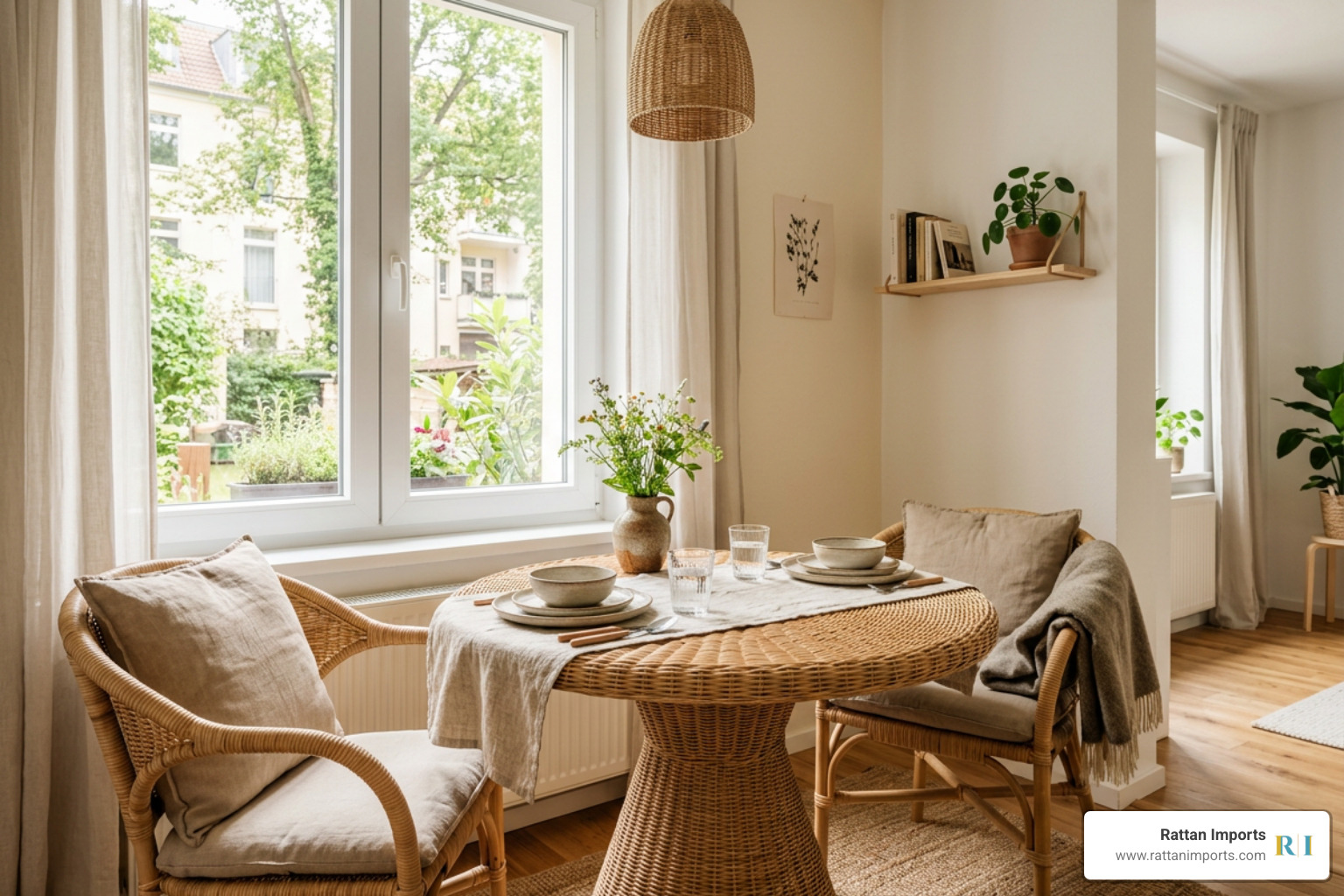
A round pedestal table is widely considered the holy grail of apartment dining room ideas. Because it lacks corner legs, it maximizes legroom and allows you to squeeze in an extra chair or two when hosting guests. Visually, its curved silhouette softens the sharp angles of a standard apartment layout, improving the overall room flow.
If you need extreme flexibility, a drop-leaf table is a game-changer. You can keep it folded down against the wall to serve as a slim console or work desk during the day, and then flip up the leaves to seat four people when dinner is served. For ultra-small spaces or narrow kitchen-living transitions, a petite bistro set or a counter-height table with stools keeps the floor plan open and breezy.
Here is a quick comparison of how different table shapes perform in small spaces:
| Table Shape | Space-Saving Level | Best For | Key Advantage |
|---|---|---|---|
| Round Pedestal | High | Corners & tight squares | No corner legs; improves traffic flow |
| Drop-Leaf | Maximum | Multi-functional rooms | Folds flat against the wall when not in use |
| Rectangular | Moderate | Narrow spaces | Can be pushed flush against a wall |
| Bistro / High-Top | High | Studios & kitchens | Small footprint; casual, airy aesthetic |
Maximizing Seating Capacity with Benches and Banquettes
If you want to maximize your seating capacity without cluttering your room with a forest of chair legs, look to benches and banquettes.
A low-profile dining bench is incredibly practical because it can slide completely underneath the table when not in use. This instantly frees up valuable floor space and keeps your walkways wide open. Benches are also wonderful for hosting because you can easily squeeze three kids or two adults onto a single bench, whereas individual chairs restrict you to a fixed capacity.
For an even cozier, restaurant-booth feel, consider a cushioned banquette. To keep the look sophisticated and airy, choose seating with elevated, tapered legs rather than a solid boxy base.
To explore premium, handmade seating options that bring natural texture and exceptional durability to your dining nook, check out the South Sea Rattan collections. These beautifully crafted pieces are designed to handle daily life while adding a touch of coastal elegance to your home.
Incorporating Smart Storage into Your Apartment Dining Room Ideas
In a small apartment, clutter is the ultimate enemy of style. If your dining table constantly becomes a dumping ground for mail, laptops, and keys, it's time to incorporate smart, multi-functional storage.
Instead of a bulky, traditional hutch that eats up precious floor space, try a wall-mounted floating credenza or a slim sideboard. Elevating your storage off the floor keeps the visual sightlines clear, making the room feel larger. You can also think vertically by installing staggered floating shelves above your dining table. This allows you to store everyday glassware, plates, or decorative plants without sacrificing an inch of floor space.
Another clever trick is to use double-duty furniture, such as a dining bench with built-in hidden storage under the seat. It is the perfect place to tuck away table linens, extra pillows, or even work-from-home gear at the end of the day.
For stunning storage solutions featuring natural woven textures and high-quality craftsmanship, explore our Spice Islands collections. These timeless designs offer the perfect balance of practical storage and elegant, organic style.
Renter-Friendly Decor and Styling Strategies
Just because you don't own your apartment doesn't mean you have to live with boring, beige walls. There are plenty of high-impact, temporary styling strategies that can make your rental dining space feel completely custom and full of personality.
Peel-and-stick wallpaper is a renter's best friend. You can use a bold, scenic mural to wrap your dining nook, creating an immersive, transportive backdrop that distracts from the room's small footprint. If wallpaper feels like too big of a project, even painting just the lower third of your wall (below a chair rail) in a rich, grounding color can instantly elevate the space.
Window treatments are another area where you can make a massive difference. Standard rental vertical blinds can feel cold and institutional. Try replacing them with natural bamboo shades paired with classic, lightweight white curtains hung high and wide. This simple swap adds incredible warmth, depth, and texture to your dining area.
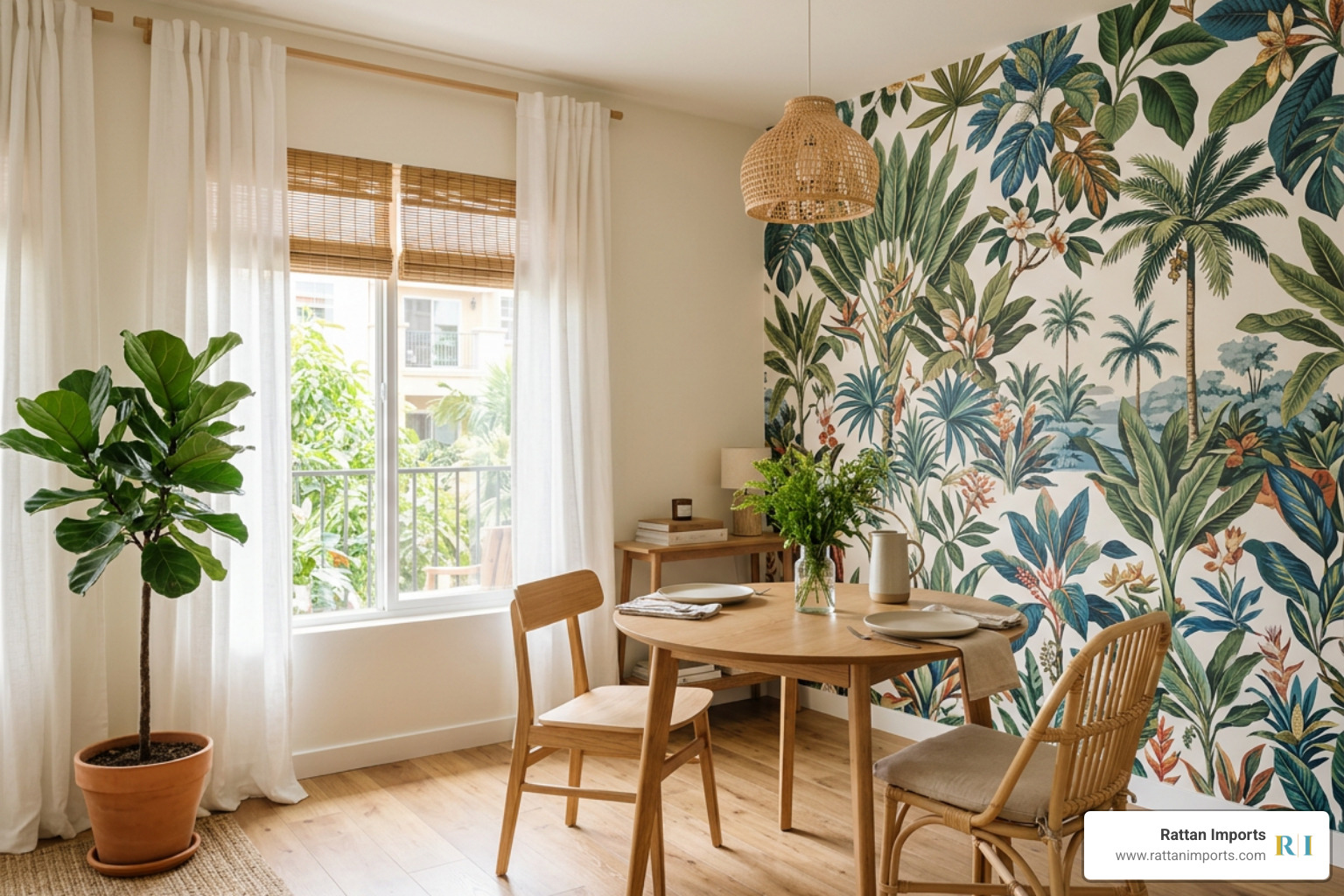
For a real-life example of how to execute a stunning, temporary space transformation, take a look at this detailed A Stunning Rental Dining Room Reveal (My Favorite Makeover...Ever!) - The Homes I Have Made. It is packed with practical DIY ideas for personalizing a rental home.
Color Palettes and Visual Tricks to Expand Your Space
To make a small dining room feel twice its actual size, you can use a few classic interior design optical illusions.
First, consider your color palette. Enveloping a small room in a monochromatic color scheme — where the walls, trim, and even the ceiling are painted in similar tones — erases hard visual breaks. This tricks the eye into perceiving the boundaries of the room as farther away. Soft neutrals, warm whites, and light wood tones work beautifully to maximize natural light.
Second, embrace the power of reflective surfaces. Hanging a large, beautifully framed mirror on the wall opposite a window will bounce natural light throughout the room and visually double your space.
Finally, choose your furniture materials strategically. Lightweight, open-back chairs (like classic rattan or spindle-back designs) allow light and sightlines to pass right through them, preventing the room from feeling crowded. Similarly, a glass-top table or furniture with clean, leggy silhouettes will dramatically reduce the "visual weight" of the room, keeping your apartment feeling bright, open, and airy.
Frequently Asked Questions about Apartment Dining Rooms
How do you separate a dining area from a living room in a small apartment?
You can easily separate the two zones without building physical walls by using visual boundaries. Place a distinct area rug under your dining set, float your sofa so its back faces the dining table, or center a dedicated pendant light directly over the tabletop. These elements work together to tell the eye exactly where one room ends and the other begins.
What is the best dining table shape for a compact space?
A round pedestal table is generally the best choice for small layouts. Its lack of sharp corners improves traffic flow, and the central pedestal base offers maximum legroom, allowing you to tuck chairs in completely. For ultra-tight spaces, a drop-leaf table offers incredible flexibility by folding flat against the wall when not in use.
What are the most common mistakes to avoid when decorating an apartment dining room?
The most common mistake is choosing oversized, bulky furniture that crowds the walkways and blocks natural light. Always measure your space carefully and aim for at least 30 to 36 inches of clearance around your table. Other common pitfalls include using a rug that is too small, relying on a single harsh overhead light instead of layered lighting, and neglecting vertical wall space for storage.
Conclusion
Creating a beautiful, functional dining area in a small apartment is all about balance, intentionality, and choosing pieces that work hard for your space. By utilizing smart layouts, zoning with rugs and lighting, and selecting flexible, space-saving furniture, you can easily transform any small corner into a welcoming sanctuary.
At Rattan Imports, we believe that limited square footage should never mean sacrificing style or quality. We specialize in premium home décor and furniture, sourced from Southeast Asia and carefully assembled right here in the U.S. Our natural rattan and hand-woven designs are perfect for adding organic warmth, texture, and light, airy silhouettes to compact apartment layouts.
To help you design your dream home with complete peace of mind, we proudly offer free shipping across the U.S. mainland, top-tier identity theft protection, and exceptional customer communication. Plus, you can always shop with confidence thanks to our price guarantee.
Ready to elevate your apartment dining space? Explore our collections today and find the perfect pieces to bring your small-space vision to life!