



How to Spot Quality Dining Furniture

Quality dining furniture starts with a sturdy frame, secure joints, and a surface that suits daily use. Solid hardwood is a strong choice if you want a table that can last and may be refinished. A well-made veneer table can also be a good choice, but check what sits beneath the veneer. Before buying, measure the room, check chair and leg clearance, and read the warranty, return, and delivery terms.
The best table is one that looks right and works for meals, work, and guests without making the room feel crowded.
I'm Nino Russo Alesi, founder of Rattan Imports. My years in hospitality and customer service shape how I help people choose quality dining furniture for the way they live.
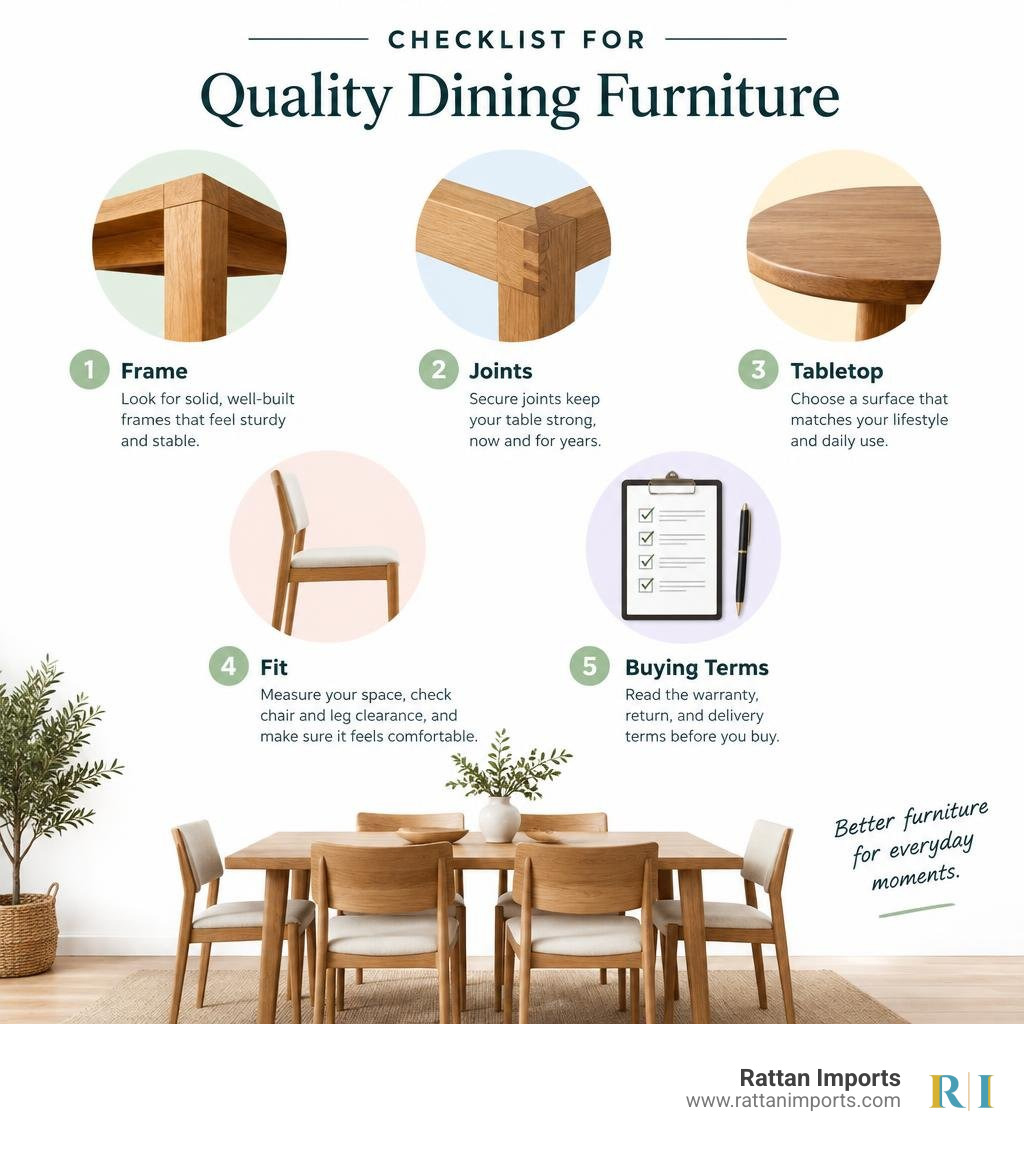
Quality dining furniture terms to know:
For a broader perspective on durable materials and construction standards, the Furniture Industry Research Association publishes independent guidance on furniture performance and quality testing.
Defining Quality Dining Furniture: Materials and Structural Integrity
For many people, the dining table is so much more than a place to eat—it is a hub for work, play, and family life. In fact, a dining table is often the only piece of furniture that doubles as a competitive board-game arena on Friday night and an executive workstation by Monday morning. When an everyday piece shoulders that much responsibility, assessing how it is put together becomes essential.
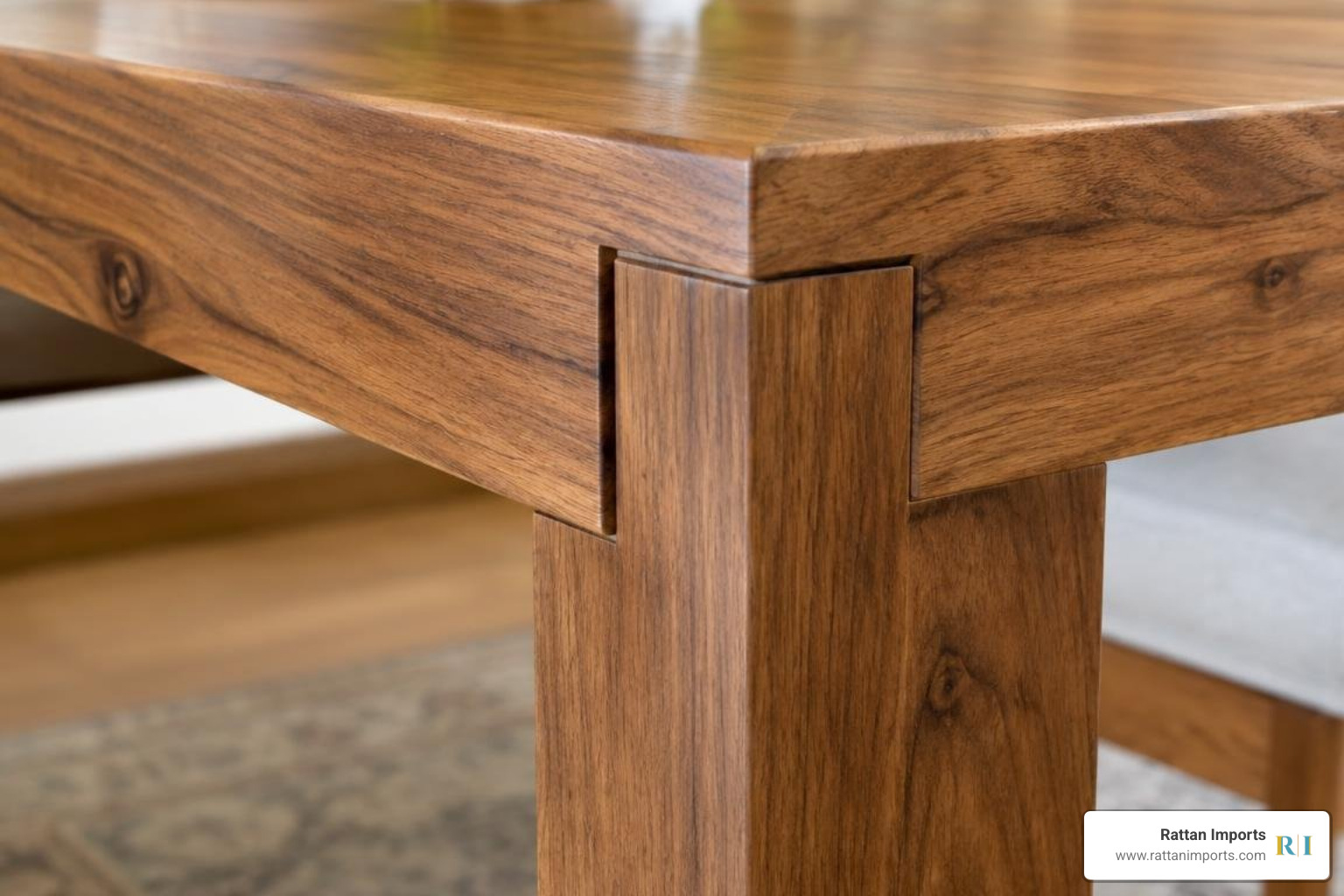
The structural integrity of a table comes down to its materials and internal joinery. Cheaper consumer furniture relies on superficial cam-locks, staples, or simple dowels bonded with quick-cure adhesive. Under the daily strain of people leaning on edges or shifting the table across floorboards, these weak connection points loosen and wobble.
In contrast, high-end construction utilizes time-tested woodworking methods. Mortise-and-tenon joints, corner blocking, and reinforced sub-framing distribute dynamic loads across the entire piece. When looking for well-built options, our dining room table guide explains how traditional framing techniques keep furniture sturdy for decades. Premium builders often incorporate metal thread inserts rather than driving wood screws directly into timber, allowing legs to be removed and reattached multiple times without stripping the wood fibers.
Solid Hardwood Construction in Quality Dining Furniture
Solid hardwood remains the gold standard for enduring furniture. Dense hardwoods such as white oak, walnut, and ash offer high resistance to impacts, everyday dings, and surface gouges. The average lifespan of a well-built solid-wood dining table exceeds 15 years, and with proper care, it can easily become a generational heirloom passed down through a family.
However, solid timber is a natural, living material that continuously responds to ambient humidity and seasonal temperature shifts. As wood absorbs moisture, it expands across the grain; as the air dries, it contracts. If a maker ignores this natural movement, a tabletop will eventually crack, cup, or split.
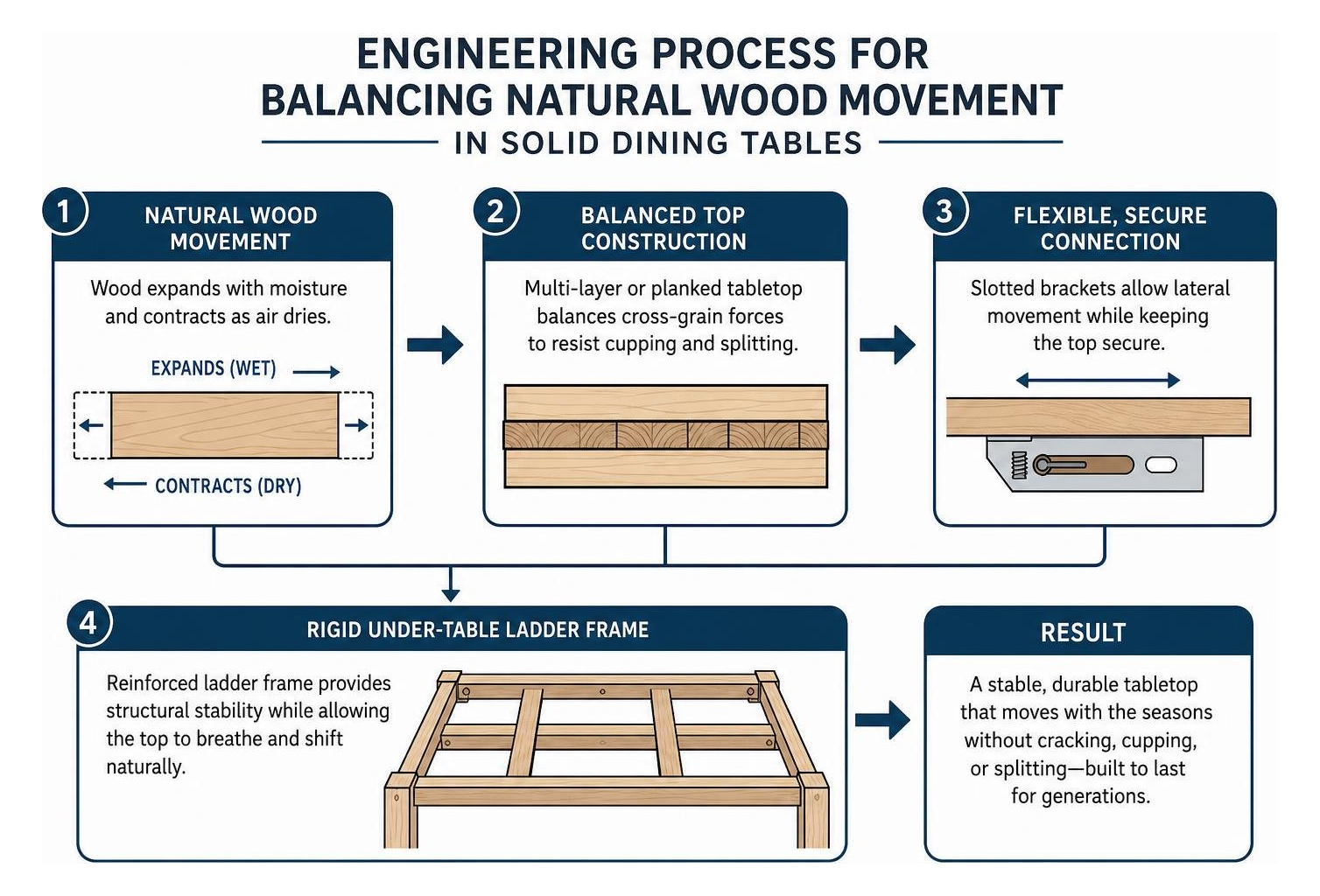
To prevent this, master craftsmen engineer tabletops using balanced multi-layer or planked configurations supported by a rigid under-table ladder frame. This framework allows the timber to breathe and shift laterally along slotted brackets without bowing upward. If you appreciate clean lines paired with structural stability, explore our solid oak Scandinavian dining sets to see how modern engineering stabilizes authentic timber.
Engineered Wood, Veneers, and Modern Metal Framing
While solid hardwood holds classic appeal, high-grade engineered wood and metal frameworks offer distinct structural advantages. High-density fiberboard (HDF) or multi-ply hardwood cores faced with natural wood veneers eliminate the expansion and contraction risks found in solid slabs. This makes them exceptional substrates for large, continuous tables with complex geometric silhouettes or ultra-thin beveled edges.
Metal framing introduces industrial strength with minimal visual bulk. Welded tubular steel, cold-rolled steel, and aircraft-grade aluminum allow for architectural profiles that timber cannot match without substantial bracing. Finished with baked polyester-epoxy powder coatings, a high-grade steel base resists chipping, oxidation, and scratches, creating an unyielding anchor for heavy natural stone, glass, or solid wood tops.
Tabletop Materials: Comparing Durability, Aesthetics, and Maintenance
The choice of tabletop material establishes your dining room's visual weight while determining the care routine required to keep the surface pristine.
| Material Type | Durability & Resilience | Aesthetic Character | Maintenance Requirements | Refinishing Potential |
|---|---|---|---|---|
| Solid Hardwood | High impact resistance; susceptible to deep water rings if unfinished. | Warm, organic, unique grain patterns; develops a rich patina over time. | Wipe with mild soapy water; periodic oiling or waxing depending on topcoat. | Full sanding, staining, and refinishing possible multiple times. |
| Wood Veneer on MDF | Stable against warping; vulnerable to deep gouges exposing the core. | Uniform grain matching; sleek, modern, mid-century architectural profiles. | Clean with damp microfiber; avoid excess moisture and pooling liquids. | Very limited; light surface buffing only, cannot take deep sanding. |
| Tempered Glass | Highly resistant to liquids and stains; can scratch or show smudges. | Airy, light-reflective; opens up compact floor plans and narrow rooms. | Frequent wiping with glass cleaner to remove grease and fingerprints. | None; damaged glass panels must be replaced entirely. |
| Powder-Coated Steel | Extreme structural rigidity; chip-resistant under standard indoor use. | Industrial, minimalist, architectural, International Style appeal. | Low maintenance; simple wipe-down with non-abrasive household cleaners. | Can be sanded down and repowder-coated if heavily scratched. |
For a broader look at durable configurations suited to varied interior layouts, take a look at our indoor dining catalog.
Solid Wood vs. Glass, Metal, and Veneer Tabletops
Solid wood carries a tactile warmth that synthetic or mineral surfaces cannot replicate. Small dings and surface wear blend into a natural patina that adds character over the decades. Furthermore, if a solid wood table suffers major damage from hot cookware or a deep scratch, the entire surface can be sanded down, re-stained, and sealed back to factory condition. Modern matte lacquers provide hospitality-grade spill resistance, shielding open pores from red wine, citrus, and oil without adding an artificial gloss.
Glass tabletops offer an open, weightless aesthetic that makes smaller rooms feel significantly larger. High-end dining tables use heavy Italian tempered glass resting on sculptural metal or carved bases. While impervious to acidic foods and liquid spills, glass surfaces reveal fingerprints readily and require frequent polishing.
Metal surfaces, alongside stone and high-grade veneers, bridge the gap between industrial strength and refined modernism. The primary trade-off with veneers is repairability: while a veneer over MDF is remarkably stable against humidity shifts, deep cuts that penetrate the thin wood layer cannot be easily sanded away.
Sizing, Shape, and Ergonomics for Everyday Living
Selecting the right dining furniture requires balancing aesthetic scale against the physical geometry of your room. An oversized table makes a room feel cramped, while an undersized table leaves an open layout feeling sparse and unfinished.
Room Dimensions and Leg Clearance Requirements
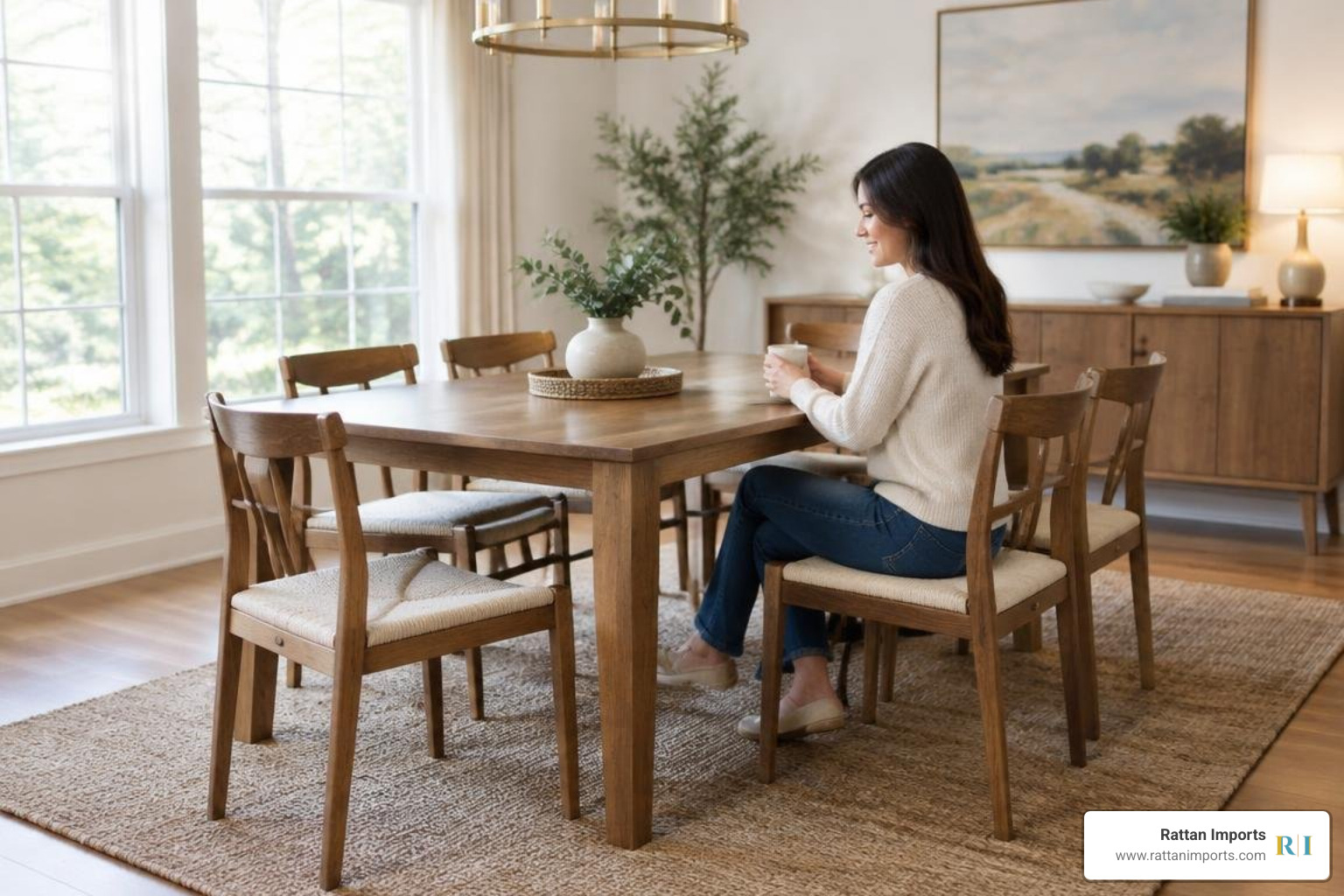
Spatial planning begins with perimeter clearance. As a general rule, maintain at least 36 to 48 inches of open floor space between the edge of your dining table and the nearest wall, sideboard, or entryway. This clearance ensures seated guests can push their chairs back comfortably without hitting walls or blocking walkways.
For personal comfort, allow roughly 24 inches (60 cm) of table perimeter per seated person to avoid knocking elbows during meals. Consider the vertical clearance as well: standard dining table heights range from 28 to 30 inches, leaving 10 to 12 inches of space between the chair seat and the underside of the tabletop. Pay close attention to deep table aprons or dropped support rails, which can restrict thigh clearance for taller individuals.
Shape plays a major role in traffic flow:
- Rectangular Tables: Best suited for long, narrow dining areas; seats larger gatherings efficiently.
- Round Tables: Ideal for square rooms and intimate conversation; eliminates sharp corners in compact layouts.
- Oval Tables: Combines the seating capacity of a rectangle with the gentle, fluid traffic lines of curved edges.
If you are planning your dining space, explore our handcrafted dining table options to find dimensions matched to your room layout.
Extension Mechanisms and Dining Arm Chair Fit
An extendable dining table offers the flexibility to transition from quiet weeknight dinners to hosting holiday feasts. High-quality extension tables utilize precision-engineered ball-bearing slides or smooth butterfly-leaf mechanisms that allow a single person to open the top effortlessly. High-grade systems lock leaves firmly into place to eliminate surface sagging or shifting seams under heavy serving dishes.
When selecting chairs to pair with your table—especially designs with armrests—measure the arm height against the table apron. A dining chair arm should slide smoothly beneath the tabletop to maximize floor space when not in use. For detailed chair sizing guidelines, consult our dining arm chair buying guide or browse our complete dining chair collection.
Design Styles and Lifestyle Considerations
Your dining table anchors the aesthetic tone of your home while catering to the functional demands of your household. Matching the material and silhouette to your lifestyle ensures the furniture remains beautiful through years of active family use.
Scandinavian, Mid-Century Modern, and International Influences
Different design movements emphasize unique structural philosophies:
- Scandinavian Design: Prioritizes organic textures, pale timbers like blonde oak and ash, and understated functional minimalism. These tables often feature softened radii on corners and tapered spindle legs that make dining spaces feel bright and serene. Pair them with modern dining room chairs for an airy dining setting.
- Mid-Century Modern: Celebrates sculptural dynamism, splayed peg legs, warm walnut tones, and gently beveled boat-shaped tops.
- International Style: Emphasizes industrial elegance, pairing tubular welded steel bases with heavy floating glass or solid timber slabs, as seen in landmark twentieth-century architectural pieces.
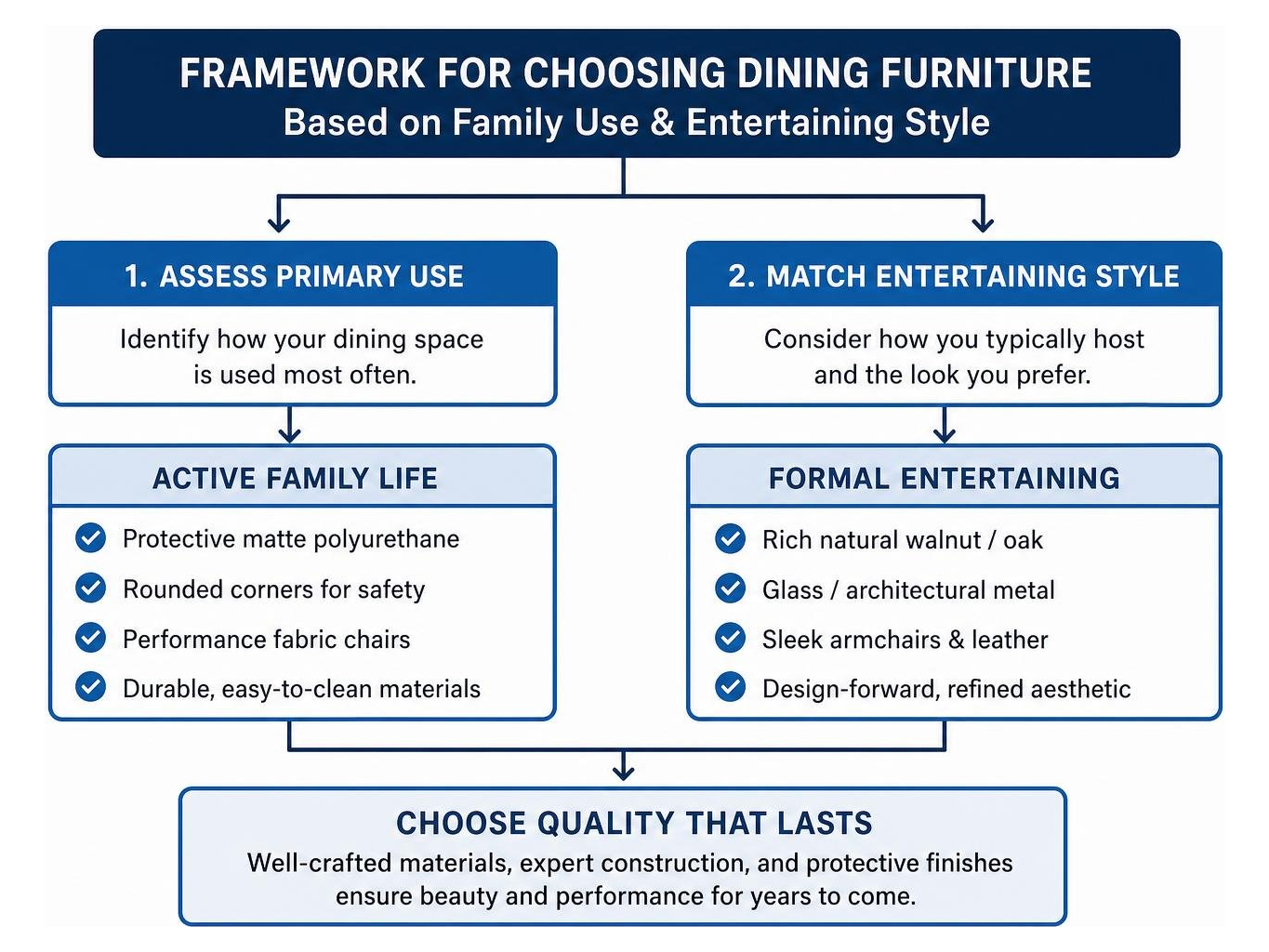
For busy households with children or pets, look for tables finished with hard-wearing polyurethane or matte conversion varnishes that resist fruit juice, milk spills, and art supplies. Pair durable tables with upholstered dining chair sets featuring stain-resistant performance fabrics to ensure easy cleanup after messy dinners. You can view fully coordinated dining arrangements in our dining sets collection.
Evaluating Longevity and Value in Quality Dining Furniture
The purchase price of premium furniture reflects its raw materials, artisanal assembly, and built-in longevity. Entry-level mass-market tables typically feature lightweight hollow cores and paper veneers that deteriorate within two to three years of daily use. In contrast, well-crafted furniture uses hand-selected kiln-dried hardwoods, structural steel bracing, and multi-step protective finishes designed to last a generation.
When investing in furniture, consider the complete purchasing experience:
- Structural Warranties: Look for multi-year structural coverage (such as 5- to 10-year guarantees) that protects against frame separation and joint failure.
- Delivery & Placement: Heavy, solid wood and glass tables require white-glove delivery services where two-person teams handle placement, room-of-choice assembly, and packaging removal.
- Return Windows: A 30-day trial period allows you to evaluate scale, lighting, and chair comfort in your own dining space before making a final commitment.
Frequently Asked Questions About Dining Furniture
What is the most durable wood for a dining table?
White oak, hard maple, ash, and American walnut are among the most durable hardwoods for dining furniture. White oak is especially popular due to its high density, excellent resistance to moisture, and prominent grain pattern that hides minor surface scuffs.
How much space is needed around a dining table?
You should leave a minimum of 36 inches (90 cm) of open floor space between the table edge and surrounding walls or furniture. If the area serves as a primary walkway through your home, aim for 42 to 48 inches of clearance to allow easy movement while chairs are occupied.
Are extendable tables sturdy enough for daily family use?
Yes, provided they feature robust structural hardware. Premium extendable tables utilize internal steel runner tracks, solid wood alignment dowels, and integrated locking latches that hold extension leaves firmly in place, matching the structural rigidity of fixed tables.
Conclusion
Choosing the right dining furniture means investing in the daily rhythm of your home. A well-built table brings together authentic materials, refined engineering, and timeless design to host countless family meals, holiday celebrations, and quiet morning coffees.
At Rattan Imports, we focus on superior craftsmanship and functional design. Our furniture collections are carefully sourced from skilled artisans in Southeast Asia and assembled in the U.S. to ensure quality in every joint and surface. We support our customers with free shipping across the U.S. mainland, dedicated customer care, identity theft protection, and a clear transparent price guarantee.
Transform your home into a warm, welcoming gathering space by exploring our complete collection of exceptional home furnishings today.