



Can You Put a Dining Room Table Outside?
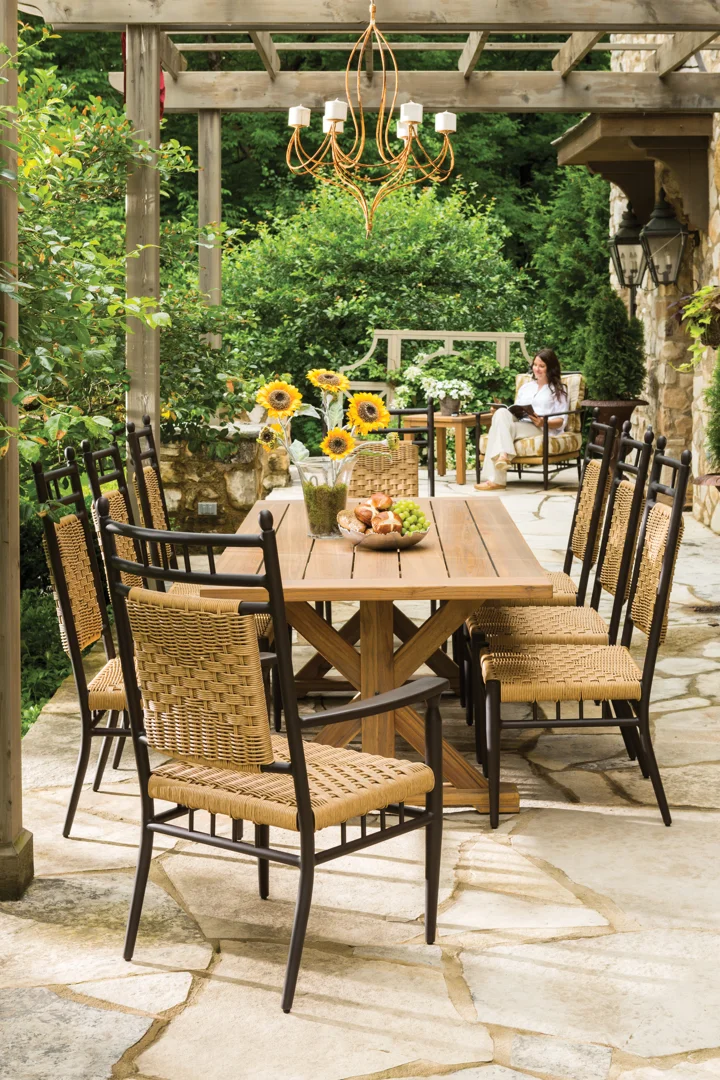
Yes, for occasional meals, if you keep it sheltered and bring it back inside afterward. To use a solid-wood table outdoors for longer, clean and dry it, seal all exposed surfaces with an exterior-rated finish, and let the finish cure before use. Keep the legs off wet ground and use a breathable cover. Avoid putting MDF or veneered tables outside; moisture can make them swell or peel.
Sealing helps, but it does not make an indoor table weatherproof. Rain, sun, and damp air can still damage its finish and joints, so plan for regular checks and dry storage.
I'm Nino Russo Alesi, founder of Rattan Imports, where I help customers choose furniture for the spaces they want to enjoy. My hospitality and customer service experience has taught me to start with the practical question behind putting a dining room table outside: how will you protect it when the weather changes?
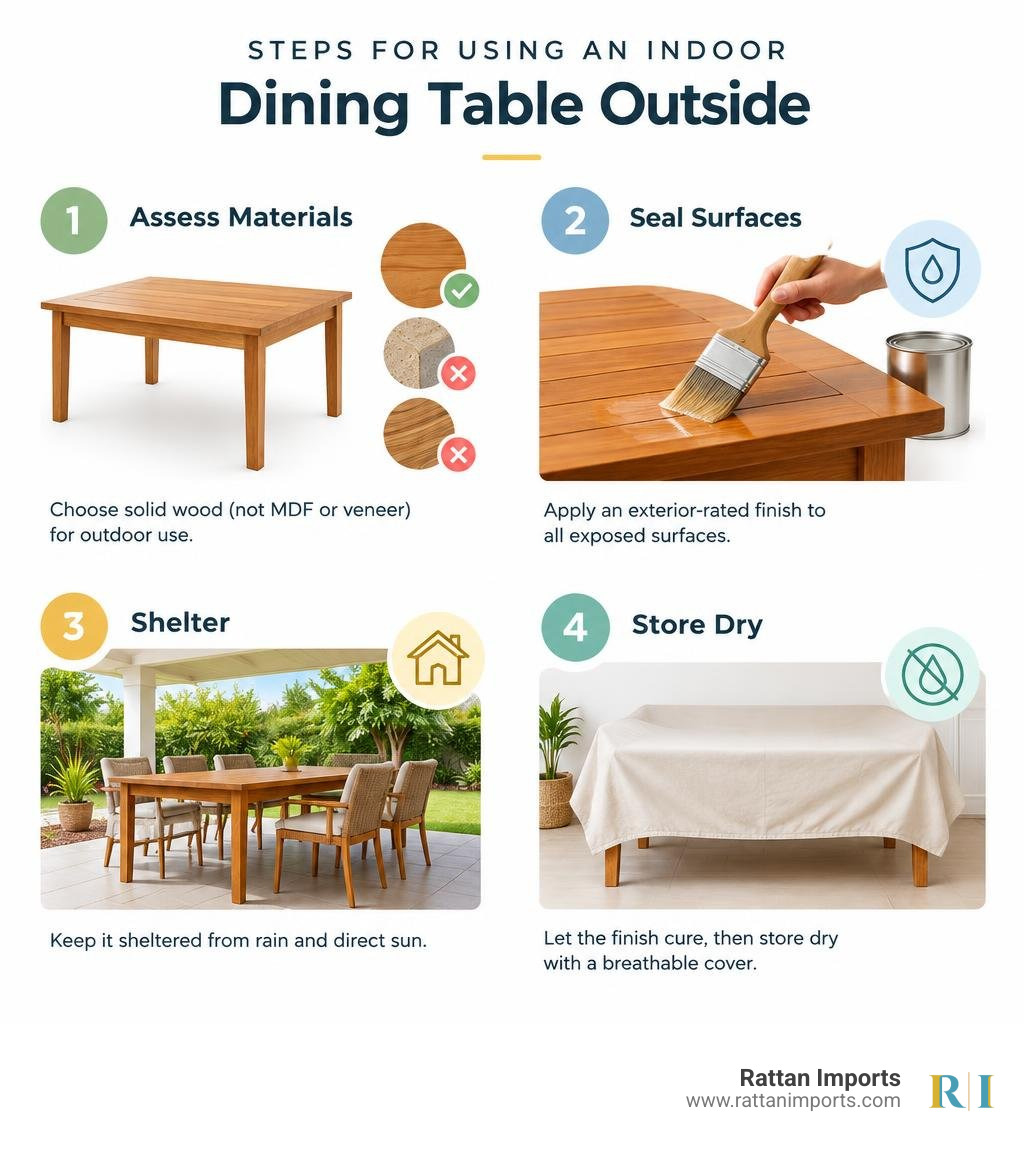
Dining room table outside word guide:
Indoor vs. Outdoor Construction: Why Putting a Dining Room Table Outside Requires Preparation
Al fresco living is more popular than ever. Outdoor dining furniture sales jumped by 28% in recent years as homeowners expanded their living footprints, and nearly 40% of Americans prefer dining outside whenever the weather cooperates. Adding a stylish dining area to an exterior patio can even increase a home’s resale value by up to 5%.
However, moving a standard dining piece straight to the deck isn't as simple as carrying it through the patio doors. Indoor furniture is built for a climate-controlled world where temperatures rarely fluctuate more than a few degrees and humidity stays steady. Outdoor furniture, by contrast, is built to survive heavy rainfall, blistering UV exposure, and freezing winter cycles. According to the U.S. Forest Products Laboratory, wood exposed to repeated wetting and drying cycles can lose structural integrity faster than wood kept in stable indoor conditions.
Before transitioning an indoor piece, it helps to understand how construction methods differ across environments:
| Feature | Indoor Dining Table | Purpose-Built Outdoor Dining Table |
|---|---|---|
| Primary Wood Species | Oak, Pine, Maple, Walnut, Cherry | Teak, Cedar, Shorea, Ipe, Cypress, Treated Acacia |
| Joinery Adhesives | Standard PVA wood glue (water-soluble) | Polyurethane, Resorcinol, or Type I waterproof glue |
| Hardware | Standard zinc-plated or untreated steel | Stainless steel (304/316 grade) or brass |
| Finish Chemistry | Lacquer, shellac, indoor nitrocellulose poly | Marine spar varnish, penetrating exterior oils, UV sealers |
| Allowance for Expansion | Minimal gaps; tight solid glue-ups | Slatted tabletops to drain water and allow wood movement |
When exploring our outdoor dining tables ultimate guide, you will notice that purpose-built tables utilize open slats. Without gaps between planks, water pools across the surface, soaking into microscopic finish imperfections and accelerating decay.
Structural Vulnerabilities of Indoor Furniture Exposed to Weather
When moisture penetrates indoor timber, the wood fibers expand unevenly. Because indoor tables feature wide, solid slab tops glued tightly together, this expansion generates tremendous hydraulic pressure within the wood. The result is severe warping, cupping, and splitting along the grain lines.
Furthermore, standard interior wood glues break down quickly when exposed to moisture. Rain dissolves water-soluble adhesives inside dowel joints, mortise-and-tenon connections, and aprons, causing the table's structural framework to wobble and collapse. Beneath the surface, interior zinc or mild steel screws begin to rust within weeks, leaving dark tannin stains across the timber while steadily losing their structural load capacity.
Assessing Your Dining Room Table Outside for Outdoor Conversion
Not every indoor table is a good candidate for outdoor conversion. Evaluating the base materials before investing your weekend into sanding and sealing will save you significant frustration.
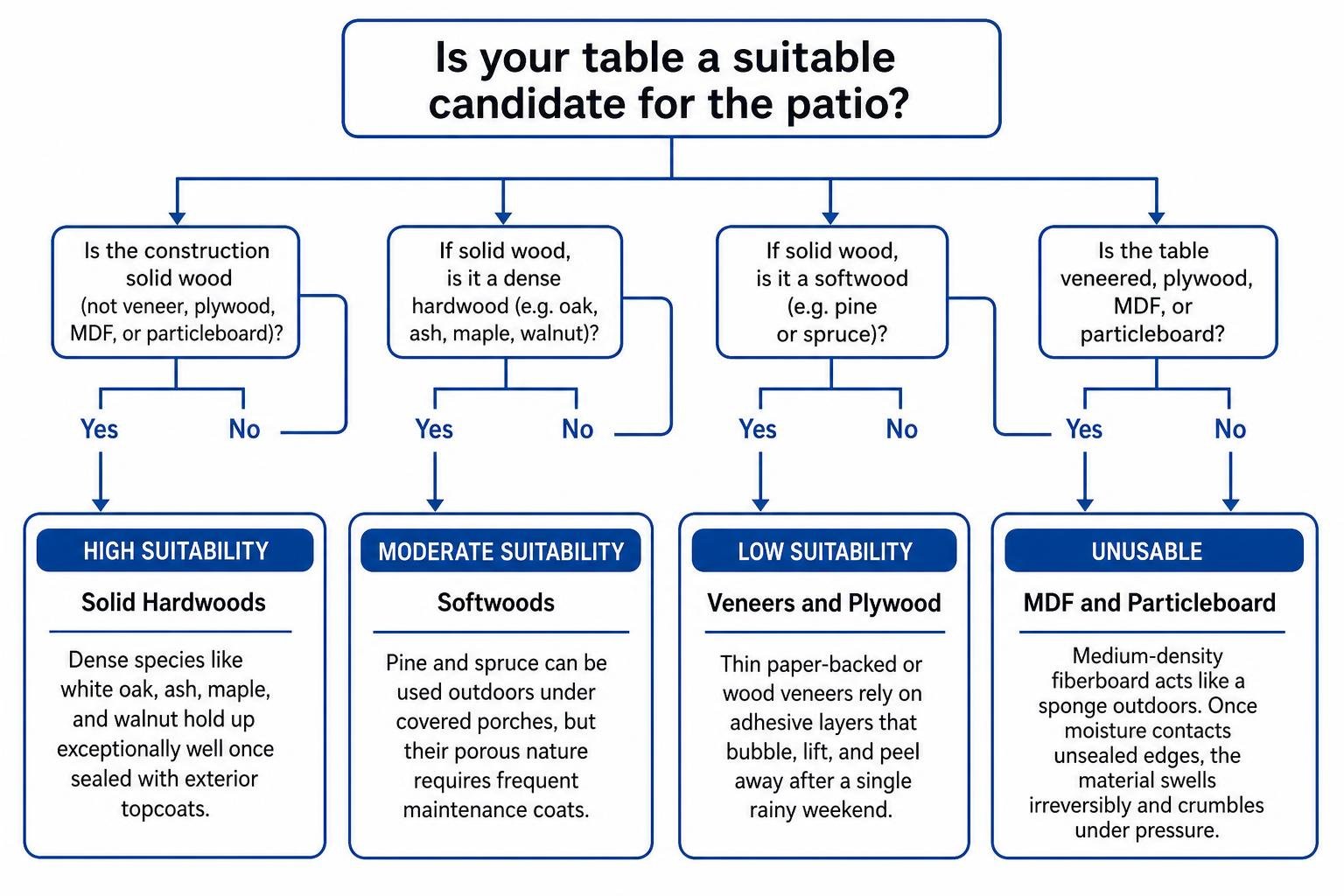
- Solid Hardwoods (High Suitability): Dense species like white oak, ash, maple, and walnut hold up exceptionally well once sealed with exterior topcoats.
- Softwoods (Moderate Suitability): Pine and spruce can be used outdoors under covered porches, but their porous nature requires frequent maintenance coats.
- Veneers and Plywood (Low Suitability): Thin paper-backed or wood veneers rely on adhesive layers that bubble, lift, and peel away after a single rainy weekend.
- MDF and Particleboard (Unusable): Medium-density fiberboard acts like a sponge outdoors. Once moisture contacts unsealed edges, the material swells irreversibly and crumbles under pressure.
How to Weatherproof an Indoor Dining Table for Outdoor Patio Living
Successfully repurposing an indoor table requires creating an elastic, water-impermeable barrier that shields the wood fibers from UV rays and sudden humidity spikes.
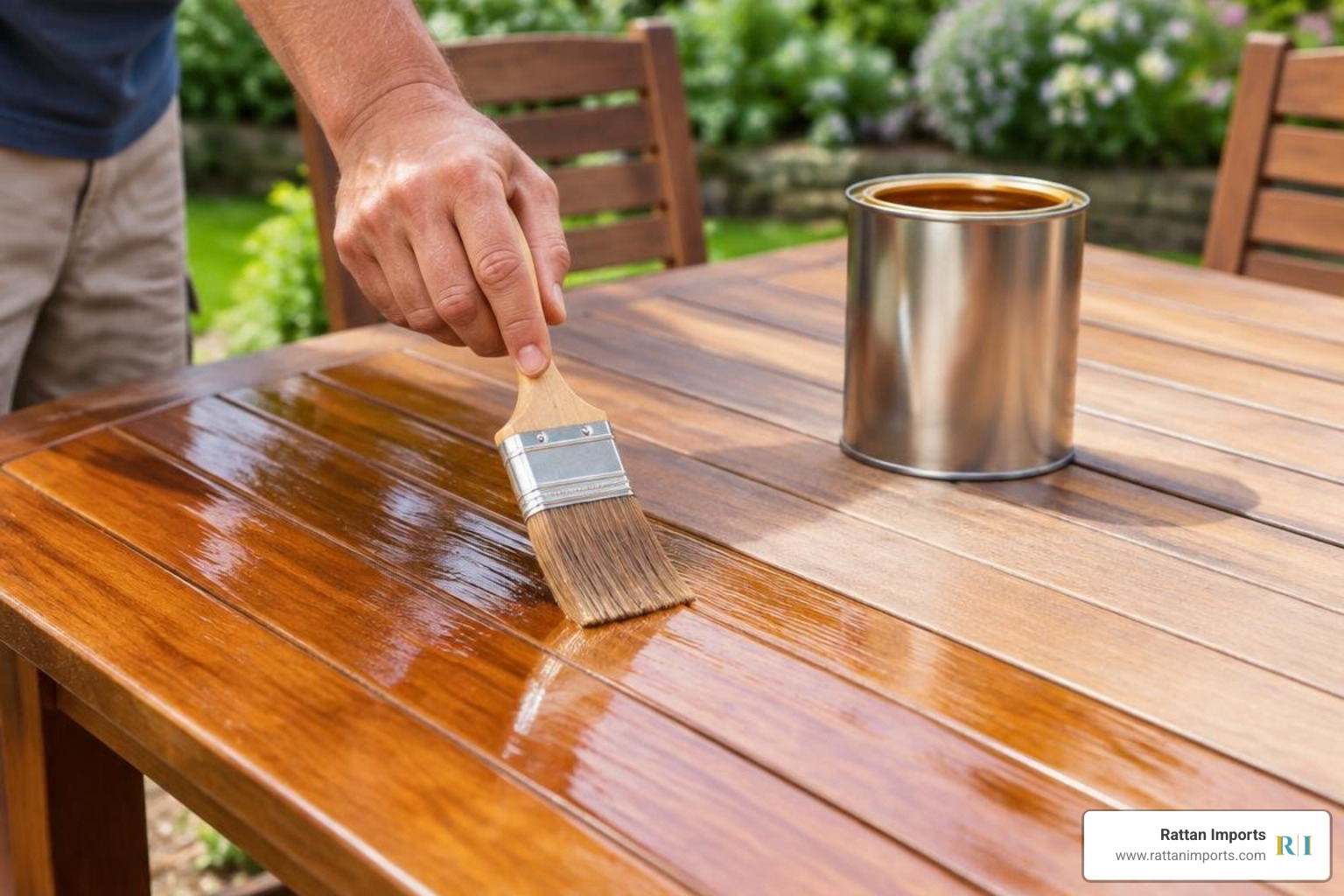
Proper technique during every step is essential to ensure long-term durability, just as it is when maintaining items featured in our outdoor rattan tables ultimate guide.
Step 1: Stripping Old Finishes and Deep Cleaning
Before applying any exterior-grade finish, you must completely remove the factory indoor lacquer, wax, or paint. Exterior finishes cannot bond properly to interior clear coats.
- Apply a Chemical Stripper: Brush a citrus-based or solvent-based finish remover evenly across the table top, legs, and apron. Allow the active agents to blister the old lacquer according to the manufacturer's dwell time.
- Scrape the Residue: Use a flexible putty knife with rounded corners to push off softened finish without gouging the raw wood grain.
-
Sand with an Orbital Sander: Progress methodically through sandpaper grits:
- Start with 80-grit to remove stubborn finish residues and flatten surface imperfections.
- Move to 120-grit to smooth scratch patterns left by the coarser paper.
- Finish with 150-grit to 180-grit for optimal finish absorption. (Avoid sanding beyond 220-grit, as overly polished wood pores cannot absorb protective penetrating oils).
- Extract Dust and Degrease: Vacuum all surfaces thoroughly, then wipe the raw timber down with mineral spirits or denatured alcohol to lift residual dust from the pores.
Step 2: Applying Marine-Grade Sealants and Exterior Topcoats
Outdoor sealants need flexibility to accommodate seasonal expansion and contraction while blocking ultraviolet sunlight.
- Select a Spar Varnish or Urethane: Marine-grade spar varnishes contain high ratios of natural drying oils (such as tung or linseed oil) combined with UV absorbers. This chemistry prevents the finish from turning brittle in freezing cold or blistering heat.
- Thin the Base Coat: Thin your initial coat by 20% using mineral spirits. This low-viscosity mix penetrates deep into the dry wood cells rather than merely sitting on the surface.
- Build Protective Layers: Apply 3 to 4 full-strength coats using a high-quality natural bristle brush. Brush smoothly along the direction of the wood grain, avoiding back-brushing once the finish begins to set.
- Sand Lightly Between Applications: Allow each coat to dry for 24 hours. Lightly hand-sand between layers with 320-grit paper to eliminate airborne dust nibs and provide mechanical adhesion for the next coat.
- Respect Full Curing Times: While spar varnish feels dry to the touch within 8 hours, it takes 14 to 21 days to reach full chemical hardness. Keep the table indoors or completely sheltered during this curing window.
Step 3: Sealing End Grain and Table Leg Bases
The end grain—found at the bottom of the table legs and the cut ends of the tabletop—absorbs water up to 250 times faster than face grain due to open capillary wood tubes.
To eliminate capillary wicking from damp patio pavers:
- Turn the table upside down to expose all leg bottoms.
- Sand the end grain smooth with 120-grit paper.
- Apply two saturating coats of clear, two-part epoxy resin or an exterior end-grain sealer directly into the wood pores. Let it soak in until the wood stops absorbing liquid.
- Once the epoxy cures completely, install heavy-duty screw-in rubber feet or nylon glides. These create a physical 1/4-inch air gap between your timber and standing patio puddles.
5 Critical Waterproofing Mistakes Homeowners Must Avoid
Converting indoor furniture requires avoiding several common DIY pitfalls that lead to wood rot, clouded clear coats, and structural failure.
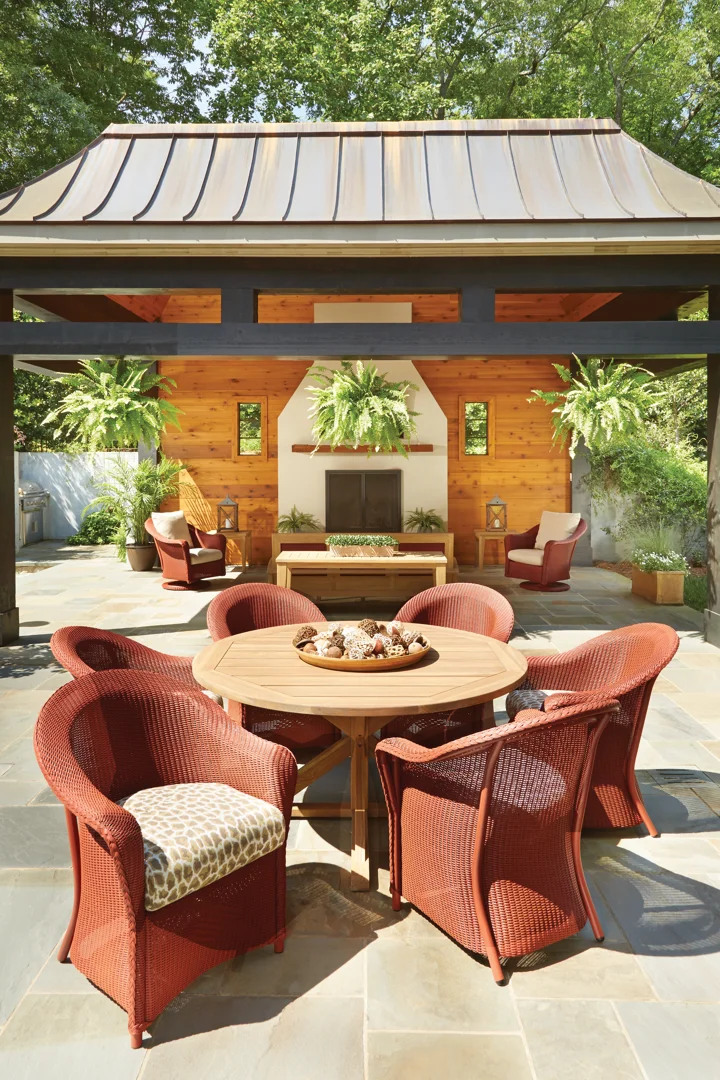
Consulting our outdoor dining sets complete guide will give you a clear perspective on how engineered outdoor furniture avoids these issues naturally.
Mistake 1: Using Standard Indoor Clear Coats Outdoors
Indoor polyurethanes, varnishes, and lacquers are engineered to dry extremely hard and scratch-resistant. However, because they lack UV blockers, direct sunlight breaks down their molecular bonds within months. The finish turns yellow, develops fine surface checks, and eventually flakes off in sheets, allowing rain straight into the timber. Always confirm that your finish container explicitly states "Exterior Spar Urethane" or "Marine Grade."
Mistake 2: Neglecting the Underside and Fasteners
Many DIYers meticulously finish the tabletop while leaving the bottom side bare. When atmospheric humidity rises, the unprotected underside absorbs ambient moisture while the sealed top surface stays dry. This moisture imbalance causes the tabletop to cup, warp, or split down glue lines.
Always coat every hidden edge, apron back, and underside with the same number of protective coats applied to the top. Replace factory steel corner brackets and table joinery screws with marine-grade 304 or 316 stainless steel fasteners to prevent internal rust staining.
Mistake 3: Using Non-Breathable Plastic Tarps
Covering an outdoor wood table with a cheap, non-breathable vinyl or polyethylene tarp creates a humid greenhouse underneath. Ground moisture evaporates, rises under the tarp, and becomes trapped against the wood surface. Within weeks, you will see black mold, mildew, and cloudy white blushing across your clear coat.
Instead, select heavy-duty, solution-dyed polyester covers designed with built-in mesh ventilation ports to promote constant airflow while deflecting falling rain.
Long-Term Maintenance and Seasonal Protection Strategies
Over 67% of homeowners with outdoor dining areas use their tables at least weekly throughout the warmer months. Maintaining your outdoor space ensures your repurposed table remains clean, functional, and visually inviting.
- Routine Washing: Clean weekly with a soft sponge, warm water, and a few drops of pH-neutral dish soap. Avoid pressure washers, scouring pads, and harsh bleach-based detergents, which strip away protective UV clear coats.
- Shaded Positioning: When arranging your patio layout—especially when coordinating accessories as shown in our guide on how to decorate an outdoor dining table—try to place your converted table under a covered pergola, awning, or porch roof to minimize direct midday UV exposure.
Maintaining a Repurposed Dining Room Table Outside Across Seasons
Wood sealers degrade slowly under sunlight and rain. Conduct an annual "water droplet test" every spring: flick a few drops of water onto the center of the tabletop.
- If the water beads tightly into round droplets, your topcoat remains intact.
- If the water flattens or darkens the wood grain within three minutes, moisture is penetrating the sealant.
When water begins soaking into the wood, lightly scuff-sand the tabletop with 220-grit sandpaper and apply a fresh renewal coat of exterior spar varnish to restore UV resilience.
Off-Season Storage and Shelter Best Practices
Winter freeze-thaw cycles are exceptionally harsh on converted indoor tables. When water enters tiny finish cracks and freezes, it expands by roughly 9%, shattering the finish and opening wide cracks in the timber.
- Winter Storage: Move your dining table into a dry shed, basement, or garage during sub-freezing months.
- Elevate Table Bases: If storage space is limited and the table must stay outside under a breathable cover, place dense composite blocks or rubber pads under each leg to keep the wood completely elevated above snow accumulations.
Frequently Asked Questions About Using Indoor Tables Outdoors
Can you leave a solid wood indoor dining table outside permanently?
Even when thoroughly sealed with marine varnish, an indoor dining table should not remain fully exposed to rain, snow, and direct sunlight 365 days a year. Solid wood indoor tables lack slatted expansion gaps and feature water-sensitive adhesives. They perform best when positioned on a covered porch, protected by a breathable furniture cover when idle, and sheltered indoors during severe winter weather.
What is the most durable sealant for outdoor table conversions?
Marine-grade spar varnish formulated with phenolic resins, tung oil, and concentrated UV blockers offers the best balance of flexibility and weather resistance. Unlike rigid interior clear coats, spar varnish flexes naturally alongside shifting wood grain without cracking or peeling under broad outdoor temperature swings.
How do you prevent table legs from rotting on wet patio pavers?
End grain at the bottom of table legs draws moisture upward from damp stone or concrete like a stack of tiny straws. To stop this capillary action, coat the bottom inch of each leg with clear two-part epoxy resin, allow it to cure, and screw heavy-duty rubber or nylon furniture glides into the base so the wood never rests directly on wet patio surfaces.
Conclusion
Repurposing a solid indoor dining table for your patio is a rewarding DIY project that creates a wonderful setting for open-air meals and family gatherings. By understanding the structural differences between indoor and exterior furniture, stripping away old finishes, sealing all surfaces with flexible marine-grade spar urethane, and isolating leg end-grain from ground moisture, you can protect your favorite wooden table for seasons to come.
If you decide that recurring sanding, sealing, and weatherproofing isn't how you want to spend your weekends, consider upgrading to purpose-built outdoor furniture engineered specifically for harsh exterior elements. Explore our curated outdoor dining collection at Rattan Imports. Sourced from Southeast Asia and assembled right here in the U.S., our collections combine handcrafted style with lasting all-weather durability. Enjoy free mainland shipping alongside our trusted price guarantee, and let us help you create the outdoor living space of your dreams.