




Why Leather Dining Chairs Belong at Every Well-Designed Table

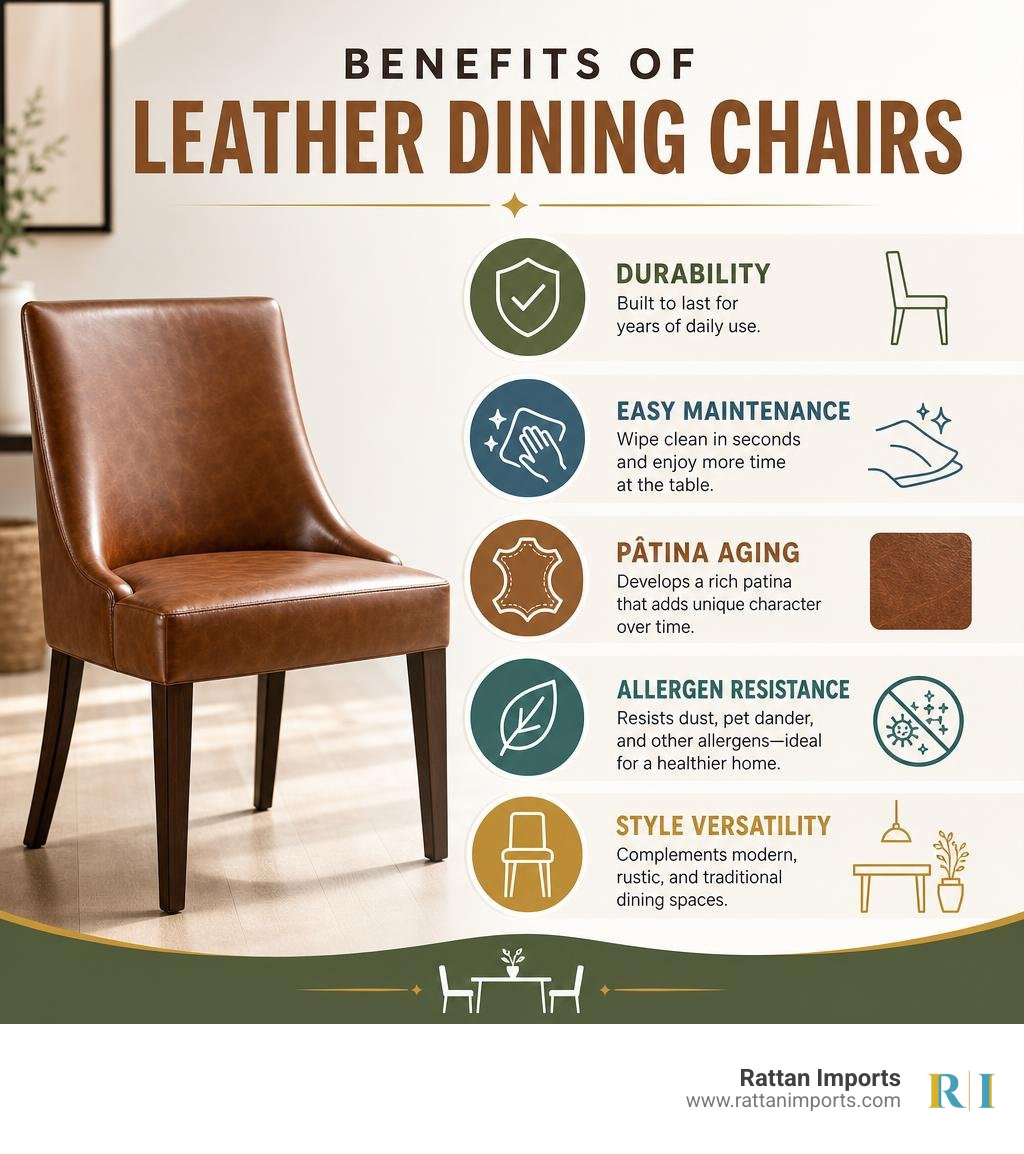
Leather dining chairs are one of the most searched seating options for homeowners and designers who want to combine durability with a polished, upscale look.
Here is a quick overview to help you decide fast:
| What You Want | Why Leather Delivers |
|---|---|
| Long lifespan | High-grade leather lasts decades with basic care |
| Easy cleaning | Wipe spills quickly — no deep absorption like fabric |
| Timeless style | Works in modern, rustic, and traditional interiors |
| Better with age | Develops a natural patina that adds character over time |
| Allergen resistance | Does not trap dust or pet dander like fabric |
The trade-off? Leather costs more upfront and needs occasional conditioning. But for most buyers, the long-term value far outweighs the initial investment.
Full-grain and top-grain leather are the two best choices for dining chairs — they resist cracking, handle daily use well, and age beautifully. Prices typically range from around $300 for entry-level options up to $4,000+ for designer or artisan pieces.
I'm Nino Russo Alesi, founder of Rattan Imports, and my background in hotel hospitality gave me a front-row seat to how leather dining chairs perform under real, daily pressure in high-expectation environments. That experience shapes every product recommendation we make for clients who want seating that is both beautiful and built to last.
Leather dining chairs vocab to learn:
The Ultimate Guide to Choosing Leather Dining Chairs
When we gather around the table, we are not just sitting down to consume calories; we are creating a space for conversation, laughter, and lingering long after the dessert plates are cleared. If your current chairs make your guests want to eat and run, it might be time for an upgrade. Choosing leather dining chairs is a declaration that you value both comfort and long-term durability.
In high-traffic households, the dining room is often the hardest-working space in the home. From morning homework sessions and remote work calls to messy family dinners and late-night board games, your chairs endure a lot of physical stress. Fabric chairs, while cozy, are magnets for red wine, spaghetti sauce, and pet hair. Leather dining chairs, on the other hand, offer an incredibly resilient alternative. High-grade leather naturally resists tearing, punctures, and cracking, making it a stellar performer under daily pressure.
To understand why leather has remained a premier seating material for centuries, it helps to compare it directly to fabric alternatives:
| Feature | Premium Leather Dining Chairs | Standard Fabric Upholstered Chairs |
|---|---|---|
| Average Lifespan | Decades (often 15–30+ years) | 5–10 years (prone to wearing thin) |
| Spill Resistance | Excellent (liquids bead up if treated) | Poor (absorbs liquids and stains quickly) |
| Allergen Profile | Hypoallergenic (does not trap dust/dander) | Traps dust mites, pet dander, and pollen |
| Maintenance | Simple wipe-down; occasional conditioning | Requires vacuuming, steam cleaning, or washing |
| Tactile Comfort | Conforms to your body; adapts to body heat | Soft initially, but foam can degrade or sag |
| Esthetic Evolution | Develops a rich, beautiful patina over time | Fades, pilling occurs, and looks worn out |
Market demand reflects this preference. Across major home retailers, you will easily find over 280 distinct results for leather seating options, with popular individual models pulling in upwards of 995 positive customer reviews. The consensus is clear: while the upfront cost of premium leather (which can range from $1,375 to over $2,325 for custom artisan builds) is higher than fabric, the cost-per-use over its lifespan makes it an exceptional long-term investment.
Understanding Leather Grades and Durability
Not all leather is created equal. If you have ever seen a cheap leather chair peel like a sunburned tourist after a few years, you have experienced the disappointment of low-grade materials. To make an informed purchase in June 2026, you need to understand the hierarchy of leather quality and how different finishes affect both wear resistance and patina development.
Full-Grain and Top-Grain Leather Dining Chairs
If you want heirloom-quality furniture that your grandchildren will fight over in a few decades, look no further than full-grain leather. This is the highest quality leather available. It uses the entire, unblemished outer layer of the hide, retaining all its natural grain, strength, and unique markings. Because the surface is not sanded or buffed, full-grain leather is incredibly tough. It does not wear out; instead, it wears in, developing a gorgeous, lustrous patina that reflects its history and usage.
Just below full-grain is top-grain leather. To create top-grain leather, the very top layer of the hide is lightly sanded to remove natural imperfections. This makes the leather slightly thinner, more pliable, and more uniform in appearance than full-grain, while still retaining excellent durability. For high-traffic dining rooms, top-grain leather offers a fantastic balance of luxurious softness, resilience, and consistent color.
Aniline and Protected Leather Options
Once the grade of the hide is selected, the tanning and dyeing process determines how the leather handles real-world spills.
- Aniline Leather: This leather is dyed exclusively with soluble dyes, allowing the natural grain, scars, and growth marks of the hide to remain visible. Aniline leather (such as the premium Davos leather featured on the stunning Chiara Chair) has a velvety, organic tactile feel. However, because it lacks a heavy protective topcoat, it is highly sensitive to liquids and sunlight. It is best suited for formal dining rooms or households without toddlers and muddy pets.
- Semi-Aniline Leather: A happy medium. Semi-aniline leather is treated with a light, matching surface coating containing a small amount of pigment. This offers a bit of stain and spill resistance while still allowing the natural beauty of the leather hide to shine through.
- Pigmented (Protected) Leather: This leather is coated with a high-durability polymer barrier containing solid pigments. It is the most robust, uniform, and low-maintenance option. If you have children who treat the dining table like an art studio or pets that occasionally jump on the furniture, pigmented leather is your best friend. Spills sit on top of the protective barrier, giving you plenty of time to wipe them away.
Styling Premium Seating Across Different Interior Designs
One of the greatest design advantages of leather dining chairs is their chameleonic ability to fit into almost any design style. Whether your home is a sleek modern loft, a cozy rustic cabin, or a grand traditional manor, leather brings structure, warmth, and texture to the space.
Modern and Minimalist Leather Dining Chairs
In modern and minimalist spaces, leather chairs prevent the room from feeling cold or sterile. By pairing clean-lined leather seats with sleek metal frames or light Scandinavian wood, you introduce natural warmth without cluttering the visual field.
For open-plan kitchens and contemporary dining spaces, look for chairs that feature:
- Sleek Swivel Bases: Modern luxury chairs often feature hidden swivel mechanisms that automatically return to center, offering effortless movement and conversation flow.
- Cooler and Nuanced Tones: While warm browns are classic, contemporary spaces look incredible with cool grey, sage green, denim blue, or warm sand tones. These colors complement stone countertops, concrete floors, and minimalist metal fixtures beautifully.
- Minimalist Profiles: Low-profile backs, slender tapered legs, and integrated seat cushions keep the dining area feeling airy and spacious.
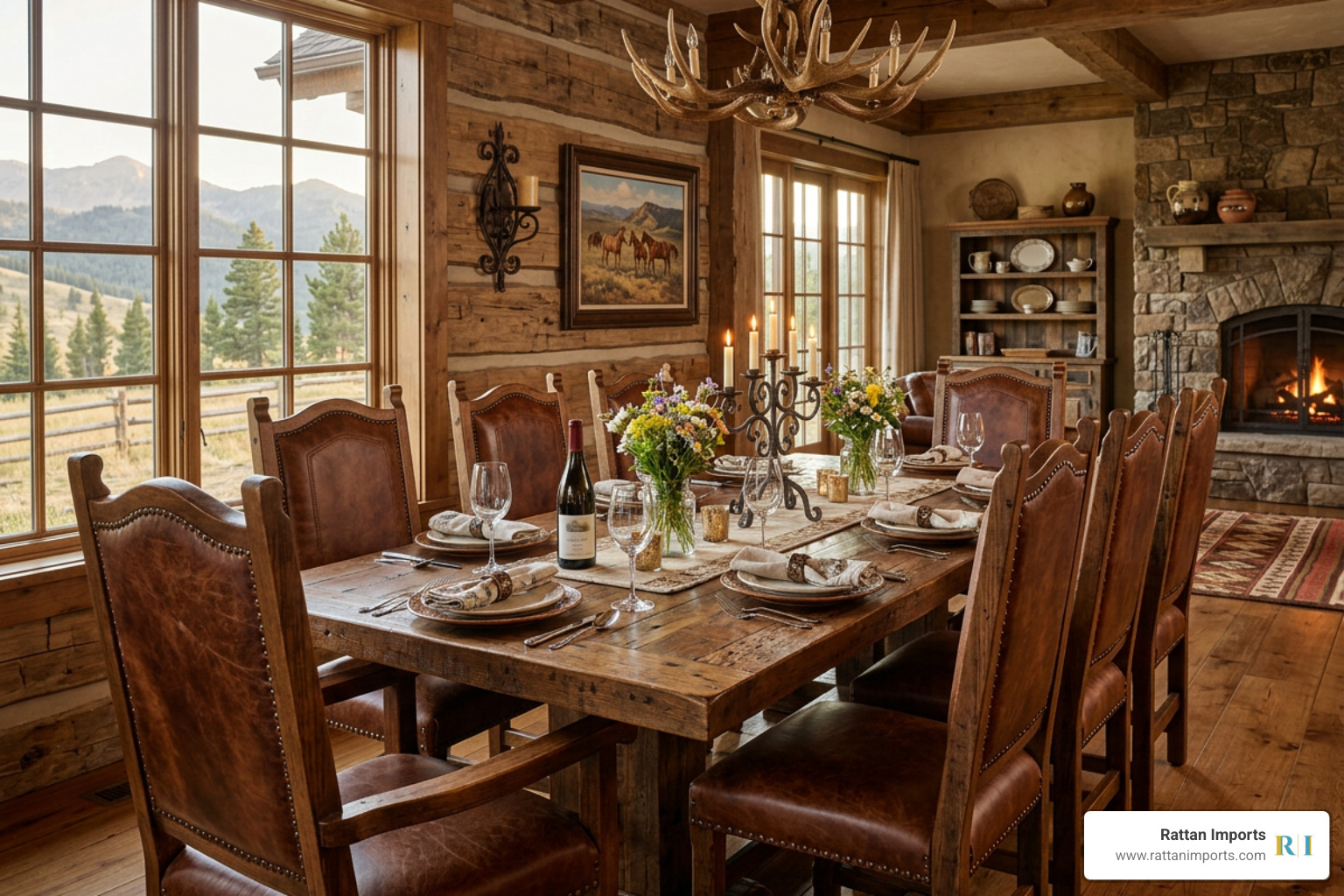
Traditional, Rustic, and Western Aesthetics
If your style leans more classic, rustic, or ranch-inspired, leather is the ultimate heritage material. It grounds the dining room with a sense of history, hospitality, and rugged elegance.
To capture this timeless character, consider chairs that showcase:
- Solid Wood Frames: Look for sturdy frames crafted from solid oak, alderwood, or reclaimed timber. High-quality construction, such as corner-blocked joinery and mortise-and-tenon joints, ensures the frame lasts as long as the leather itself.
- Artisan Details: Button tufting, diamond stitching, and hand-applied nailhead trim add depth and visual texture.
- Custom Textures: Many high-end rustic designs combine smooth top-grain leather with cowhide, embossed crocodile patterns, or hair-on-hide accents to create a bespoke, multi-textured masterpiece. Warm, rich camel, cognac, and dark chocolate tones work best here, echoing the natural landscape.
Essential Care and Maintenance for Leather Seating
We often hear clients ask: "Is leather too high-maintenance for a busy home?" The short answer is no! In fact, leather is far easier to maintain than fabric, provided you follow a few simple, proactive steps.
To keep your leather dining chairs looking spectacular for decades, establish this straightforward care routine:
- Weekly Dusting: Dust and microscopic grit can act like sandpaper on leather over time. Once a week, quickly wipe down your chairs with a clean, dry microfiber cloth. For tufted or stitched seats, use your vacuum’s soft brush attachment to clear out any crumbs from the seams.
- Immediate Spill Action: If a spill occurs, do not panic—and do not scrub! Grab a soft, damp cloth and gently blot the liquid. Never use harsh household chemical cleaners, soaps, or aerosols, as they can strip the protective finish and dry out the hide. For aniline leathers (like the Davos leather on the Chiara Chair), avoid water entirely; instead, vacuum with a soft brush and consult a specialist for stubborn marks.
- Conditioning Every 3 to 6 Months: Just like our skin, leather needs moisture to stay supple and resist cracking. Every few months, apply a high-quality leather conditioner using a soft cloth or sponge. This restores the natural oils, enhances the patina, and reinforces the protective barrier.
- Sun and Heat Protection: Direct sunlight and nearby heating vents are the natural enemies of leather. Over time, UV rays will fade the color, while dry heat will cause the leather to shrink and crack. Position your dining set away from direct window glare and heating radiators.
- Handling Pet Scratches: If your cat or dog leaves a light scratch, do not despair. For genuine top-grain or full-grain leather, you can often rub the scratch gently with a clean, warm finger. The natural warmth and oils from your skin will help redistribute the leather’s built-in oils, making the mark blend right into the natural patina.
Frequently Asked Questions
Is leather or fabric better for dining chairs?
It depends on your household priorities. Leather is superior for stain resistance, ease of cleaning, allergen control (it does not trap dust or pet dander), and sheer lifespan. Fabric is generally less expensive upfront, offers a wider variety of woven textures, and does not experience temperature sensitivity (feeling cool in winter or warm in summer). However, fabric stains easily, holds onto odors, and wears out much faster than leather.
How do you protect leather chairs from pets and children?
To child-proof and pet-proof your investment, opt for top-grain pigmented leather rather than delicate aniline leather. Pigmented leather has a robust protective coating that repels spills, sticky fingers, and light claws. Additionally, look for chairs constructed with high-density foam cushions and sturdy webbed seat bases, which bounce back quickly and resist sagging even when kids treat them like trampolines.
How long do high-quality leather chairs last?
When crafted with solid wood frames, proper joinery, and premium full-grain or top-grain leather, these chairs can easily last for 30 years or more. Unlike fabric, which thin out and look dated, high-quality leather ages gracefully, growing softer, more comfortable, and more visually interesting as the years go by.
Conclusion
Investing in leather dining chairs is an investment in your home’s daily comfort, style, and long-term durability. By choosing the right leather grade for your lifestyle and giving it a little basic love and care, your dining chairs will remain a beautiful, welcoming centerpiece for countless meals and memories to come.
At Rattan Imports, we specialize in premium home décor and furniture, sourced from the finest artisans in Southeast Asia and carefully assembled right here in the United States. We are dedicated to providing an exceptional customer experience, which is why we offer free shipping across the U.S. mainland, comprehensive identity theft protection, and our ironclad Price Guarantee.
Ready to elevate your dining space? Explore Rattan Imports to find the perfect seating solutions for your home. For more expert tips, Read our Ultimate Dining Chair Guide, or dive straight into our curated collections to Browse Spice Islands Collection and Browse South Sea Rattan Collection today!