



Finding the Right Dining Room Chair Height

Standard dining room chair height is 17 to 19 inches from the floor to the top of the seat, with 18 inches being a common choice. For a table that is 28 to 30 inches tall, measure from the floor to the underside of the tabletop or apron. Choose a seat height that leaves about 10 to 12 inches between the seat and that lowest edge.
I’m Nino Russo Alesi, founder of Rattan Imports. My years in hospitality and my work helping customers choose furniture have taught me to check dining room chair height against the actual table, not just a standard size.
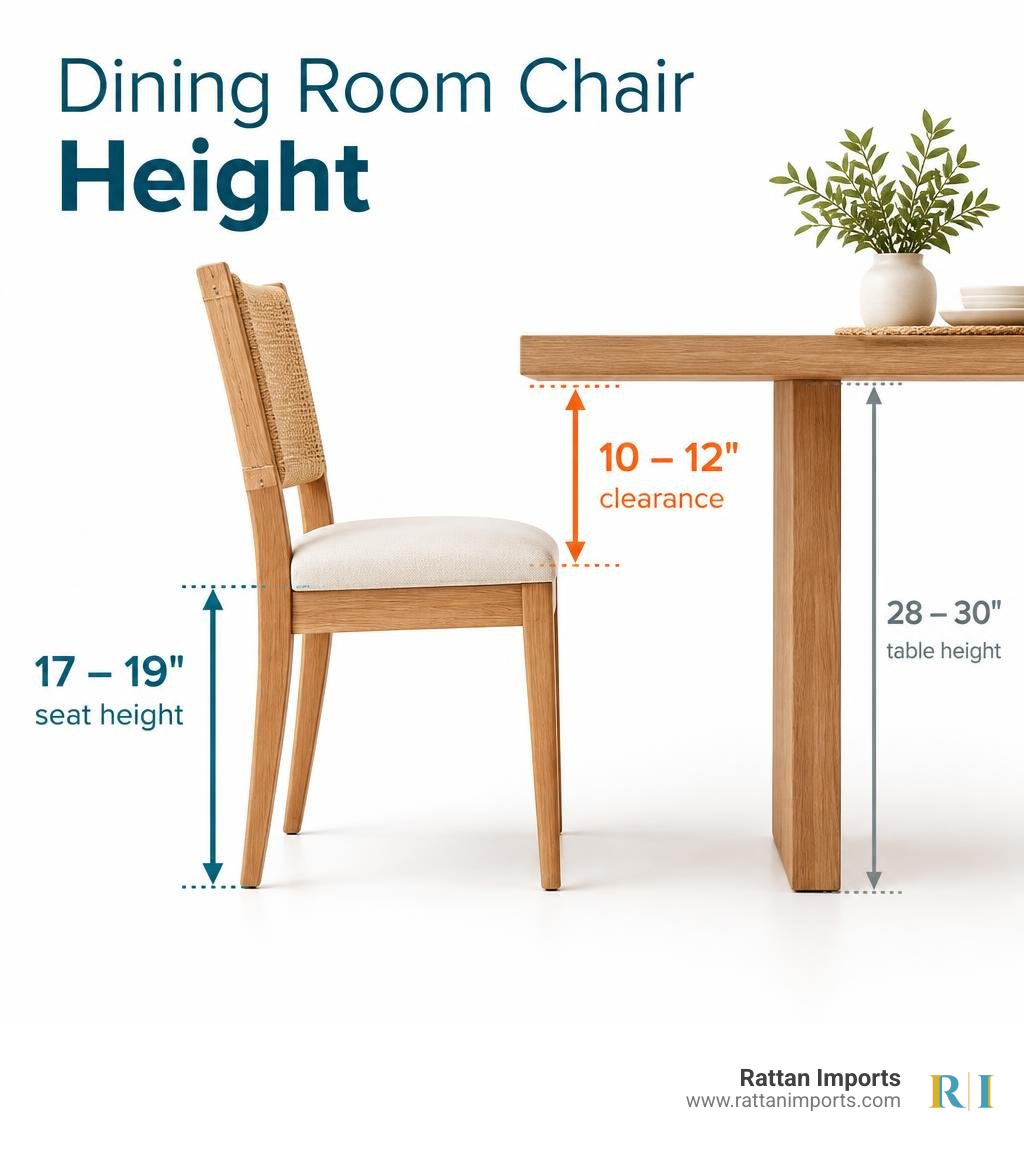
Dining room chair height terms to know:
Standard Dining Room Chair Height and Clearance Guidelines
When setting up an inviting dining space, the relationship between your tabletop and seat height determines everything from physical comfort to how long guests linger over dessert. If your chairs sit too low, diners feel like toddlers reaching up toward their plates. If they sit too high, your guests end up trapped, crossing their legs into solid timber or decorative framing.
The industry benchmark for standard dining tables sits right between 28 and 30 inches from the floor to the top surface. To accompany these tables, standard dining chairs feature a seat height ranging between 17 and 19 inches, with 18 inches representing the gold standard across residential and commercial design.
The most critical measurement is not the table height itself, but the vertical clearance gap. For optimal legroom and effortless posture, you must preserve a 10 to 12-inch gap between the top of the chair seat and the underside of the table.
Where many homeowners run into trouble is overlooking the table apron—the structural wooden frame directly beneath the tabletop. An apron hanging 2 to 3 inches below the surface lowers the available clearance significantly. If your table stands 30 inches high but features a 3-inch apron, your clearance measurement begins at 27 inches, not 30 inches.
| Dining Setting Type | Table Height Range | Chair / Stool Seat Height | Recommended Vertical Clearance |
|---|---|---|---|
| Standard Dining | 28" – 30" | 17" – 19" (avg. 18") | 10" – 12" to table underside |
| Counter Height | 34" – 36" | 24" – 26" | 10" – 12" to counter underside |
| Bar Height | 40" – 42" | 28" – 30" | 10" – 12" to bar underside |
| Extra-Tall / Pub | 44" – 47" | 34" – 40" | 10" – 12" to table underside |
How to Measure for the Ideal Dining Room Chair Height
Finding the right measurements before buying new seating prevents costly returns and awkward meals. Follow this step-by-step measuring sequence:
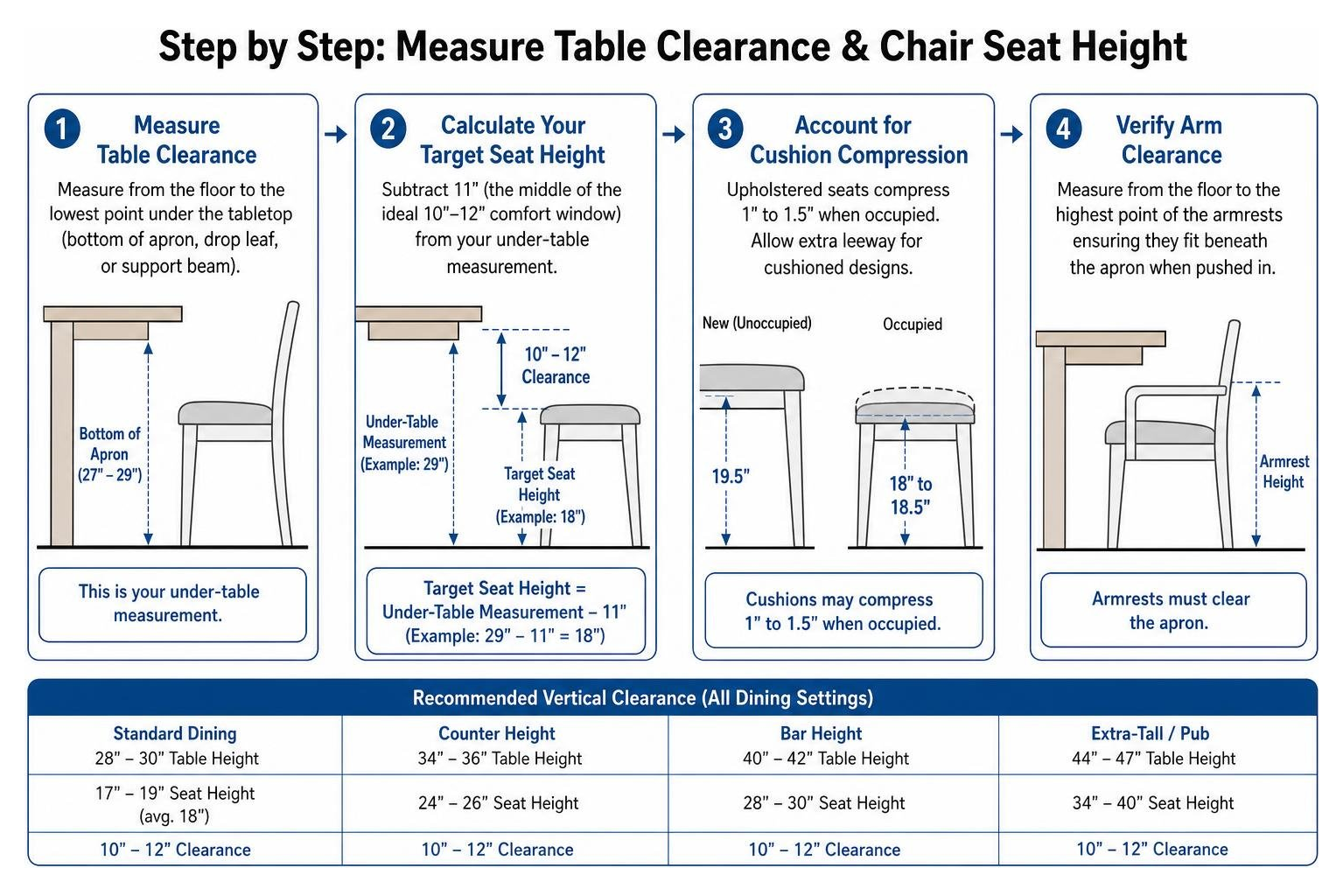
- Measure Table Clearance: Extend a tape measure from your finished flooring up to the lowest point under your tabletop. If the table has an apron, drop leaf, or support beam, measure directly to the bottom edge of that component.
- Calculate Your Target Seat Height: Subtract 11 inches (the middle of the ideal 10 to 12-inch comfort window) from your under-table measurement. For example, if your table underside sits at 29 inches, your target seat height is 18 inches.
- Account for Cushion Compression: Upholstered seats filled with high-resilience foam or plush batting compress under body weight. A brand-new upholstered chair measuring 19.5 inches when empty will often settle down 1 to 1.5 inches when occupied. Measure solid wood and rattan chairs at their rigid top plane, but allow a little extra leeway for cushioned designs.
- Verify Arm Clearance: If you prefer armed chairs, measure from the floor to the highest crest of the armrests to ensure they glide cleanly beneath the apron when pushed in.
Standard vs Counter vs Bar: Dining Room Chair Height Variations
Modern homes often incorporate multiple dining zones, including casual kitchen peninsulas, freestanding kitchen islands, and dedicated dining rooms. Knowing the dimensional differences between standard, counter, and bar settings ensures everyone sits at the appropriate ergonomic elevation.
Counter-height tables and kitchen islands sit between 34 and 36 inches off the ground. Pairing them with standard 18-inch chairs will leave your chin hovering near the plate rim. Instead, counter-height seating requires a seat height of 24 to 26 inches. This height creates an open, modern atmosphere and provides a seamless transition between food preparation and casual dining.
Bar-height tables, popular for entertaining spaces and pub-style rooms, stand between 40 and 42 inches high. These arrangements require stools or chairs with seat heights of 28 to 30 inches. Reviewing our guide on bar chair height will help you pair taller bar configurations with matching footrests and sturdy bases for secure, balanced seating.
Chair Dimensions: Seat Depth, Backrest Height, and Arm Clearance
Getting the seat height right is half the battle; the rest of the chair’s proportions dictate how comfortable your guests remain throughout a multi-course dinner.
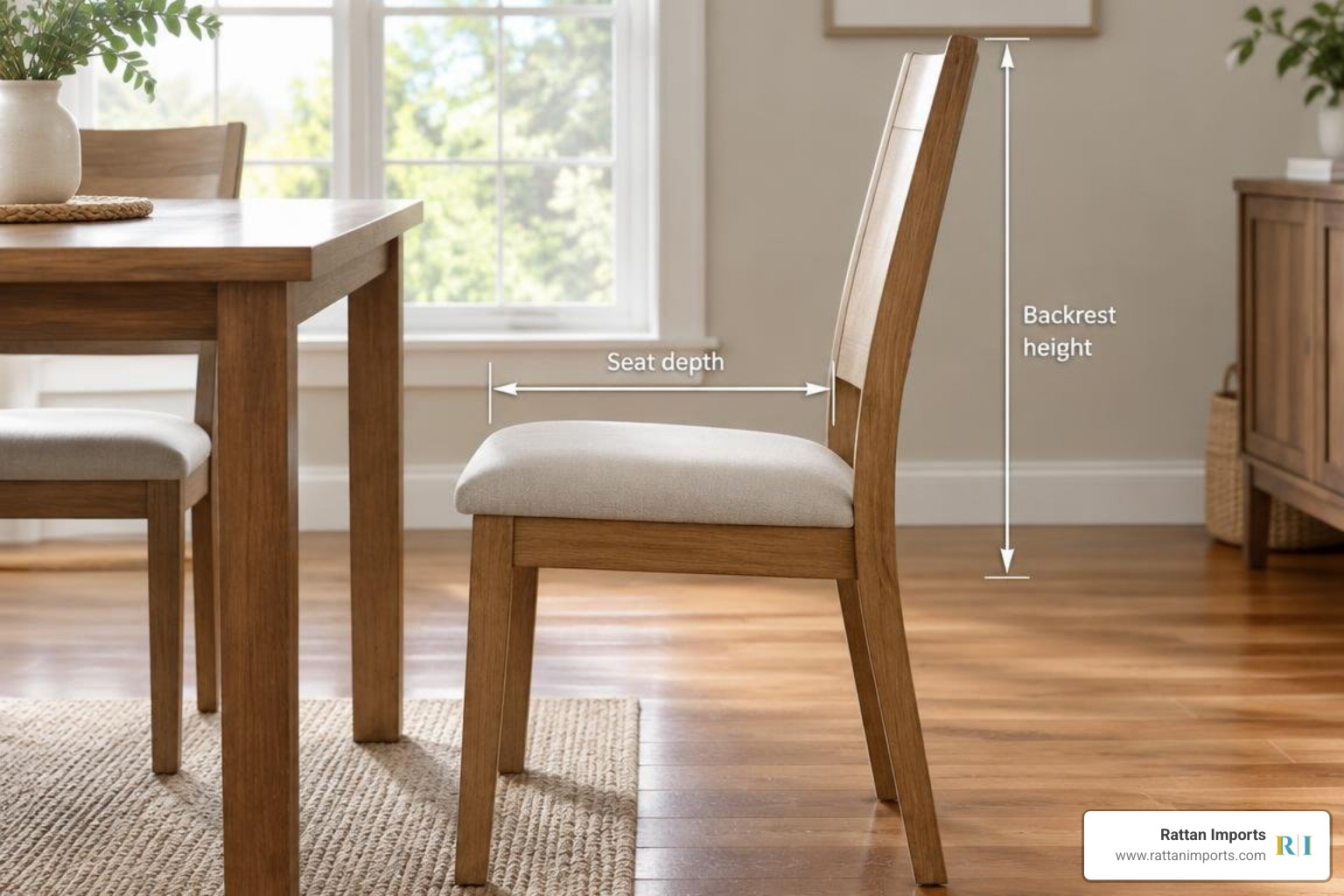
Seat depth—the distance from the front edge of the seat cushion to the backrest—typically spans 16 to 19 inches. A shallower seat depth of 16 to 17 inches provides better lumbar contact for shorter individuals and children, keeping their feet firmly supported. Deeper seats spanning 18 to 19 inches cater well to taller frames by supporting the full length of the thighs without cutting off circulation behind the knees. Learn more about choosing balanced furniture proportions in How to Choose Chairs for Your Dining Table.
Chair backrest height influences the room's visual scale. As a styling rule, the top rail of the chair back should extend at least 2 inches above the tabletop surface to create a pleasing silhouette. Total chair back heights generally sit between 32 and 36 inches off the floor. Lower-profile backrests keep open-concept rooms feeling breezy and uncluttered, whereas high-back designs bring structure and formal elegance to dedicated dining rooms.
Incorporating Armchairs and Sizing Table Perimeter Clearance
Armchairs introduce luxurious comfort to dining spaces, but their wider footprint requires careful planning. A standard armless side chair measures between 17 and 20 inches wide, whereas a dining armchair spans 25 to 27 inches wide.
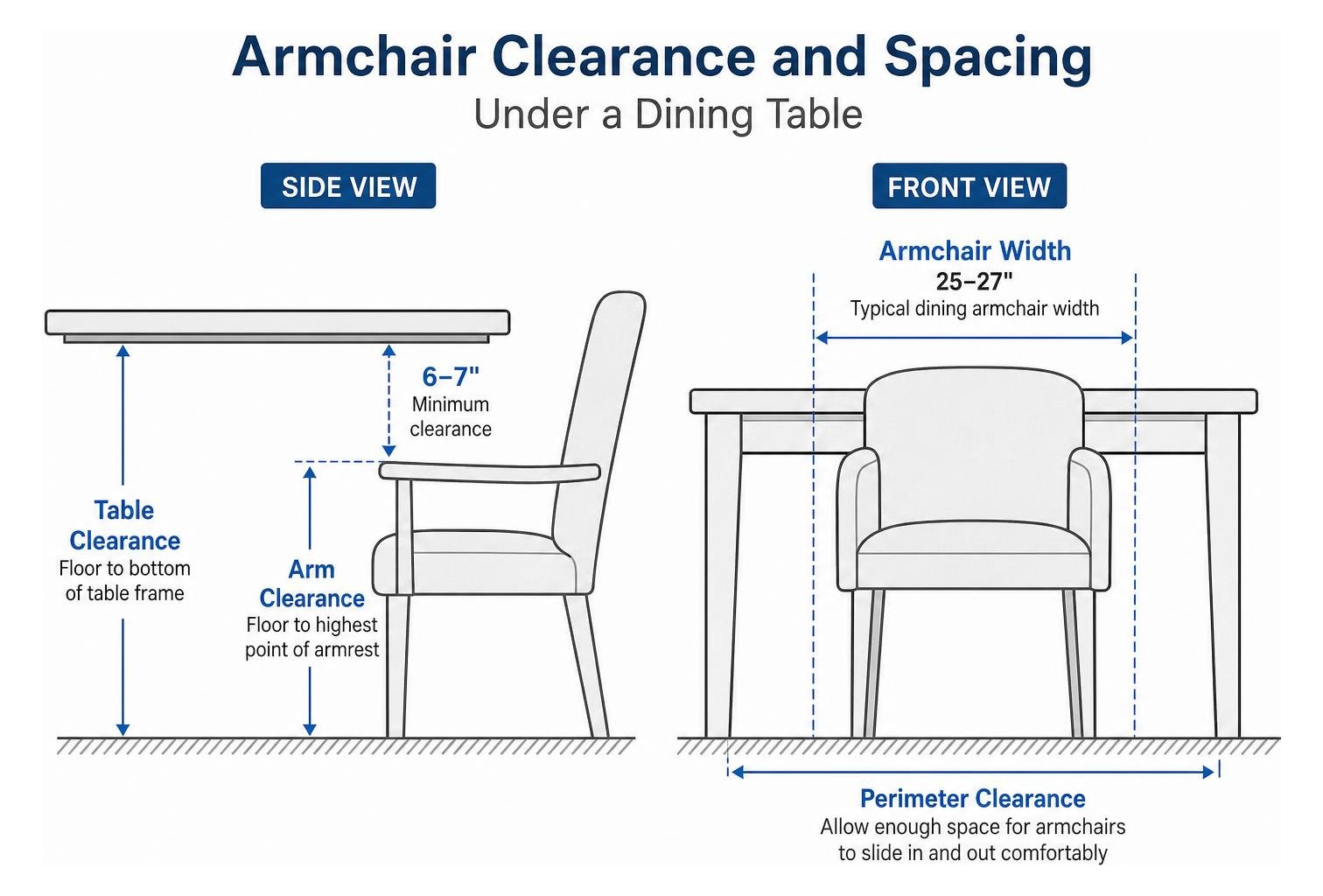
To prevent armrests from colliding with your table apron, ensure there is at least 6 to 7 inches of clearance between the top of the armrest and the bottom of the table frame. When selecting end seating, explore choosing a comfortable dining chair with arms to ensure your table base leaves ample elbow room. For grand dining spaces with generous dimensions, high dining chairs with arms frame the head and foot of the table beautifully while establishing a balanced aesthetic.
Spacing and Diner Capacity Calculations
Nothing ruins a great dinner party faster than guests knocking elbows over the salad bowl. Calculating the proper perimeter spacing around your table keeps conversation flowing easily.
- Eating Width per Person: Allocate 24 to 26 inches of table perimeter for every seated diner.
- Elbow Clearance Between Chairs: Maintain a minimum 6-inch gap between the outer edges of adjacent chair seats.
- Total Width per Guest: Plan for a total of 30 to 32 inches per guest for comfortable, uncrowded movement.
- Perimeter Wall Clearance: Leave 36 to 42 inches between the edge of your table and any surrounding walls, buffets, or doorways so guests can push back their chairs and walk behind seated diners freely.
If you are outfitting a compact dining room or breakfast nook, tables with central pedestal bases offer a distinct advantage. By replacing four corner legs with a single support pillar, pedestal tables maximize usable knee room and make it easier to tuck extra seating around the perimeter without awkward collisions.
Material Choices and Comfort Trade-Offs for Dining Seating
The materials you choose for your dining chairs impact seat give, durability, and ongoing maintenance. Understanding the structural dynamics of wood, upholstery, and metal helps you match your seating to your household's daily lifestyle.
| Chair Material | Average Weight Support (ANSI/BIFMA) | Maintenance & Cleaning | Best Suited For | Comfort Level Over Extended Meals |
|---|---|---|---|---|
| Solid Wood | 275 – 300+ lbs | Easy; wipe clean with damp cloth; periodic polish | Daily family use; classic & rustic settings | Firm; benefits from contoured seats or tie-on pads |
| Upholstered (Fabric/Leather) | 250 – 300 lbs | Moderate to high; spot clean; faux leather wipes easily | Long multi-course entertaining; formal dining | Exceptional initial cushioning; foam compresses over time |
| Metal Frame | 300+ lbs | Low; highly durable against scuffs and spills | Modern, minimalist, or industrial spaces | Rigid; best paired with an upholstered or woven seat |
| Natural Woven Rattan | 250 – 300 lbs | Low; light dusting or gentle vacuuming with brush attachment | Coastal, organic modern, and transitional homes | Naturally yielding contour; flexible, breathable comfort |
Quality dining chairs built to commercial ANSI/BIFMA standards are load-tested around a 275-lb design baseline, ensuring reliable stability across years of daily gatherings. Fully assembled frames offer long-term joint rigidity, whereas flat-pack furniture may require periodic bolt tightening to eliminate wobbles.

Natural Textures and Styling Balance
Pairing varied textures around your table creates a welcoming, designer-curated look. Pairing a smooth timber or glass tabletop with handcrafted natural textures introduces organic warmth that softens rigid architectural lines.
Incorporating natural woven dining chairs introduces visual depth while providing ergonomic support that subtly yields to the body during long conversations. Woven materials bridge traditional and modern aesthetics effortlessly. To bring organic materials into your home design, explore how you can elevate your dining space with textured seating that pairs durability with refined craftsmanship.
Frequently Asked Questions About Dining Chair Dimensions
What is the standard height of a dining chair seat?
The standard height of a dining chair seat is 18 inches, with an acceptable ergonomic range of 17 to 19 inches from the floor to the top of the seat. This height pairs naturally with standard dining tables measuring 28 to 30 inches tall.
How much space should be between the chair seat and the dining table apron?
Preserve a vertical gap of 10 to 12 inches between the top of the chair seat and the underside of the table apron or tabletop. This allows comfortable thigh room for crossing your legs while keeping your forearms positioned naturally for dining.
Can you mix chair heights and arm styles at the same dining table?
Yes, provided the seat planes remain uniform. Keep all chair seat heights within the same 17 to 19-inch standard range so every diner sits at eye level. A classic styling technique uses comfortable armchairs at the head and foot of the table paired with matching armless side chairs along the lengths.
Conclusion
Finding the ideal dining room chair height comes down to balance and clearance: allow 10 to 12 inches of vertical thigh room beneath your table's lowest edge, maintain 24 to 30 inches of width per guest, and select seat materials that support your daily lifestyle.
At Rattan Imports, we believe every shared meal deserves exceptional comfort and enduring style. We specialize in premium home décor and furniture, responsibly sourced from Southeast Asia and carefully assembled in the U.S. We back every order with our price guarantee, identity theft protection, and complimentary shipping across the U.S. mainland.
Ready to transform your dining space? Take your measurements, explore handcrafted dining chairs tailored for lasting comfort, and discover premium home collections built to anchor your family gatherings for years to come.