



Is a Glass Wood Dining Table Right for a Busy Household?

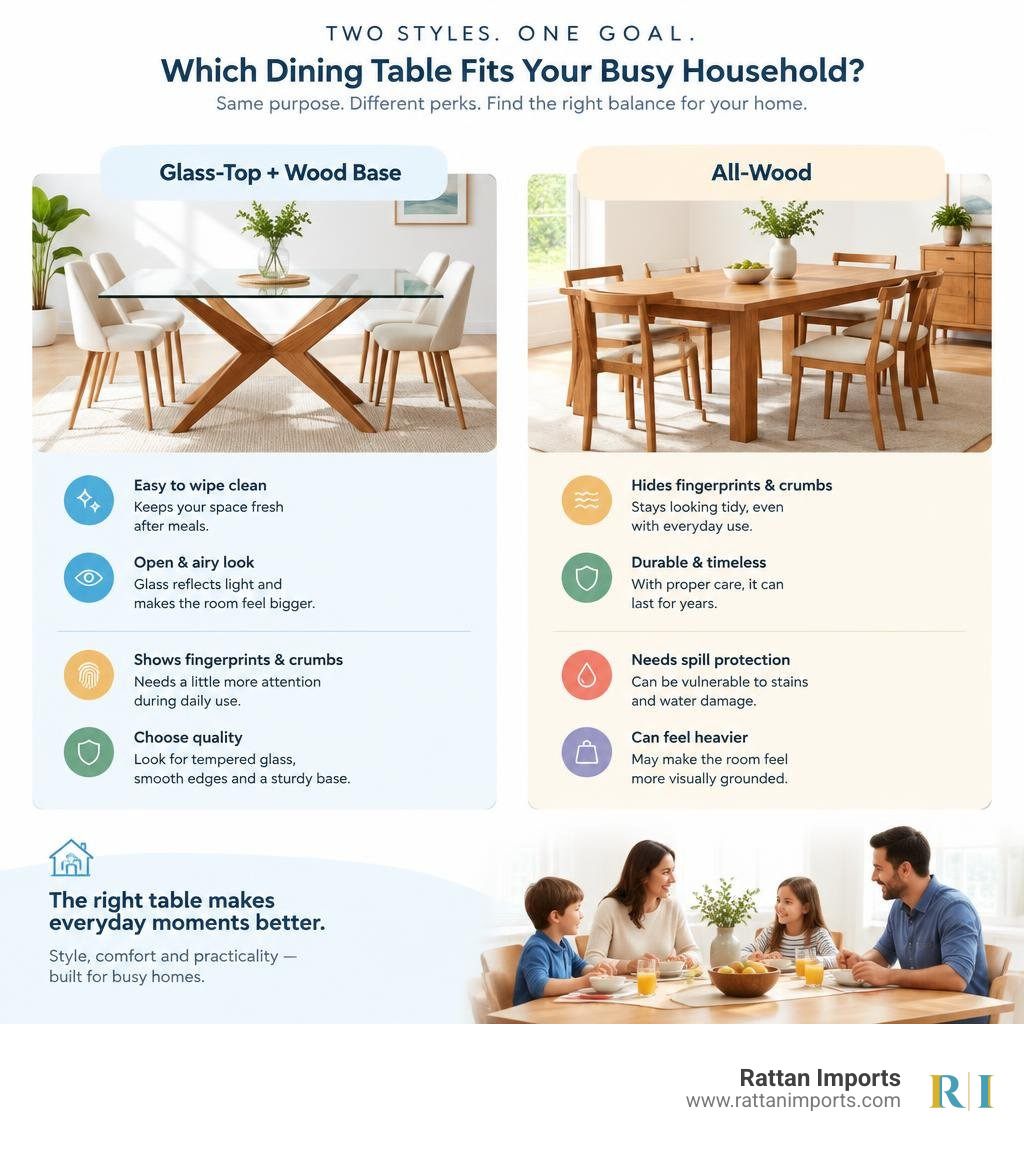
A glass-top dining table with a wood base gives you the open look of glass and the warmth of wood. Compared with an all-wood table, its top is easier to wipe clean after meals and keeps the base visible. The trade-off: glass shows fingerprints and crumbs more readily, while wood can hide them but needs protection from spills. For daily family use, look for tempered glass, smooth edges, and a sturdy base.
I’m Nino Russo Alesi, founder of Rattan Imports. My background in hospitality, e-commerce, and customer support shapes how I help shoppers weigh the practical details of a glass wood dining table, from daily care to delivery.
Benefits of a Glass Wood Dining Table for Modern Living
When furnishing a home in 2026, finding furniture that merges aesthetic sophistication with everyday functionality is essential. A dining table must withstand busy breakfast rushes, messy homework sessions, and elaborate holiday dinners while serving as the visual anchor of your room.
Combining glass with natural timber solves many common decorating dilemmas. While an all-wood table can sometimes feel heavy or visually dominate a room, transparent surfaces reflect natural light and create an open atmosphere. Exploring comprehensive resources like our Dining Room Tables Ultimate Guide 2026 reveals that mixed-material furniture continues to gain popularity for its versatility and warmth.
Visual Lightness and Spatial Flow
The defining benefit of a glass-topped surface is optical expansion. In compact dining areas, apartments, or modern open-plan layouts, solid tables can create visual roadblocks that make spaces feel cramped.
A transparent tabletop maintains uninterrupted sightlines across your room. It exposes the floor plan beneath, allowing your dining chairs, rugs, and architectural details to shine. By reflecting ambient daylight and indoor illumination, glass enhances brightness, giving both modest dining nooks and expansive floor plans an airy, spacious feel.
Balancing Warm Timber with Modern Glass
While glass provides modern clarity, an all-glass piece can sometimes feel stark or clinical. This is where rich timber bases provide essential balance. Natural wood brings warmth, organic grain patterns, and structural grounding into the room.
Whether you appreciate the tailored lines of mid-century walnut or the breezy textures featured in our Rattan Dining Table with Glass Top collection, the contrast between smooth glass and tactile wood elevates transitional, rustic, and modern interior schemes alike.
Engineering, Safety, and Material Breakdown
Choosing mixed-material furniture requires understanding how modern engineering keeps these pieces durable and stable for daily family life.
Selecting the Right Glass Wood Dining Table for Daily Family Use
Safety is often the primary concern for households with active children and pets. Fortunately, modern high-end dining tables rely on heavy-gauge tempered safety glass.
During manufacturing, safety glass undergoes extreme thermal tempering processes that make it 4 to 5 times stronger than standard float glass. It resists high impact loads, heavy dinnerware, and daily thermal shocks from warm plates. If an extreme impact ever causes tempered glass to break, it fractures into small, rounded, blunt granules rather than sharp, hazardous shards.
Standard family-ready tables use tops between 8 mm and 10 mm in thickness, while statement designer pieces feature heavy 15 mm fused and tempered glass for maximum stability and luxury appeal.
Wood Species and Base Structural Profiles
A glass top requires a substantial, well-engineered foundation. Common premium wood species include:
- Solid Oak: Highly durable with a prominent, classic grain. Solid oak legs paired with tempered glass tops consistently earn strong customer ratings for everyday reliability.
- Solid Walnut: Celebrated for its rich, chocolate tones and flowing grain patterns. Sculptural designs highlight handcrafted walnut bases finished with hand-rubbed oils.
- Teak and Dense Hardwoods: Averaging around 650 kg/m³ in density, teak offers high structural strength and natural moisture resistance.
- Heat-Treated Timber: Kiln-drying and heat treatments prevent warping, splitting, and seasonal movement, ensuring the base remains level under heavy glass.
Whether constructed as a sculptural central pedestal, a geometric cross-base, or a traditional trestle, modern wood joinery distributes tabletop weight evenly across the entire frame.
Glass Finishes and Surface Treatments
Standard clear glass naturally exhibits a subtle greenish tint along its beveled edge due to iron content. Today, you can select from various specialized finishes:
- Extra-Clear (Starfire) Glass: Formulated with reduced iron to deliver crystal-clear transparency with true color fidelity.
- Smoked and Bronzed Glass: Infused with warm bronze or cool charcoal tints, adding moodiness while naturally minimizing visible surface dust.
- Acid-Etched Matte Glass: Chemically treated to provide a smooth, velvety finish that resists fingerprints and diffuses overhead glare.
- Ceramic-Bonded Glass: Integrates high-strength ceramic styling directly onto the glass substrate for added scratch defense.
Shapes, Sizing, and Extension Mechanisms for Dynamic Spaces
Finding the perfect dining piece involves balancing your room's physical dimensions with your entertaining needs.
Round, Rectangular, and Oval Room Layouts
Room shape dictates tabletop geometry. Leaving at least 36 to 42 inches between table edges and surrounding walls ensures smooth foot traffic:
- Round Tables (36" to 50" / 119 cm to 140 cm): Perfect for square rooms, breakfast corners, and smaller spaces. Round layouts encourage conversation and eliminate sharp corners. If you prefer organic textures, consider our Rattan Round Table options for relaxed family dining.
- Rectangular Tables (220 cm to 260 cm): Best suited for long, dedicated dining rooms. Models in these lengths comfortably accommodate 8 to 10 guests.
- Curved and Oval Designs: Curvilinear and oval profiles, commonly available in 140 cm, 160 cm, and 180 cm diameters, soften rectangular rooms while maximizing seating capacity, as highlighted by design authorities like Architectural Digest.
Precision Extension Systems and Capacity
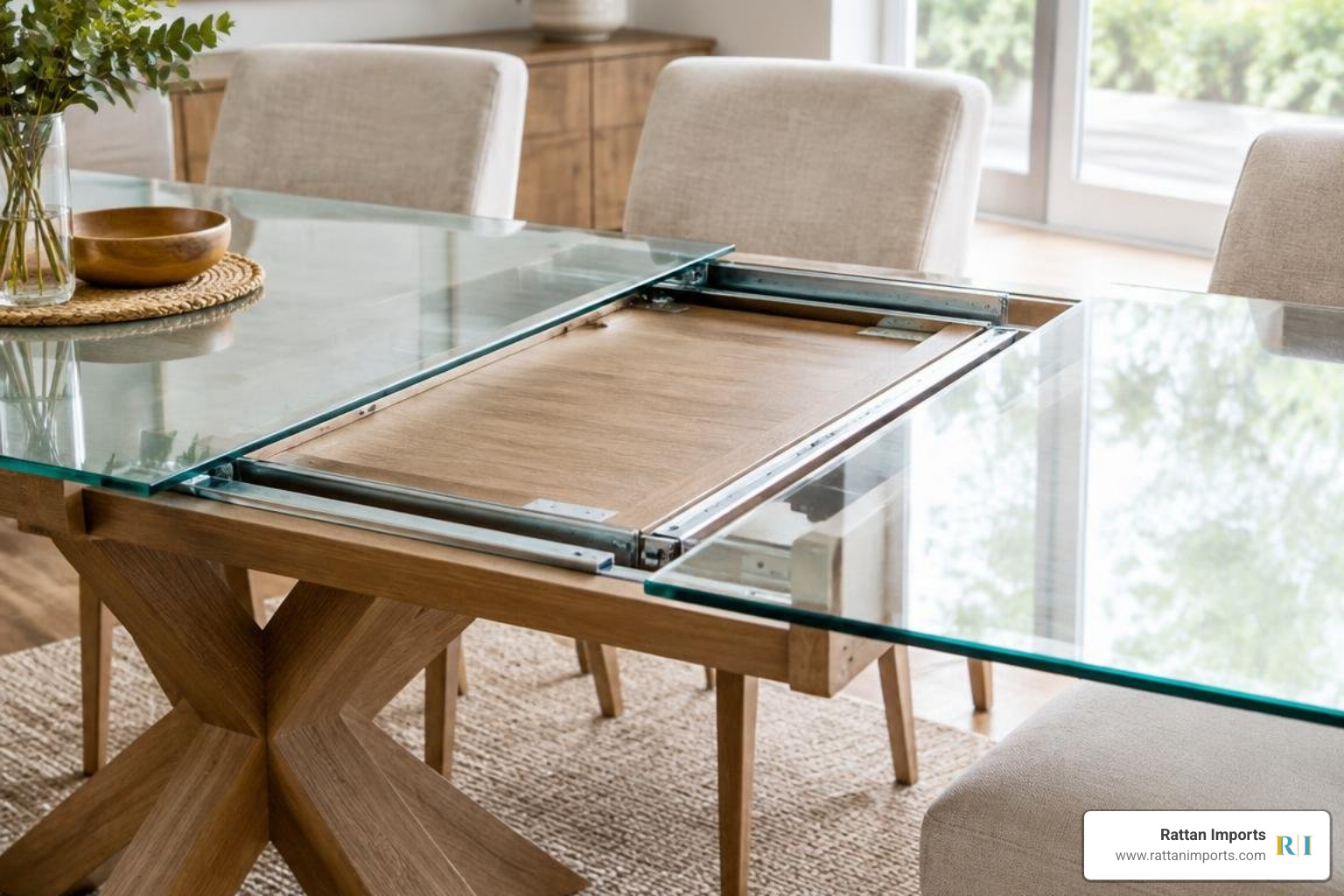
Modern engineering allows extendable glass dining tables to operate seamlessly without heavy lifting. Patented synchronized track systems glide internal leaves outward with a soft-close response. These counterbalanced mechanics let a single person expand a 6-person family table to seat 12 or more guests in seconds for festive gatherings.
Comparing Table Materials for High-Traffic Households
Understanding how a glass-and-wood dining table performs under everyday demands helps you determine the best fit for your home.
| Feature / Metric | Tempered Glass Top + Wood Base |
|---|---|
| Spill & Liquid Resistance | 100% Non-Porous (Zero Staining) |
| Heat Resistance | High (Thermal Shock Resistant) |
| Visual Weight | Light & Open (Expands Spaces) |
| Scratch Vulnerability | Low to Moderate (Abrasives Scratch) |
| Daily Cleaning Effort | Quick Wipe (Smudges Show Readily) |
| Typical Lifespan | Decades (Non-Degrading Surface) |
For broader natural material comparisons, browse The Complete Guide to Choosing the Perfect Wicker Dining Table for inspiration on pairing casual textures with high-performance tops.
Durability, Maintenance, and Scratch Resistance
Unlike unfinished wood that can absorb wine spills, pasta sauce, or water rings, glass provides an impermeable, hygienic surface. Daily cleanup requires only a quick spray and wipe.
To preserve the glass surface over years of use, use soft placemats, coasters, and felt pads under rough ceramic dishware.
Managing a Glass Wood Dining Table with Kids and Pets
A mixed-material table adapts well to active households when selected with everyday practicality in mind:
- Eased Edges: Look for beveled, pencil-polished, or rounded edge radiuses to keep children safe.
- Base Stability: Broad pedestals and sturdy trestles prevent tipping and remain stable during busy mealtimes.
- Secure Bumpers: Ensure high-grip silicone suction pads sit between the wood base and glass top to eliminate slippage.
- Pet Smudge Management: Keep a microfiber cloth handy in a nearby drawer for quick cleanups of stray nose prints.
Pricing, Delivery Logistics, and Maintenance Guidelines

Daily Cleaning and Surface Preservation
Maintaining your table requires simple, routine care:
- For the Glass: Clean daily with a standard ammonia-free glass cleaner or warm water mixed with mild liquid dish soap using a clean microfiber cloth. Never use steel wool or abrasive scouring pads.
- For the Wood Base: Dust weekly with a soft, dry cotton cloth. Periodically apply high-grade natural furniture oil or wax to preserve timber luster and guard against dryness.
Price Tiers, Assembly, and Warranty Expectations
Prices for glass-and-wood dining tables vary based on materials and craftsmanship:
- Budget Tier ($200 – $600): Flat-pack models with tempered glass tops and solid oak or beech legs, offering simple utility for compact dining areas.
- Mid-Range Tier ($700 – $2,500): Substantial solid timber frames, larger dimensions, and refined beveling designed for growing families.
- Luxury & Designer Tier ($3,000 – $10,000+): Custom European engineering, fused 15 mm glass tops, and handcrafted walnut framing.
Because glass tops are heavy—often weighing between 40 kg and 80 kg—two-person delivery and assembly is strongly recommended. When investing in quality furniture, verify comprehensive shipping protections, clear manufacturer warranties, and our price match guarantee for complete peace of mind.
Frequently Asked Questions About Glass Wood Dining Tables
Is tempered glass safe for everyday family dining with young children?
Yes. High-quality tempered glass is 4 to 5 times stronger than regular annealed glass and withstands daily household impacts. If broken under extreme stress, it fractures into small, dull pebble fragments rather than sharp shards. Choosing tables with rounded or pencil-polished edges provides added safety for busy households.
How do extendable glass dining tables operate without heavy lifting?
Modern extendable models feature precision-engineered mechanical glides and counterbalanced tracks beneath the frame. As you pull one end, internal hardware smoothly extends concealed glass leaves with minimal effort, allowing quick seating adjustments for guests.
What wood bases offer the best stability for heavy glass tabletops?
Solid kiln-dried hardwoods like oak, walnut, and dense teak provide the most stable foundations. Look for wide trestles, cross-leg structures, or weighted central pedestals fitted with non-slip silicone pads that support the glass securely without shifting.
Conclusion
A glass top paired with a solid timber base brings architectural balance, natural warmth, and dependable function to modern dining spaces. By reflecting light, protecting against everyday spills, and highlighting the craftsmanship of its wooden base, this mixed-material style offers long-lasting performance for active homes.