



How to Choose a Wide Glider Recliner for Twins and Toddlers

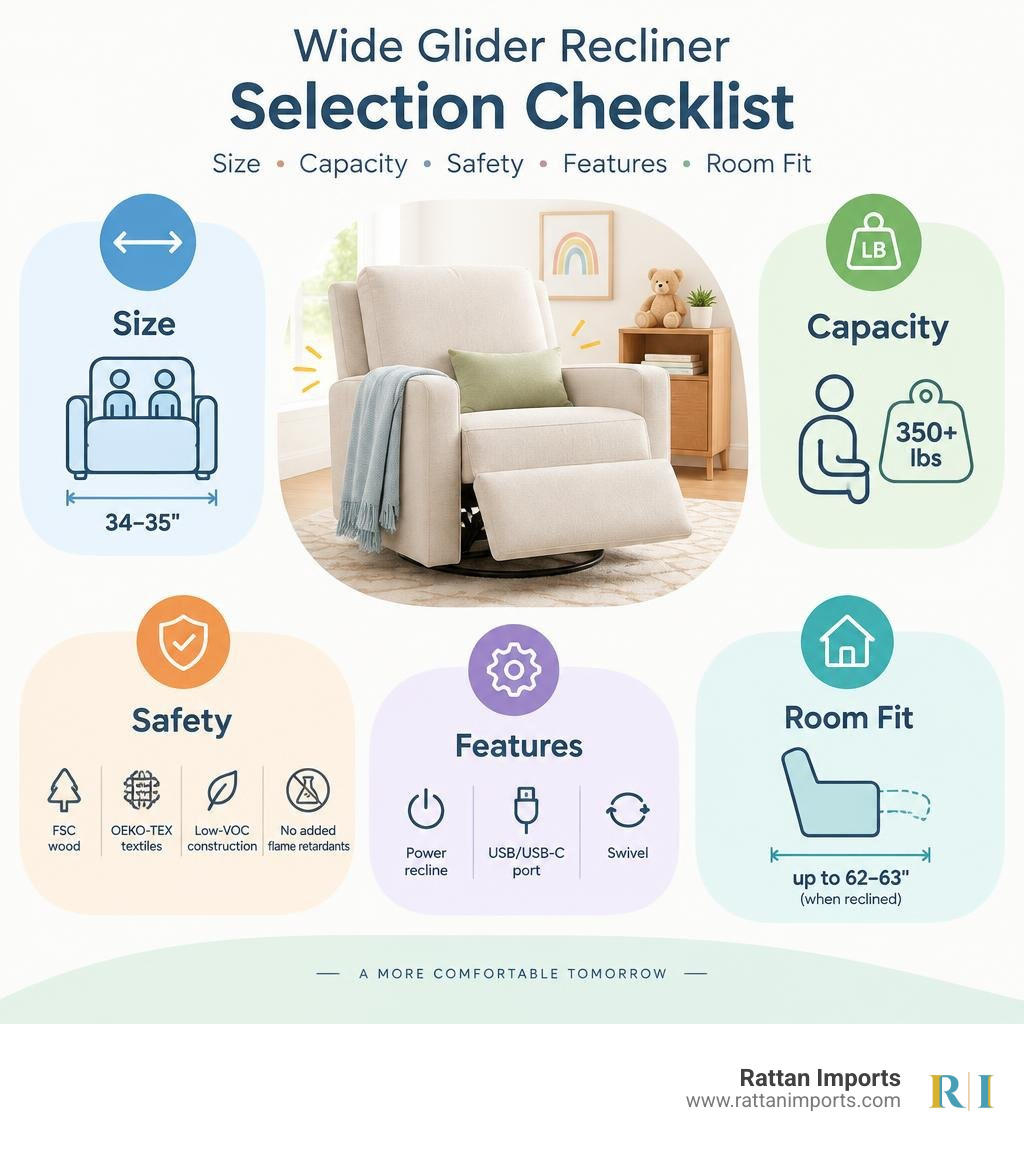
For parents of multiples, the best wide glider recliner has enough room for tandem feeding or toddler snuggles without sacrificing back support, safe movement, or nursery floor space. Look first for a seat around 34 to 35 inches wide, a stated capacity of 350 pounds or more, smooth gliding, and a recline design that fits your room when fully extended.
A quick buying checklist:
- Choose chair-and-a-half sizing for twins, a nursing pillow, or shared storytime. Standard gliders are often better for one adult and one baby.
- Measure the full footprint, not just the chair width. Some oversized recliners extend to roughly 62 to 63 inches when reclined.
- Prioritize a stable frame and certified materials. FSC-certified wood, OEKO-TEX STANDARD 100 textiles, low-VOC construction, and no added chemical flame retardants are valuable signals.
- Match features to nightly use. Power recline, an easy-reach USB or USB-C port, and a swivel can make late-night feeds easier; manual models are usually simpler and cost less.
- Plan for life after the nursery. Neutral upholstery and a more tailored silhouette can help the chair become a living room or reading-nook seat later.
Extra width is not a substitute for safe sleep practices. A recliner can be an excellent place to feed, soothe, and cuddle, but babies should be moved to a separate, flat, firm sleep surface before the adult falls asleep.
I am Nino Russo Alesi, founder of Rattan Imports, with a background in hospitality, e-commerce, and helping customers choose furniture that suits how they truly live. That customer-first approach informs this guide to finding a wide glider recliner that balances comfort, quality, room fit, and dependable delivery.
Easy wide glider recliner glossary:
Standard vs. Chair-and-a-Half: Why Parents of Multiples Need Extra Space
When welcoming twins or managing a newborn alongside an eager toddler, space inside your nursery seating is non-negotiable. Standard nursery gliders typically offer an interior seat width between 18 and 22 inches. While cozy for a single infant and caregiver, this compact footprint quickly becomes cramped when you introduce specialized tandem nursing pillows, which can measure upwards of 26 to 30 inches across. Trying to squeeze yourself, two feeding infants, and bulky support gear into a traditional glider leads to awkward posture, strained shoulders, and compromised safety.
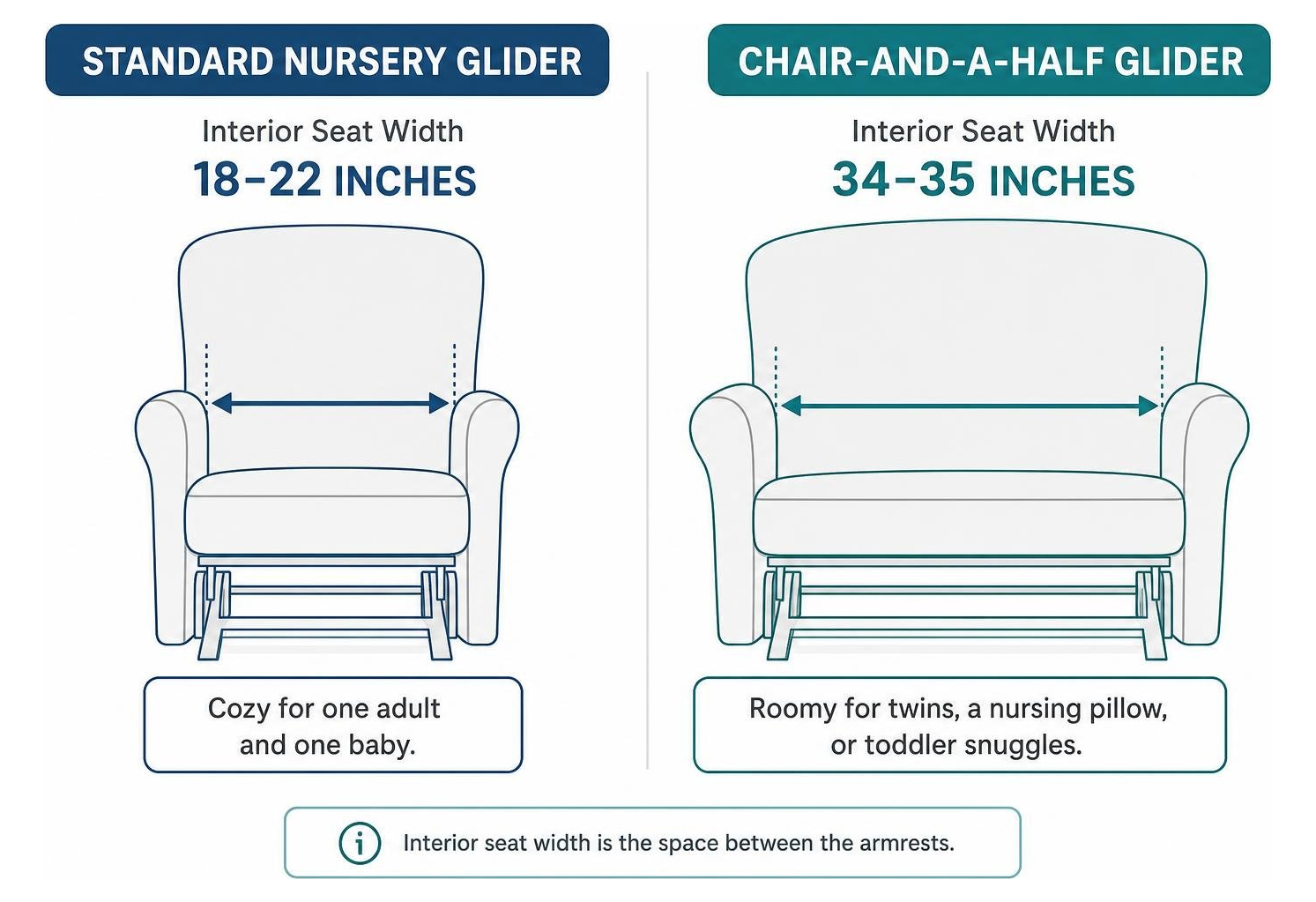
An oversized chair-and-a-half configuration bridges the gap between a single armchair and a bulky loveseat. It provides the generous elbow room required for dual football-hold breastfeeding positions or bottle-feeding both babies simultaneously without bumping the armrests. Moreover, as your children grow, an expansive seat allows older siblings to curl up beside you for bedtime stories without displacing the baby. When comparing gliders and rockers, the smooth linear motion of a glider paired with an oversized seating profile offers superior stability during fussy tandem-soothing sessions.
Sizing Specifications for a Wide Glider Recliner
Navigating the exact dimensions of an oversized chair prevents common nursery layout headaches. Interior seat width is the most critical metric for nursing comfort, but you must also account for exterior frame bulk and mechanical extension:
- Interior Seat Width: Look for an interior measurement of 34 to 35 inches. This provides approximately 4 to 10 inches of additional lateral space compared to standard models, comfortably accommodating tandem nursing setups.
- Exterior Dimensions: The outer width of these chairs often measures 39 to 53 inches across, with an upright depth ranging between 33 and 46 inches and heights of 37 to 41 inches.
- Full Recline Extension: When the footrest is elevated and the backrest is lowered, the chair can span 62 to 63 inches in total length.
- Seat Depth and Height: Optimal ergonomic seat depth falls around 21 to 22.5 inches, paired with an accessible seat height of roughly 19 inches to allow easy entry and exit while cradling infants.
Before ordering, map out these measurements on your nursery floor with painter's tape, keeping our guide to extra wide rocking chairs and layout planning in mind to preserve clear walking paths.
Weight Capacity and Multi-Child Ergonomics
A standard accent chair is rarely engineered to hold the dynamic, combined load of an adult, two rapidly growing babies, and heavy nursery accessories. Oversized glider recliners typically offer robust weight capacities of 350 to 360 pounds.
To safely sustain this load over years of use, superior chairs incorporate metal-reinforced seating boxes, heavy-gauge steel glider tracks, and kiln-dried timber frames. Ergonomics play an equally vital role: high-density foam padding and pocket-coil core inserts distribute weight evenly, relieving pressure on the tailbone and lower back during hours of nighttime feeding. Dedicated lumbar support pillows and plush pillow-top armrests help maintain neutral spine alignment, preventing neck and shoulder fatigue while keeping your arms supported at the perfect elevation.
Key Features to Look For in a Wide Glider Recliner
A truly functional wide glider recliner balances smooth soothing movement, intuitive adjustment, and effortless positioning. Standard gliders move along a fixed back-and-forth linear path, but pairing that glide with a 180-degree or 260-degree swivel mechanism gives you the freedom to reach nightstands, grab burp cloths, or turn toward a twin bassinet without disturbing a resting baby.
Quality seating should also feature pocket-coil seat springs encased in high-resiliency foam, ensuring the seat maintains its bounce and shape without developing dead spots. Modern designs blend continuous gliding comfort with contemporary tech accessories designed to simplify nighttime parenting.
Choosing the Best Wide Glider Recliner Mechanism
When evaluating mechanical systems, parents generally choose between manual tab-pull recliners and motorized power mechanisms:
- Manual Tab-Pull Systems: These mechanisms use an internal release lever. While budget-friendly and free from power cords, they often snap open quickly and require considerable leg strength to lock the footrest back into place—a jarring motion that can easily startle sleeping babies.
- Motorized Power Recline: Electric motors allow whisper-quiet, continuous adjustments to any custom angle at the touch of a button. Premium motorized systems offer independent backrest recline and footrest elevation, allowing you to elevate your legs for circulation while keeping the back upright for safe feeding.
- Continuous Gliding During Recline: While many traditional recliners lock their gliding mechanism the moment you recline, advanced designs feature parallel rocking mechanics that maintain a soothing glide even when the backrest is tilted back.
For a deeper dive into mechanical variations, explore our overview of reclining nursery glider mechanisms to match the right motion style to your daily routine.
Tech Integration: Power Recline and Device Charging
Midnight feedings require staying awake and keeping essential nursery tools within arm's reach. Integrated technology turns your nursery chair into a functional command center:
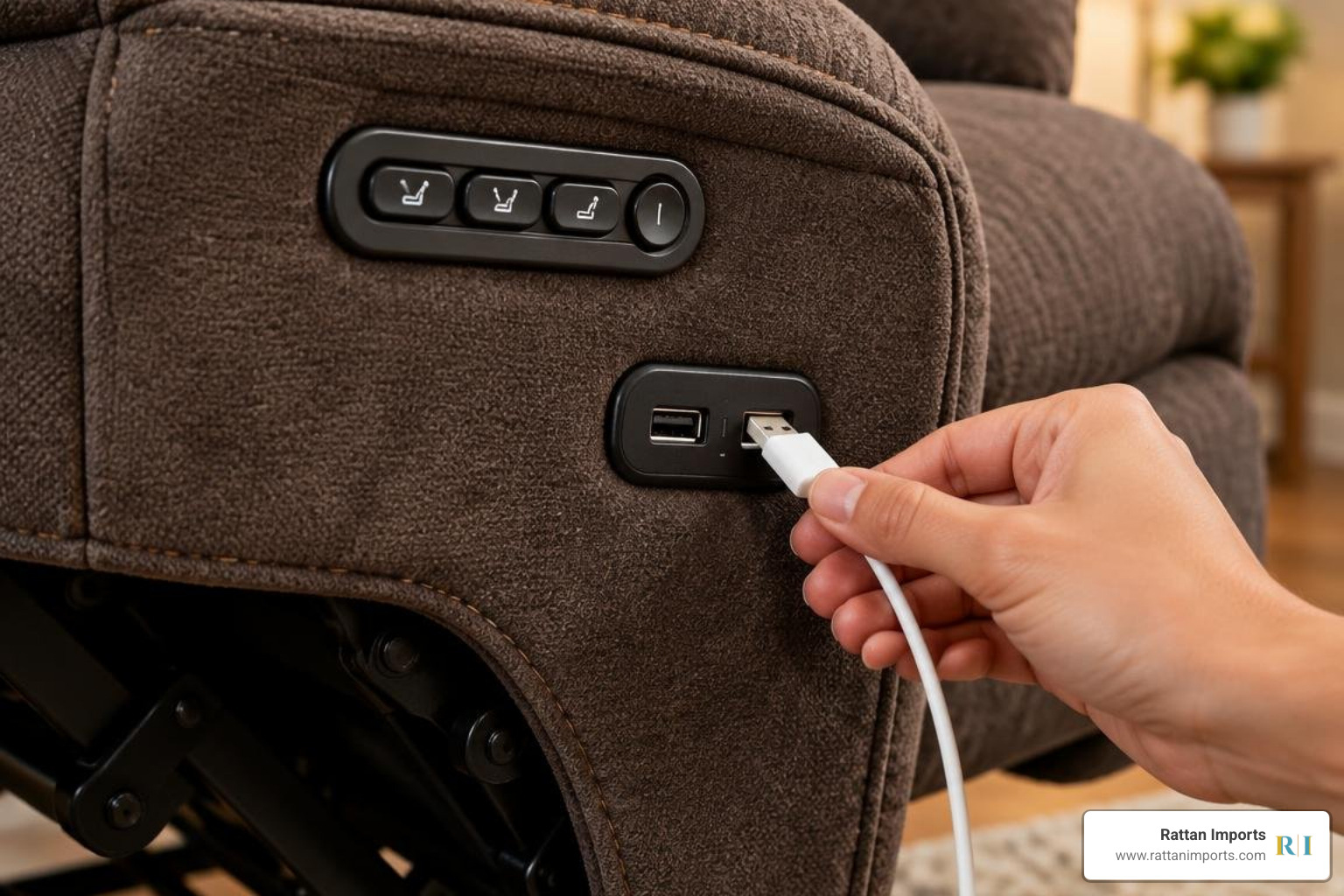
- Dual USB-A and USB-C Ports: Built-in armrest charging ports keep your phone, white noise machine, or baby monitor powered without trailing cords across the floor.
- Intuitive Control Panels & Home Buttons: Backlit or tactile buttons allow effortless adjustments in the dark, while dedicated "home" buttons return the backrest and footrest to their upright, closed positions in a single press.
- Cordless Battery Pack Options: If your nursery layout places the glider in the center of the room away from wall outlets, chairs compatible with rechargeable lithium-ion battery brackets provide cordless operation, eliminating tripping hazards.
Materials, Nontoxic Certifications, and Nursery Durability
Because newborn skin is sensitive and developing respiratory systems are delicate, the structural materials and fabrics in your nursery require careful consideration. A reliable frame should be constructed from solid kiln-dried hardwoods or sturdy eucalyptus-engineered wood to prevent warping and squeaking under heavy use. If you are comparing freestanding units against traditional sets, our gliders with ottoman buying guide breaks down how varying base constructions impact long-term stability.
Eco-Friendly Certifications and Child Safety
When choosing furniture for a baby's room, look for transparent, third-party safety and environmental certifications:
- OEKO-TEX® STANDARD 100: Verifies that every component of the upholstery fabric—from threads to dyes—has been tested and certified free from harmful levels of toxic substances and allergens.
- GREENGUARD Gold Certification: Ensures the furniture meets strict chemical emissions limits, contributing to cleaner indoor air by keeping volatile organic compounds (VOCs) to a minimum.
- FSC-Certified Timber: Confirms the wood frame originates from responsibly managed, sustainable forests.
- Zero Chemical Flame Retardants: Modern safety standards allow manufacturers to meet flammability requirements using dense, naturally resistant barrier fibers rather than harmful chemical sprays.
Stain-Resistant Performance Fabrics
Nursery upholstery faces daily encounters with spit-up, formula spills, and dropped snacks. Selecting the right fabric ensures your investment stays fresh for years:
- High-Performance Polyester: Engineered with liquid-repellent moisture barriers, performance polyester allows spills to bead on the surface for easy blotting with a damp cloth and mild soap.
- Textured Chenille: Provides an ultra-soft, plush hand feel while offering excellent abrasion and pilling resistance under frequent friction.
- Soft Ribbed Corduroy: Delivers a cozy, modern texture with thick structural backing that resists stretching, claw snags, and premature wear.
- Removable, Washable Cushion Covers: Zippered seat and back covers allow hassle-free machine washing, making deep cleaning simple after major messes.
Transitioning Nursery Seating into Everyday Living Spaces
An oversized nursery glider is a significant investment, but its utility extends far beyond the baby years. Thanks to their generous proportions and sophisticated lines, these chairs transition seamlessly into living rooms, home theaters, and primary bedrooms once the nursery days are done. Deep, corduroy-clad silhouettes easily double as luxurious family lounge seating.
To ensure your chair transitions effortlessly across rooms:
- Select Neutral, Versatile Palettes: Creams, soft taupes, charcoals, and warm ivories adapt to changing interior décor trends much better than pastel nursery hues.
- Look for Modular Removable Backs: Oversized chairs can be difficult to maneuver through narrow hallways and standard 30-inch interior doorways. Chairs designed with tool-free, slide-locking removable backrests make room-to-room moving simple.
- Appreciate Handcrafted Assembly: High-integrity construction ensures the mechanical components hold up over years of continuous relaxation. Learn more about quality craftsmanship by exploring domestic seating options.
Frequently Asked Questions about Oversized Gliders
How much wall clearance is needed for an extra-wide reclining glider?
Most standard reclining gliders require 10 to 12 inches of clearance behind the backrest to fully recline without hitting the wall. If space is tight, look for "wall-hugger" or zero-clearance mechanisms that shift the seating bucket forward along a track as the back tilts downward, requiring as little as 4 to 6 inches of rear clearance. Always ensure you also have at least 20 inches of open space in front of the chair for the extended footrest.
Can an oversized glider smoothly rock while in a reclined position?
Standard mechanical recliners automatically lock their glider tracks once the footrest mechanism is triggered for safety. However, specialized motorized nursery gliders feature independent back-recline actuators combined with continuous parallel-glide tracks. This allows you to recline the backrest to a comfortable resting angle while maintaining a gentle, soothing gliding motion to rock babies to sleep.
How do you prevent motor noise and cushion sagging over time?
To maintain quiet operation and cushion firmness:
- Choose Pocket-Spring Seats: High-density foam surrounding individually wrapped pocket coils prevents premature flattening and body impressions.
- Distribute Weight Evenly: Avoid perching exclusively on the edge of the armrests or seat front.
- Inspect Mechanical Tracks Periodically: Keep steel glider bearings clean and free of nursery carpet fibers, applying a light dry silicone spray lubricant annually if any squeaks develop.
Conclusion and Final Recommendations
Choosing the right seating for twins or multiple young children transforms challenging nighttime routines into comfortable, shared family bonding. By prioritizing an expansive 34-to-35-inch seat width, certified nontoxic materials, resilient performance upholstery, and a whisper-quiet reclining mechanism, you create a restful sanctuary for both you and your little ones.
For additional nursery seating inspiration, explore our comparing gliders and rockers for nursery setups guide, or discover timeless natural textures across our Spice Island seating designs. Every piece we offer is supported by our dedicated price guarantee policy and free mainland shipping, giving you complete peace of mind when finding premier handcrafted furniture for your growing home.