



Outdoor Bar Chairs That Stand Up to Sun and Rain
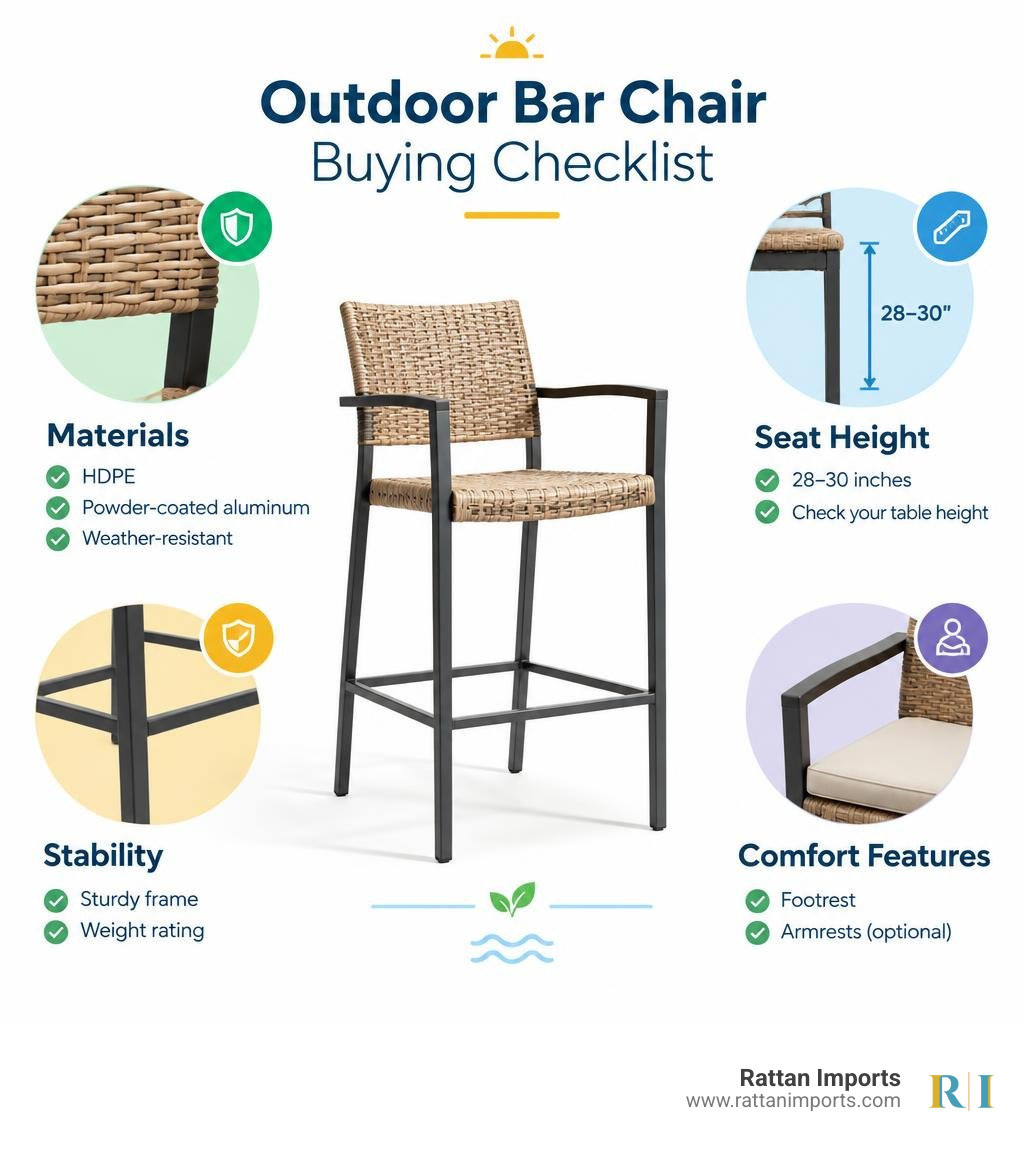
For outdoor bar chairs that stay sturdy and look good across every season, start with weather-resistant materials such as high-density polyethylene (HDPE) or powder-coated aluminum. Check the chair's structural weight rating, choose a stable frame that resists strong wind gusts, and prioritize ergonomic features like a broad footrest and contoured armrests if guests will sit for long stretches. A standard seat height of about 28 to 30 inches pairs seamlessly with most bar-height tables, but always measure your tabletop clearance before purchasing.
I'm Nino Russo Alesi, founder of Rattan Imports. My background in hospitality, customer service, and luxury outdoor furniture e-commerce shapes how I help homeowners and commercial hosts evaluate the long-term durability, comfort, aesthetics, and maintenance details of outdoor bar chairs.
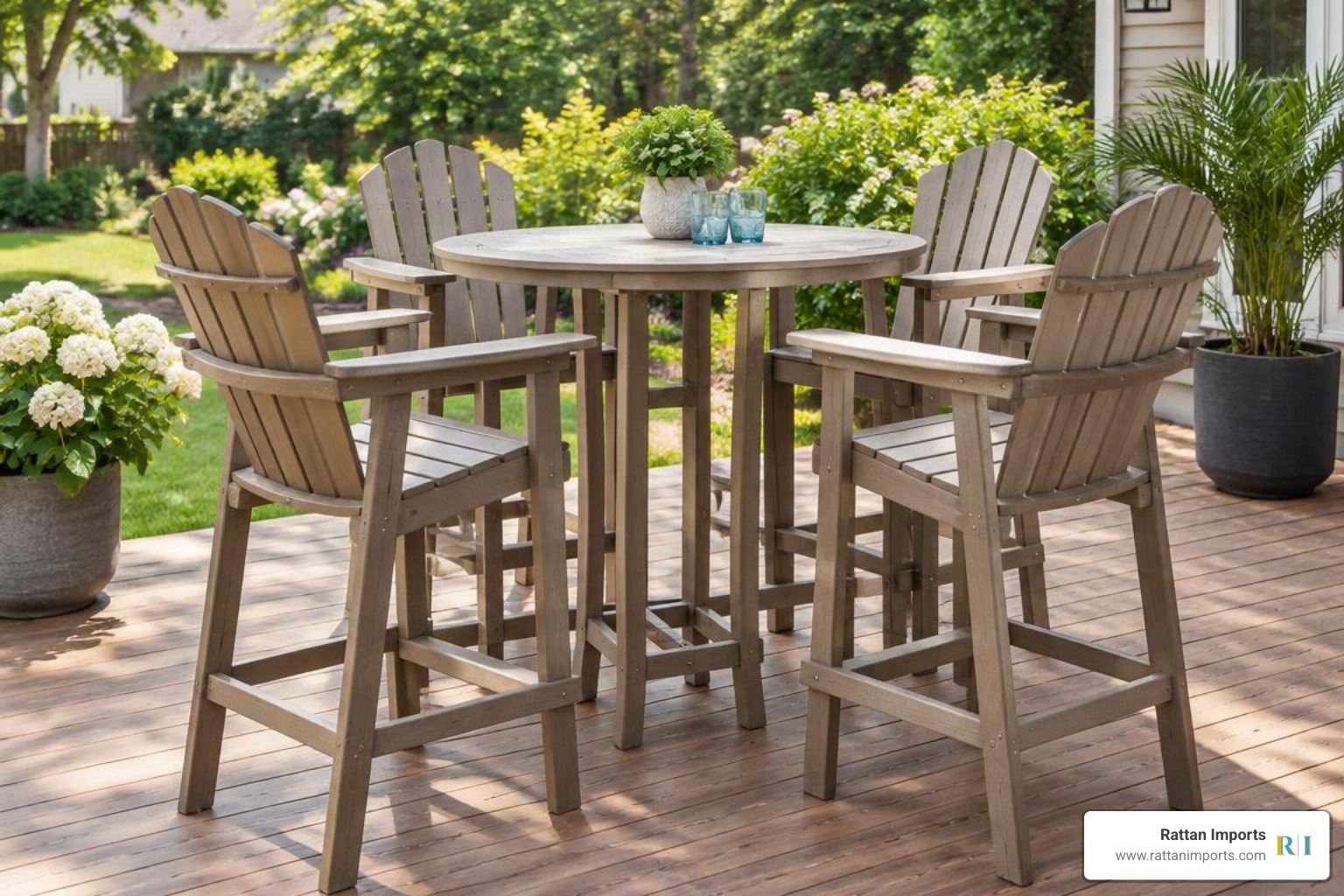
Helpful guides for choosing seating include understanding bar chair height, setting up an outdoor bar and barstools, and styling versatile woven counter stools.
Key Features of Weather-Resistant Outdoor Bar Chairs
Elevated outdoor entertaining requires seating that looks refined while handling the punishing effects of direct sun, torrential rain, shifting humidity, and fluctuating seasonal temperatures. When outfitting a backyard patio bar, counter-height pool ledge, or open-air kitchen island, structural stability and heavy-duty engineering must take priority over purely decorative designs.
A high-performance bar stool must feature a robust weight capacity to accommodate diverse guests safely over years of regular use. Premium all-weather designs typically boast an independently tested capacity of 350 to 360 lbs per chair. This high weight rating does more than just ensure individual user safety—it also directly reflects denser frame components, reinforced cross-bracing, and thick-walled extrusions that provide essential ballast against sudden wind gusts. Lightweight, flimsy chairs can easily slide across an exposed deck or tip over during an unexpected summer thunderstorm, whereas heavier composite profiles or treated architectural metal frames remain securely anchored on outdoor pavers, stone flags, or hardwood decking.
Look for completely non-porous surfaces that will not absorb drink spills, barbecue grease, environmental moisture, or chlorinated pool water. Investing in high-quality outdoor furniture should always be paired with strong manufacturer guarantees; a comprehensive 3-year residential structural warranty and a clear, flexible 30-day return policy offer dependable peace of mind when curating your open-air living space.
Material Durability: Selecting Outdoor Bar Chairs for Sun and Rain
Outdoor furniture faces relentless exposure to harsh ultraviolet radiation, cyclical moisture saturation, and corrosive airborne salt near coastal properties. Synthetic High-Density Polyethylene (HDPE) lumber and high-grade synthetic resin wicker lead the outdoor furniture industry in total environmental resilience.
Unlike conventional injection-molded plastics that become brittle, chalky, and structurally compromised under intense summer heat, HDPE integrates specialized UV inhibitors throughout the entire material profile. This thorough compound saturation stops deep fading, prevents surface peeling or flaking, and completely blocks moisture penetration across decades of direct weather exposure.
Powder-coated aluminum frames offer another rust-proof solution that keeps structural integrity intact without shedding paint chips or leaving unsightly reddish-brown rust rings on your expensive patio stone. As highlighted in the HGTV guide on outdoor patio bar sets, modern composite lumber and powder-coated alloys prevent mildew buildup and resist environmental degradation far better than untreated softwoods or fragile painted metals.
Design Elements for Comfort and Accessibility
Sitting at an elevated height should feel natural, relaxed, and thoroughly secure for guests of all ages. Thoughtful ergonomic features transform a basic tall perch into a welcoming, supportive lounge seat:
- Built-in Footrests: When feet dangle without proper support, painful pressure builds beneath the thighs and quickly strains the lower back. Sturdy integrated footrails give legs a stable resting spot and double as an essential mounting step when climbing into the seat.
- Supportive Armrests: Opting for barstools with armrests delivers vital physical leverage, making it much easier and safer to sit down and stand up without losing balance.
- Swivel Functionality: Using dynamic swivel barstool designs lets you pivot smoothly toward active conversations or poolside views without dragging chair legs across textured pavers.
- Ergonomic Slatted Backs: Contoured backrests support the spine during long dinners while allowing rainwater and cooling breezes to flow straight through.
Materials That Resist Rust, UV Fading, and Moisture
Selecting the right outdoor material prevents premature deterioration and avoids the exhausting, recurring cycle of sanding, staining, scraping, and repainting. When comparing bar stools, carefully evaluate how each distinct frame and weave material balances ongoing maintenance requirements with structural longevity under local climate conditions:
| Material Type | Rust Resistance | UV Fading Resistance | Moisture & Mildew Defense | Typical Maintenance |
|---|---|---|---|---|
| HDPE Lumber | Impervious (Synthetic) | Exceptional (UV-Inhibited) | 100% Waterproof | Wash with mild soap and water |
| Powder-Coated Aluminum | Rust-Proof | Excellent Powder Coating | Completely Non-Porous | Wipe down with a damp cloth |
| Synthetic Resin Wicker | Impervious (Over Coated Frame) | High (Fade-Resistant Strands) | High Moisture Shedding | Soft-bristled brush rinse |
| Grade-A Teak Hardwood | Natural Oils Inhibit Rust | Develops Silver Patina | High Natural Rot Resistance | Annual teak oil or sealant application |
Marine-grade hardware, particularly 18-8 stainless steel fasteners and coated brass connectors, ensures that critical structural connection points do not corrode, bind, or weaken when exposed to humid coastal air, chlorine mist, or heavy seasonal rain. In modern outdoor furniture manufacturing standards, composite building materials with solid-core colorfastness eliminate the risk of minor scratches or surface chips exposing an unsightly, mismatched base color underneath.
Fixed Frames vs. Folding Styles
Deciding between stationary fixed frames and folding bar chairs depends on your available patio footprint, typical hosting habits, and seasonal storage arrangements.
Fixed-frame bar chairs deliver the absolute maximum in wind resistance, frame rigidity, and long-term joint durability. With individual chair weights often exceeding 30 lbs, stationary models remain firmly planted in exposed, breezy spaces like rooftop terraces, open pool decks, or coastal docks where strong squalls occur regularly.
Folding bar chairs, on the other hand, provide invaluable flexibility for compact balcony layouts, urban verandas, and quick off-season winter storage in a garden shed. However, folding mechanisms introduce moving mechanical hinges and pivot joints that require periodic inspection, cleaning, and light silicone lubrication to prevent stiffness or mineral binding over time.
Routine Maintenance and Longevity
High-performance all-weather furniture requires remarkably little effort to maintain, but establishing a simple, regular cleaning routine preserves its vibrant finish and pristine showroom appeal for decades:
- Seasonal Washing: Clean all structural surfaces thoroughly with warm water and a mild, biodegradable dish soap to lift away accumulated outdoor pollen, airborne dust, dirt, and sticky tree sap.
- Deep Spot Cleaning: Treat stubborn surface spots, grease splatters, or dried bird droppings with a gentle 50/50 mixture of distilled white vinegar and warm water, or use a soft baking soda paste applied with a microfiber cloth.
- Low-Pressure Rinsing: You can safely rinse durable HDPE composite chairs and aluminum frames using a standard garden hose or an electric pressure washer set strictly to a wide-fan, low-pressure nozzle.
- Protective Covers: While premium all-weather materials easily withstand freezing winter temperatures, fitting breathable, water-resistant furniture covers during long periods of non-use prevents grime accumulation and drastically reduces your spring cleaning workload.
Ergonomics, Height Pairing, and Assembly Best Practices
Nothing disrupts a relaxed outdoor cocktail hour faster than banging your knees against the hard underside of a table apron rail or awkwardly straining to reach your drink across an overly elevated counter.
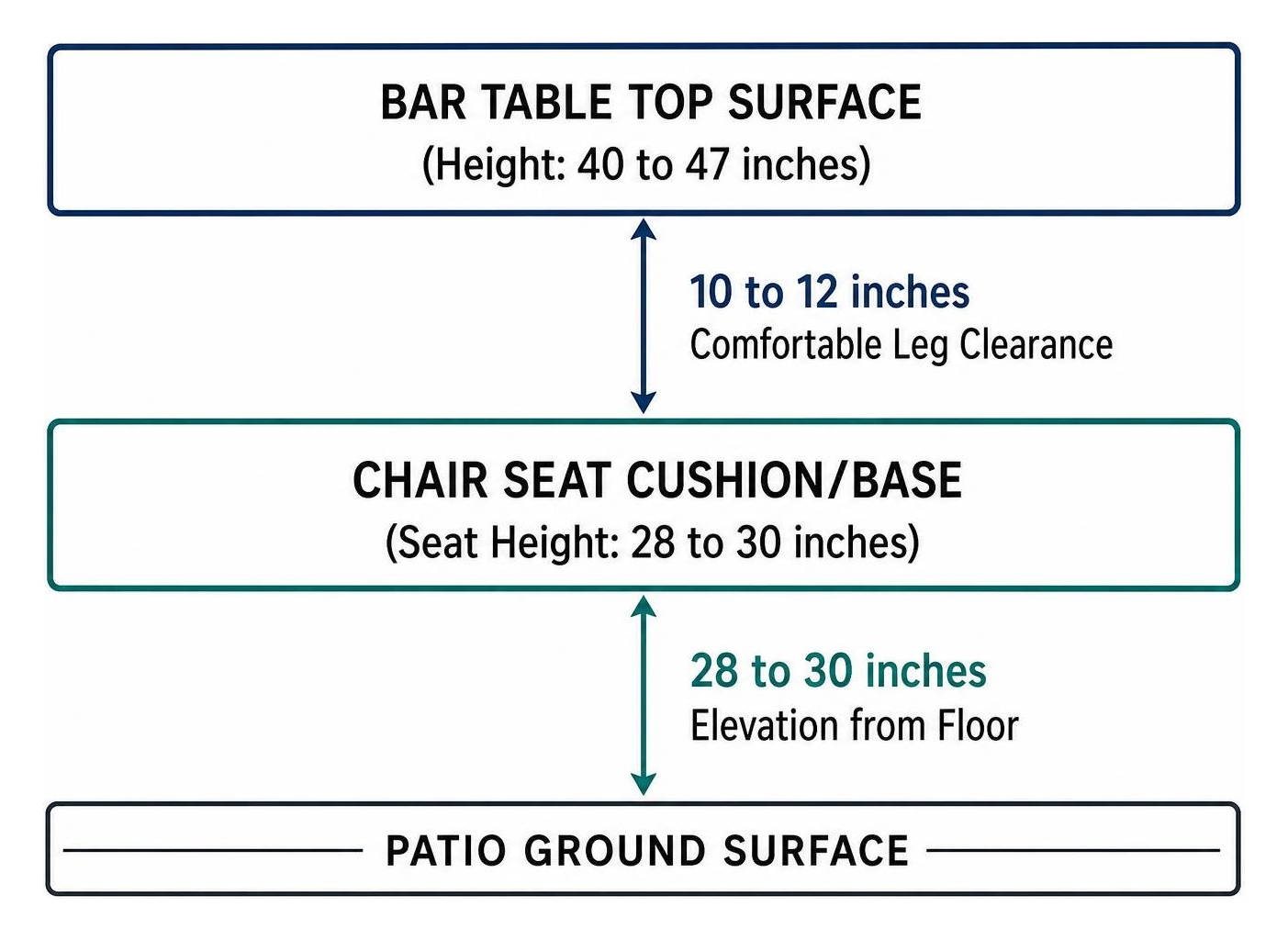
Proper Counter Clearance: Sizing Your Outdoor Bar Chairs
Standard outdoor bar-height tables and built-in entertaining ledges typically measure between 40 and 47 inches high from the ground to the upper tabletop surface. The ideal seat height for these taller tables ranges specifically from 28 to 30 inches (with 28.5 inches widely recognized by designers as the universal sweet spot for comfortable posture).
This precise vertical alignment ensures an ergonomically sound 10 to 12 inches of open leg clearance between the chair seat cushion and the lower edge of the bar counter. Beyond providing ample thigh room, elevated bar seating raises your natural seated eye line. This elevated perspective allows you and your guests to converse comfortably and enjoy panoramic outdoor views looking clear over standard 36-to-42-inch deck safety railings, glass balustrades, and perimeter pool fences.
Assembly Steps and Hardware Safety
Assembling your outdoor bar furniture correctly from the start guarantees years of safe, silent, wobble-free entertaining on the patio:
- Stage Components on a Soft Surface: Unpack and arrange all hardware and frame sections over a clean blanket, drop cloth, or large cardboard box to avoid scratching powder-coated finishes during the build.
- Hand-Tighten First: Thread all bolts loosely into their corresponding pre-drilled holes by hand before fully torquing down any individual joint. This essential step keeps cross-braces, legs, and footrails naturally aligned without cross-threading.
- Flush Bolt Alignment: Verify that all stainless steel fasteners sink completely flush into their recessed countersinks to prevent protruding bolt heads from snagging delicate summer clothing or scraping bare skin.
- Leveling: Place the fully assembled bar chair upright on a flat, even surface, apply firm downward body pressure onto the center of the seat base to square the frame legs, and then tighten every bolt firmly using the supplied Allen wrench.
Frequently Asked Questions About Outdoor Bar Seating
What is the ideal seat height for outdoor bar tables?
For standard bar-height tables measuring between 40 and 47 inches from ground to tabletop, the recommended seat height is 28 to 30 inches. If you are outfitting counter-height tables or kitchen peninsulas (which typically measure 34 to 36 inches high), you will need lower seats, generally measuring 24 to 26 inches from the floor to the top of the seat cushion.
How do HDPE bar chairs compare to natural wood?
High-Density Polyethylene (HDPE) lumber matches the dense, substantial weight and refined appearance of traditional hardwoods without their inherent vulnerabilities to rotting, splintering, warping, or termite infestation. While premium natural hardwoods like grade-A teak require regular seasonal oiling or specialized sealants to prevent weathering to a gray patina, solid HDPE incorporates color pigments throughout that never demand sanding, staining, painting, or protective waterproofing.
Can outdoor bar chairs stay outside year-round?
Commercial-grade outdoor chairs manufactured with UV-stabilized HDPE lumber, rust-proof powder-coated aluminum, or high-density synthetic resin wicker are engineered to remain outdoors in all four seasons. Utilizing fitted, breathable furniture covers during extended freezing winter months provides an extra layer of protection against abrasive airborne debris, environmental grime, and snow accumulation, ensuring that hardware and surfaces remain immaculate.
Conclusion
Upgrading your patio, deck, or poolside terrace with durable, weather-tested outdoor bar chairs instantly transforms an underutilized outdoor corner into a welcoming, sophisticated venue for casual morning espresso and lively evening sunset gatherings. By investing in heavy-duty structural materials such as UV-stabilized HDPE composite and corrosion-free powder-coated aluminum, you secure dependable, beautiful seating that effortlessly handles years of sun and rain.
Explore our broad collection of curated bar stools and sets to discover the ideal design for your home entertaining area. We proudly provide free mainland shipping, comprehensive identity theft protection, and our dependable price guarantee, allowing you to furnish your dream patio with complete confidence and lasting value.