



Why Your Home Needs More Sunshine
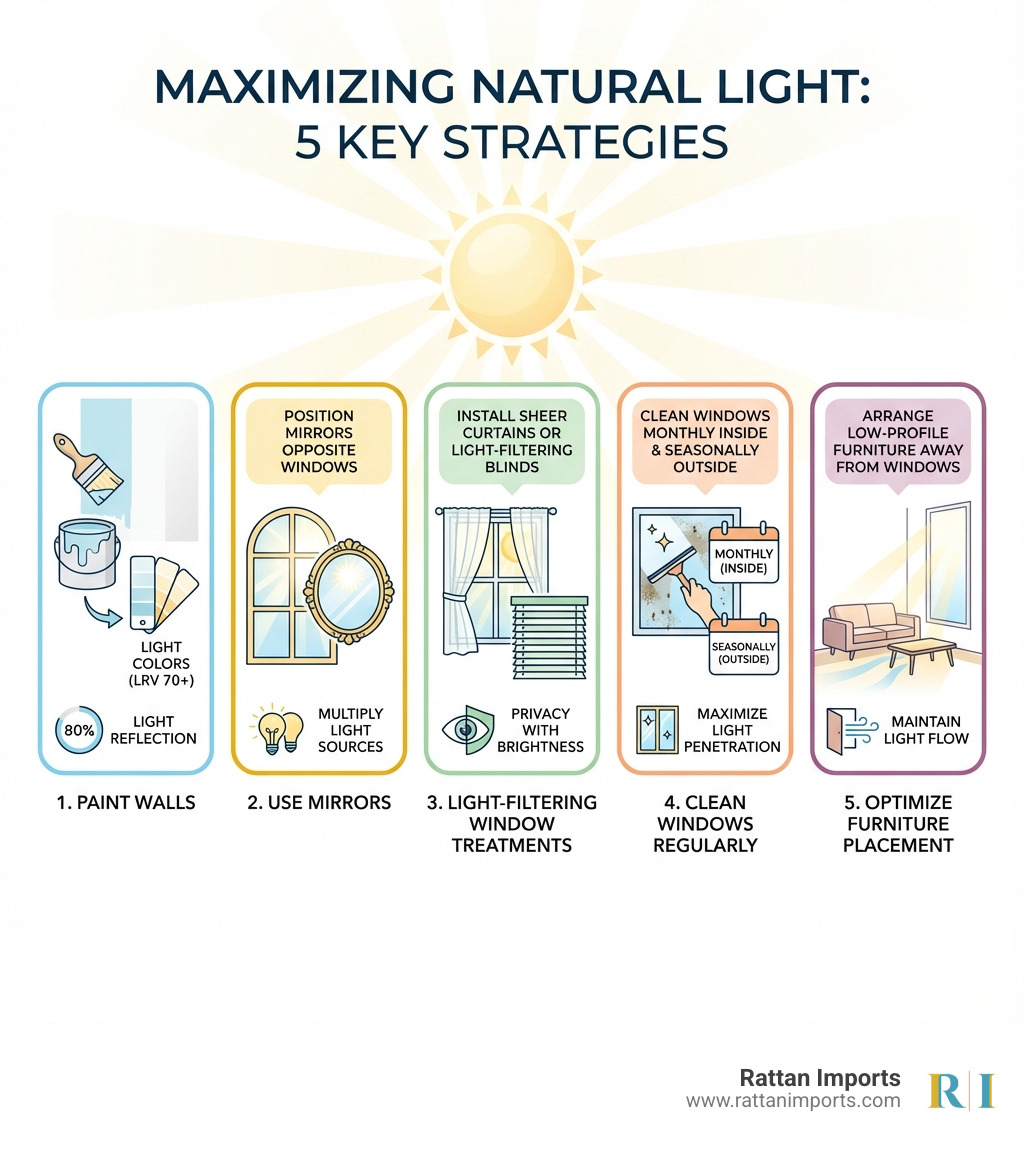
Natural light decor transforms dark, uninviting spaces into bright, welcoming sanctuaries that boost your mood and make rooms feel larger. To maximize natural light in your home:
- Paint walls in light colors with high Light Reflectance Values (70+) – whites and pastels reflect over 80% of sunlight
- Place mirrors opposite windows to multiply and bounce light throughout the room
- Choose sheer curtains or light-filtering window treatments instead of heavy drapes
- Keep windows sparkling clean – dust and grime significantly reduce light penetration
- Use light-colored, low-profile furniture to avoid blocking windows and maintain open sight lines
When you walk into a home bathed in natural sunlight, the space instantly feels more expansive, airy, and alive. This isn't just an aesthetic preference – it's rooted in science.
Natural light has profound effects on our well-being. Studies show that daylight improves focus, reduces stress, and supports better overall health. Less daylight means less vitamin D production, which can influence serotonin levels – the chemical that helps us feel happy and energized. Beyond the psychological benefits, maximizing natural light can also reduce your reliance on artificial lighting, potentially lowering energy costs by as much as one-third.
The good news? You don't need floor-to-ceiling windows or a complete home renovation to create a brighter space. Strategic decor choices, smart furniture placement, and thoughtful design decisions can dramatically transform how light flows through your home.
I'm Nino Russo Alesi, and throughout my years in hospitality and founding Rattan Imports, I've learned that Natural light decor isn't just about brightness – it's about creating those beautiful, curated moments where you want to gather with loved ones in spaces that feel warm and inviting. Whether you're working with challenging north-facing rooms or simply want to make the most of existing windows, the strategies in this guide will help you harness the power of sunshine to transform your home.
Related content about Natural light decor:
The Foundation: Maximizing Light with Color and Surfaces

Choosing the Right Paint Palette
Light Reflectance Value (LRV) measures how much light a color reflects – the closer to 100, the more light bounces back into your room. To maximize natural light, opt for high LRV colors. Whites and pastels reflect over 80% of sunlight, acting as giant reflectors that bounce light into every corner. Soft grays, pale blues, creamy beiges, and understated greens also reflect light generously. For more insights on selecting shades, explore our guide on Rattan Revival: Choosing the Best Paint Colors.
Don't forget the ceiling – a white ceiling with flat finish reflects significant light back into the room. If pure white feels stark, paint the ceiling a few shades lighter than your walls for a similar effect.
The Power of Reflective Finishes
Beyond color, paint finish dramatically impacts light behavior. While matte finishes absorb light, glossy and metallic surfaces reflect and scatter it. Satin or semi-gloss paints work excellently for walls, with their slight sheen subtly bouncing light around. Shinier finishes highlight wall imperfections.
Polished floors, whether light wood or light-colored tiles, act as excellent light reflectors. In kitchens and bathrooms, glossy backsplashes or tiles catch and diffuse light, giving spaces a soft glow.
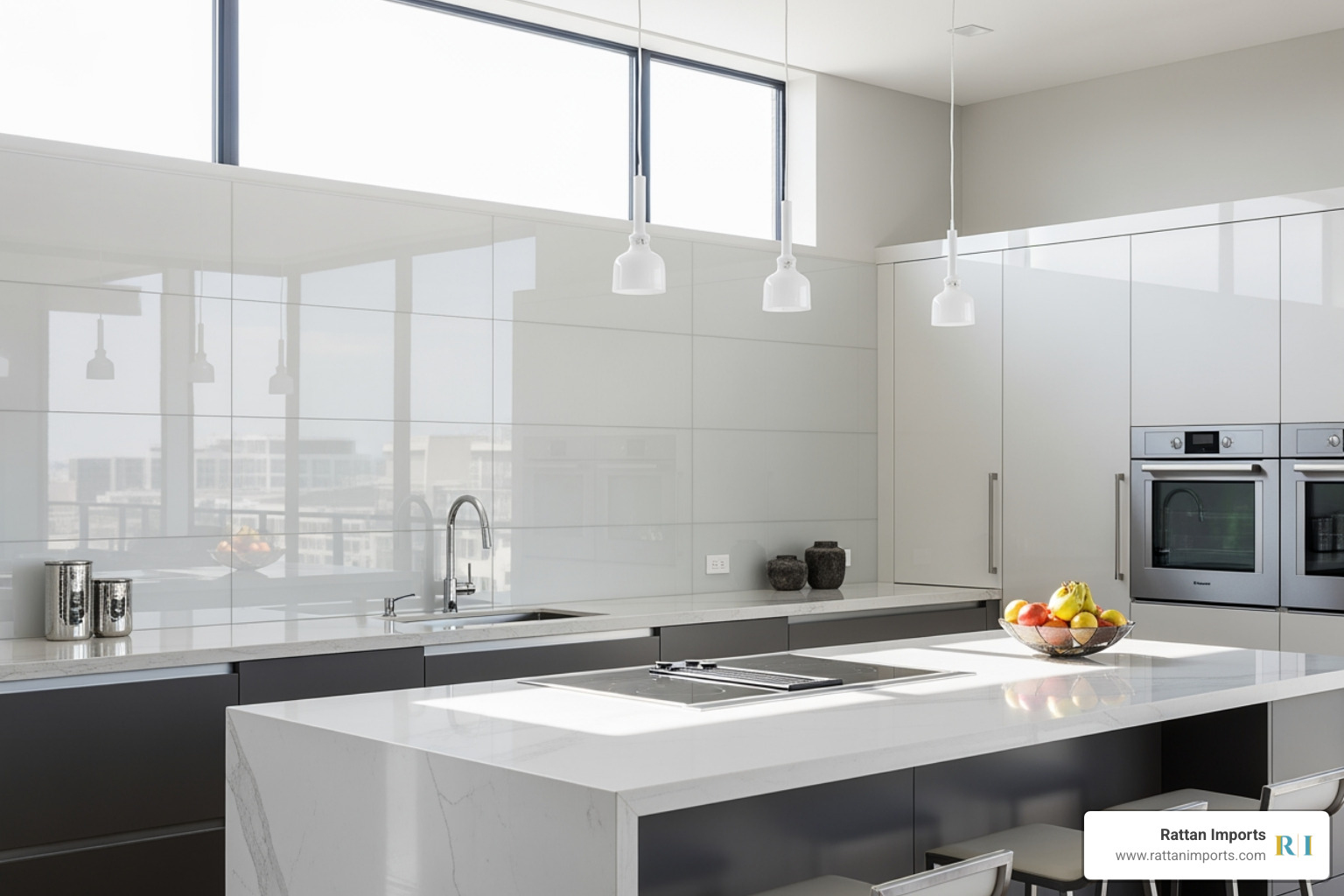
(Source: Village Handcrafted Cabinetry)
The Simplest Trick: Crystal Clear Windows
Clean windows are paramount for maximizing natural light. Dust, grime, and pollen form a barrier that significantly reduces sunlight. Regular cleaning gives your home's brightness a noticeable boost. Clean interior windows monthly and deep clean exterior windows and screens in spring and fall. For hard-to-reach spots, professional service can be worthwhile.
(Source: @houseonthecorner_16)
Architectural Solutions and Exterior Adjustments
Upgrading Windows, Doors, and Skylights
For perpetually dim homes, structural changes make enormous differences. Installing larger windows or widening existing ones dramatically increases light influx. Transom windows above doors filter more light without compromising privacy.
For rooms lacking wall space or deep within homes, skylights bring overhead sunlight. Solar tubes (tubular daylighting devices) are compact, reflective tubes directing rays into darker corners where traditional windows aren't feasible. While skylights require larger investments, solar tubes offer cost-effective solutions.
(Source: West Bury Joinery, Solatube)
Interior doors crucially impact light flow. Replace solid doors with glass or French doors, particularly in sunlit rooms. For privacy, frosted or etched glass diffuses light while maintaining seclusion.
(Source: Union Corporation Japan)
Consider energy efficiency when upgrading. Modern double or triple-pane windows with Low-E coatings let in ample light while limiting heat transfer.
Embracing an Open-Concept Flow
Open floor plans reduce walls between rooms, allowing light to flow freely. Consider removing non-load-bearing walls or creating wider openings. Partial walls or columns define zones without obstructing light, making spaces feel larger. For more ideas, check our Top 9 Tricks to Make Small Living Spaces & Furniture Look Bigger.
(Source: Alexis Austin)
Landscaping for Light
Overgrown trees and shrubs block light and cast shadows. Regular pruning near windows optimizes sunlight. Strategic planting ensures greenery complements rather than obstructs natural light.
Light-colored exterior walls reflect light into homes. Light-colored driveways, patios, or pathways reflect ambient light upwards into windows.
(Source: TMD Landscape Designs)
Strategic Furnishing & Natural Light Decor
The Magic of Mirrors and Metallics
Mirrors multiply light sources by reflecting and bouncing light throughout rooms. Position large mirrors opposite windows to double perceived light and reach darker corners. Mirrored furniture and decorative elements actively contribute to brightness.
(Source: Danusia Interior)
Metallic accessories with polished chrome, brass, gold, and silver finishes catch and scatter light. Place these near windows where they catch incoming light at its brightest. Explore our collection of Sip in Style with These Stunning Rattan Coffee Tables.
(Source: Hayley Stuart)
Perfecting Your Natural Light Decor with Furniture
Furniture placement critically impacts natural light decor. Avoid bulky, dark furniture blocking windows. Choose low-profile pieces with open designs. Light-colored upholstery reflects more light than dark fabrics.
At Rattan Imports, we specialize in natural textures like rattan and wicker. Their open weaves and pale tones allow light to filter through, bringing airy, coastal chic vibes. Explore Wicker Living Room Furniture That Weaves Comfort and Style and Coastal Chic to Indoor Comfort: The Versatility of Rattan Wicker.
Window Treatments that Welcome the Sun
For optimal natural light decor, choose treatments allowing maximum light while providing privacy. Sheer curtains diffuse harsh sunlight into soft glow. Light-filtering blinds like bamboo shades reduce glare while allowing ambient light. Top-down, bottom-up shades let light in from above while maintaining eye-level privacy.
(Source: Studio Haus Co)
Hang drapery high and wide – extend curtain rods 12 inches beyond window frames so curtains clear windows when open.
| Window Treatment | Light Control | Privacy Level | Notes |
|---|---|---|---|
| Sheer Curtains | Diffuse bright light | Light to moderate | Ideal for living rooms |
| Light-Filtering Blinds | Reduce glare | Moderate | Great for bedrooms |
| Blackout Drapes | Block most light | High | Best for media rooms |
The Foundation: Maximizing Light with Color and Surfaces
Choosing the Right Paint Palette
The colors we choose for our walls and ceilings play an instrumental role in either augmenting or diminishing the presence of natural light. Light Reflectance Value (LRV) is a measure of how much light a color reflects. The closer the number is to 100, the more light will bounce back into the room, making it feel brighter and more expansive.
To truly maximize natural light, we always recommend opting for high LRV colors. Whites and pastels are the champions here, with their innate ability to reflect over 80% of the sunlight they interact with. Imagine a room bathed in sunlight, with these hues acting as giant reflectors, bouncing light into every corner. Beyond crisp whites, a whole palette of softer neutrals awaits. Soft grays, pale blues, creamy beiges, and understated greens have a natural affinity with sunlight, reflecting it generously across your living space. These colors can make a room feel inherently brighter and more airy, especially in spaces with limited natural light. For more insights on selecting the right shades, explore our guide on Rattan Revival: Choosing the Best Paint Colors.
Do not forget the ceiling. While walls get most of the attention, a white ceiling with a flat finish can reflect a significant amount of light back into the room, making it feel loftier and brighter. If a pure white feels too stark, painting the ceiling a few shades lighter than your walls can achieve a similar effect while maintaining a cohesive look.
The Power of Reflective Finishes
Beyond color, the finish of your paint and surfaces can dramatically impact how light behaves in a room. While matte finishes absorb light, glossy and metallic surfaces have the ability to reflect and scatter light, similar to mirrors but with a more subtle, diffused effect.
For walls, satin or semi-gloss paints are often recommended. These finishes have a slight sheen that subtly bounces light around the room, enhancing brightness. That shinier paint finishes can highlight imperfections on walls, so ensure your surfaces are smooth before applying.
The power of reflection extends to floors and other surfaces too. Polished floors, whether light wood or light-colored tiles, can act as excellent light reflectors. High-gloss flooring, for instance, can serve as a secondary light source, distributing light even further into the room. In kitchens and bathrooms, glossy backsplashes or tiles can similarly catch and diffuse light, imbuing the space with a soft, radiant glow and helping light reach even the most hidden nooks and corners.
(Source: Village Handcrafted Cabinetry)
The Simplest Trick: Crystal Clear Windows
Clean windows are paramount for maximizing natural light. Dust, grime, water spots, and pollen can accumulate on windowpanes, forming a translucent barrier that significantly reduces the amount of sunlight entering your home. It is similar to wearing sunglasses indoors – you are unnecessarily dimming your environment.
Regular window cleaning can give your home's natural brightness a significant boost because a spotless window allows sunlight to stream in unhindered, increasing the intensity of light that reaches your interiors. Cleaning interior windows at least once a month, and deep cleaning exterior windows and screens in the spring and fall, can make a visible difference. For hard-to-reach spots, investing in a professional service can be worthwhile. Unobstructed light flow starts with a crystal-clear view.
(Source: @houseonthecorner_16)
Architectural Solutions and Exterior Adjustments
Upgrading Windows, Doors, and Skylights
Sometimes, to truly maximize natural light, we need to think beyond paint and decor and consider more structural changes. If your home feels perpetually dim, upgrading your windows and doors can make an enormous difference. Installing larger windows, such as floor-to-ceiling varieties, or widening existing ones can dramatically increase the influx of light. Adding transom windows above existing windows or doors can also filter more light into a space without compromising privacy or wall space.
For rooms that lack sufficient wall space for windows, or those deep within the home, skylights and solar tubes are excellent options. Skylights bring in overhead sunlight, offering a broad wash of light and even a view of the sky. Solar tubes, also known as tubular daylighting devices (TDDs), are compact, highly reflective tubes that act as sunlight conduits. They can direct rays into the deeper and darker areas of your home where traditional windows are not feasible. While skylights can be a larger investment and may pose a greater risk of leakage or heat gain, solar tubes are often a more cost-effective way to bring daylight into specific areas.
(Source: West Bury Joinery, Solatube)
Interior doors also play a crucial role in light flow. Solid doors can act as barriers, compartmentalizing spaces and blocking natural light from spreading. Consider incorporating glass or French doors into your design, particularly in rooms that receive ample sunlight. Their transparency can dramatically increase the movement of light, helping transform your space into a radiant, sunlit haven. For those concerned about privacy, frosted, etched, or reeded glass options can diffuse light while maintaining seclusion.
(Source: Union Corporation Japan)
When making these upgrades, it is important to consider energy efficiency. Modern energy-efficient glass, such as double or triple-pane with Low-E (low-emissivity) coatings, is designed to let in ample light while helping reduce heat transfer. This helps keep your home more comfortable and can assist with managing energy use.
Embracing an Open-Concept Flow
The layout of our homes has a strong impact on the distribution of natural light. Traditional homes with many small, separated rooms can often feel dark and compartmentalized, even with numerous windows. Open floor plans reduce the number of walls between rooms so light can travel farther.
If you are open to structural changes, consider removing non-load-bearing walls or creating additional openings in existing walls. Even partial walls or widened doorways can improve the movement of light. Partial walls or columns can be used to define zones without completely obstructing light, improving light distribution and making spaces feel significantly larger and more connected. For more ideas on how to make your spaces feel bigger, check out our Top 9 Tricks to Make Small Living Spaces & Furniture Look Bigger.
(Source: Alexis Austin)
Landscaping for Light
The natural light entering our homes is influenced by what happens outside as well as inside. Overgrown trees and shrubs, while attractive, can block light, casting shadows and preventing sunlight from reaching your interiors.
Regular pruning of foliage near windows is a simple way to improve the amount of sunlight entering your home. Think carefully about the types of plants you cultivate near your house; strategic planting can ensure that greenery frames views and softens the architecture without overwhelming your windows.
Your home's exterior surfaces also influence how light behaves. Light-colored exterior walls can reflect light into your home and brighten interior spaces. Using light-colored materials for driveways, patios, or pathways can reflect ambient light upwards and into your windows, adding a subtle boost to overall brightness.
(Source: TMD Landscape Designs)
Strategic Furnishing & Natural Light Decor
The Magic of Mirrors and Metallics
Mirrors are a designer's secret weapon when it comes to maximizing natural light. They do not just reflect our image; they reflect light, creating the illusion of more windows and multiplying existing light sources. The key is strategic placement. Position a large mirror directly opposite a window, and it can bounce light into darker corners and make the space feel significantly larger. Placing mirrors adjacent to windows or in dark hallways can also be very effective.
You can extend this technique with mirrored furniture. A mirrored coffee table in your living room or a mirrored nightstand in your bedroom adds both function and reflection. Mirrored-backed bookshelves or decorative elements with mirrored surfaces increase the number of reflective planes in a room, further playing up available light.
(Source: Danusia Interior)
Metallic accessories also help brighten spaces. Polished chrome, brass, gold, and silver finishes have reflective qualities that catch and scatter light. Place these items near windows or under skylights so they can catch incoming light at its strongest, using it as a highlight that adds visual interest while also contributing to overall illumination. Think metallic picture frames, lamp bases, decorative bowls, or even gilded fixtures. For ideas on styling, explore our collection of Sip in Style with These Stunning Rattan Coffee Tables.
(Source: Hayley Stuart)
Perfecting Your Natural Light Decor with Furniture
Furniture placement and selection are critical in effective natural light decor. Bulky, dark furniture placed directly in front of windows can block natural light, creating shadows and making a room feel heavier. Instead, choose low-profile furniture that allows light to move across the space. Pull large pieces away from window areas and opt for open designs, such as slim legs and airy silhouettes, to keep sight lines open.
Light-colored upholstery for sofas, chairs, and beds reflects more light than dark fabrics, supporting a brighter look. Furnishings with shiny lacquered, clear glass, or see-through acrylic finishes can further reflect and transmit light.
At Rattan Imports, we focus on natural textures like rattan and wicker. These materials are beautiful and durable, and their open weaves and pale, natural tones work with natural light rather than against it. Rattan furniture, whether it is a coffee table, a living room set, or a bedroom piece, brings an airy, coastal chic vibe that suits light-filled rooms. Explore our collections like Wicker Living Room Furniture That Weaves Comfort and Style and Coastal Chic to Indoor Comfort: The Versatility of Rattan Wicker for inspiration.
Window Treatments that Welcome the Sun
Window treatments provide privacy and control, but they can also block valuable natural light. For optimal natural light decor, choose treatments that let in as much light as possible while still meeting your practical needs.
Sheer curtains, made from fabrics like linen, voile, or lace, are a flexible choice. They soften direct sunlight into a gentle glow, helping create a bright yet comfortable atmosphere and offering light to moderate privacy.
Light-filtering blinds, such as bamboo or woven wood shades, reduce glare while still letting in ambient light and adding texture. Retractable window treatments allow you to pull them fully clear of the glass during the day. For rooms where privacy is a concern, top-down, bottom-up shades let you keep the lower part of the window covered while allowing daylight to enter from above.
(Source: Studio Haus Co)
Hanging drapery high and wide can also make a noticeable difference. Extending the rod beyond the window frame by at least 12 inches on each side allows curtains to stack off the glass when open so light can enter unimpeded.
Illuminating Challenging Spaces and Balancing Light
Strategies for Your Natural Light Decor in Dark Rooms
North-facing rooms receive indirect, cooler light. Amplify available light using warm-toned paint colors like creamy whites or soft yellows. Mirrors are particularly effective here.
Basements require creative solutions. Light wells bring sunlight from ground level. Solar tubes channel sunlight from roofs, providing diffused glow. See Est Living for more ideas.
In dark rooms, use light colors everywhere. Choose lighter furniture or reflective surfaces. Even small accents contribute to brightness. For contrast, consider Find Your Perfect Black Rattan Side Table balanced with lighter surroundings.
Balancing Natural and Artificial Light
Blend natural and artificial light for comfort throughout the day using layered lighting:
- Ambient Lighting: General room illumination from chandeliers or recessed lighting
- Task Lighting: Focused light for activities via table or desk lamps
- Accent Lighting: Highlights architectural details with wall sconces
Dimmable switches adjust intensity as natural light changes. Choose bulbs with 2700K-3000K color temperature for welcoming glow that blends with daylight.
Frequently Asked Questions about Natural Light Decor
What paint finish is best for reflecting natural light?
Satin or semi-gloss finishes are best for reflecting natural light, as their sheen helps bounce light around a room more effectively than a flat or matte finish. However, be aware that higher sheens can highlight wall imperfections, so ensure your surfaces are smooth before applying.
How can I have both privacy and natural light?
Opt for sheer curtains, light-filtering blinds, or top-down/bottom-up shades. These options diffuse incoming light to brighten the room while obscuring the view from outside. Frosted or etched window films are also an excellent, renter-friendly solution that allows light in while maintaining privacy.
Will adding more windows make my home less energy-efficient?
Not necessarily. Modern energy-efficient windows, such as double or triple-pane with Low-E (low-emissivity) coatings, are designed to let in light while helping limit heat transfer. This can help keep your home more comfortable and support energy efficiency.
Conclusion: Create Your Own Sunlit Sanctuary
Using the power of natural light is one of the most impactful ways to transform your home. By integrating thoughtful natural light decor strategies—from choosing the right paint colors and reflective finishes to optimizing furniture placement and selecting appropriate window treatments—you can create spaces that are not only aesthetically pleasing but also supportive of your mood, productivity, and overall well-being.
A brighter home often feels like a happier home. Start with simple changes and gradually explore more significant upgrades, and you can watch your rooms come alive with warmth and energy, feeling more expansive and inviting.
At Rattan Imports, we believe that the right furniture can complement your sunlit sanctuary. Our collections, featuring rattan and wicker pieces sourced from Southeast Asia and assembled in the U.S., are designed to improve the airy, natural aesthetic that abundant light creates. Enjoy free mainland U.S. shipping, a price guarantee, and identity theft protection as you discover the best indoor furniture to complete your light-filled home.