



How to Choose Heavy Duty Gliders That Last
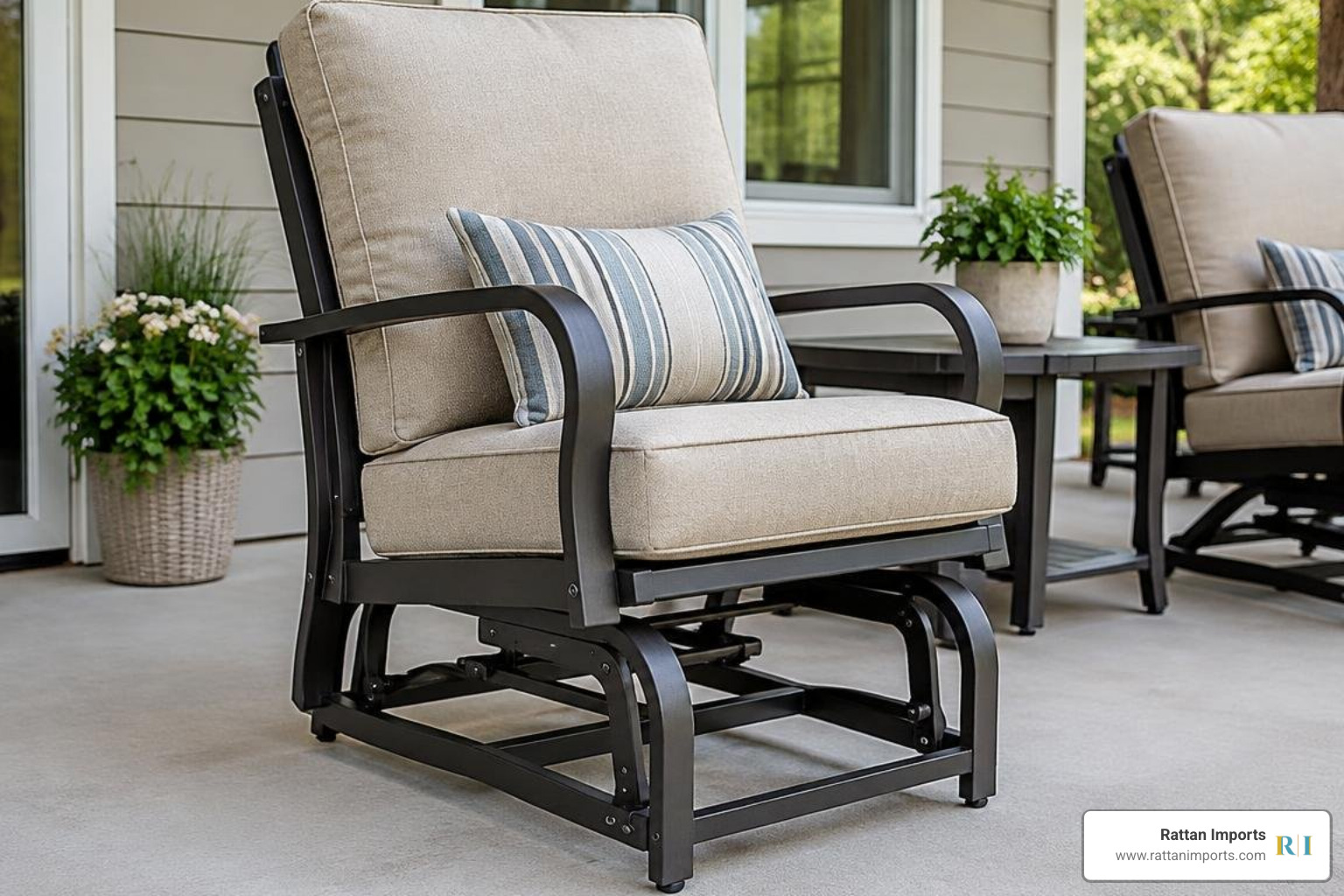
For heavy duty gliders, start with the manufacturer's stated weight limit. Choose a rating above the combined weight of everyone who will sit on the glider, then check the frame, seat supports, and moving joints. Many heavy-duty porch models are rated for 500 pounds or more, but capacity varies by design. For outdoor use, look for weather-resistant materials and enough space for the glider to move freely.
A higher weight rating is only useful if the glider also fits your space and feels comfortable. This guide will help you compare construction, seating features, and upkeep before you buy.
I'm Nino Russo Alesi, founder of Rattan Imports, where my work in furniture and customer service has taught me to focus on how a piece will serve the people using it. When evaluating heavy duty gliders, I start with the practical details: the stated load limit, build quality, and fit for the space.
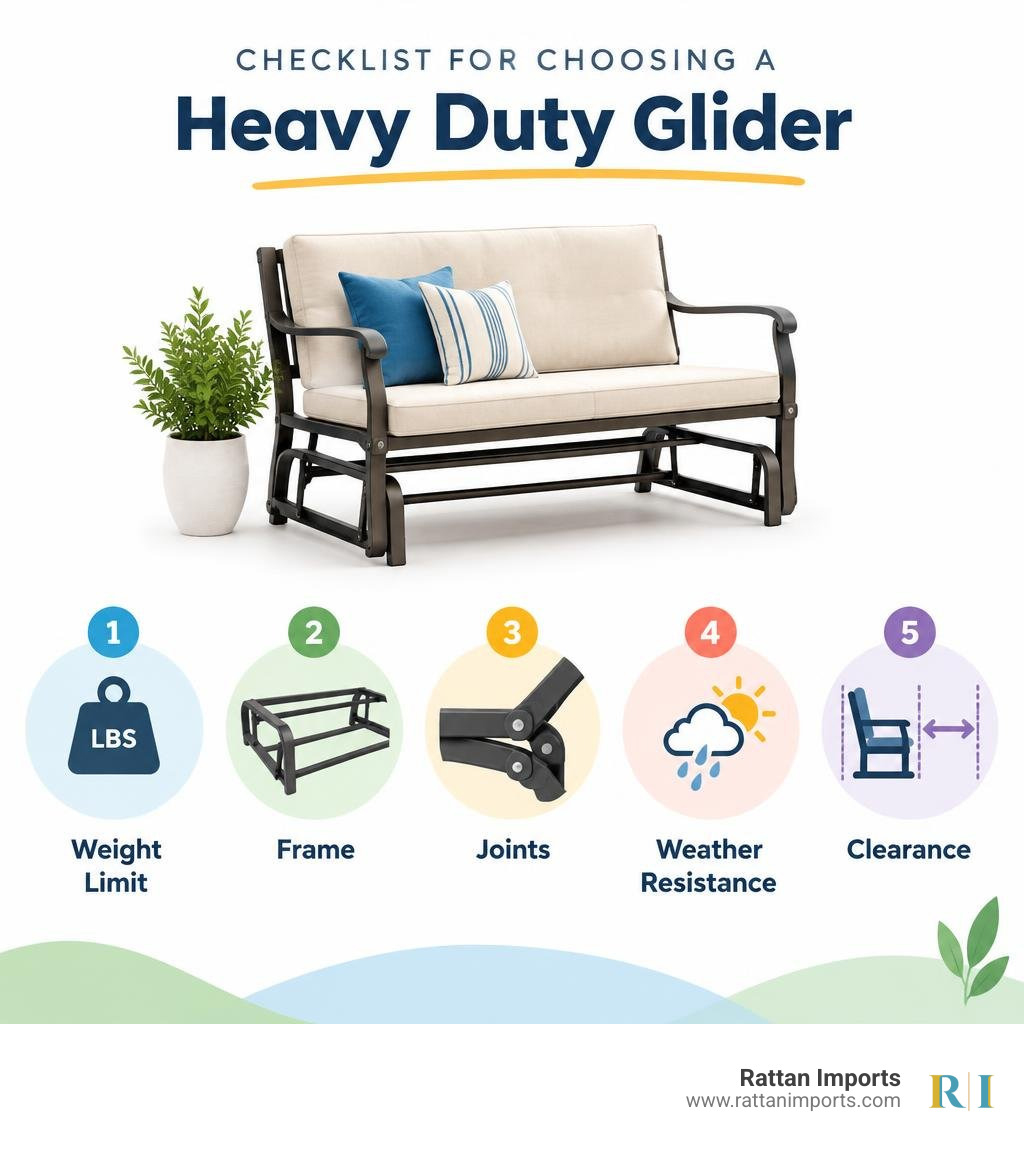
Basic heavy duty gliders vocab:
What Defines Heavy-Duty Gliders: Materials, Construction, and Load Capacities
When we talk about heavy-duty construction, we are looking at far more than just thick armrests or substantial visual bulk. A true heavy-duty glider is engineered from the ground up to endure repeated mechanical movement under substantial load. While standard residential gliders typically support between 250 and 300 pounds, heavy-duty variants feature commercial load limits starting at 500 pounds and extending up to 900 pounds or more.
The core differentiator lies in the mechanical linkage. High-capacity gliders utilize heavy-gauge steel swing arms fitted with precision-sealed, stainless steel ball bearings. These enclosed bearings keep out moisture, dirt, and grit, ensuring a smooth horizontal glide without metal fatigue or premature grinding. Furthermore, the structural framework relies on dense, impact-resistant materials fastened with marine-grade 316 stainless steel bolts rather than light-duty wood screws or cheap staples.
| Material Type | Typical Load Limit | Weather & UV Resistance | Maintenance Requirements |
|---|---|---|---|
| High-Density Poly Lumber (HDPE / HIPS) | 660 – 900 lbs | Exceptional (Impervious to moisture & rot) | Low (Occasional soap-and-water wash) |
| Treated Solid Wood (Cedar / Pine) | 500 – 800 lbs | High (Requires periodic sealing) | Moderate (Annual sealing or staining) |
| Powder-Coated Steel / Aluminum | 600 – 800 lbs | High (Corrosion-resistant coating) | Low to Moderate (Inspect for scratches) |
| Resin Wicker over Aluminum Frame | 400 – 600 lbs | High (UV-treated synthetic weave) | Low (Brush clean, wipe frame) |
Essential Weight Capacity Benchmarks for Heavy Duty Gliders
Understanding weight capacity requires distinguishing between static and dynamic load limits. Static capacity refers to stationary weight placed gently on the seat slats, whereas dynamic capacity accounts for the active kinetic energy generated when two or three adults sit down, lean back, and engage the gliding motion.
A dependable heavy-duty benchmark begins at 500 to 600 pounds for two-person benches, while three-seat models and reinforced commercial benches easily achieve 800 to 900-pound thresholds. Choosing a generous weight rating prevents frame racking, joint looseness, and sagging center slats over years of daily enjoyment. If you are looking for single-occupant comfort with extra space, exploring a wide glider recliner provides ample room and reinforced support.
Material Engineering: Poly Lumber, Treated Wood, and Powder-Coated Metal
The longevity of heavy-duty seating depends directly on material density and weather resistance:
- High-Density Poly Lumber (HDPE & HIPS): Recycled plastics engineered with solid coloring throughout. They will not splinter, warp, crack, or peel, making them virtually maintenance-free across freezing winters and sweltering summers.
- Pressure-Treated Pine and Western Red Cedar: Classic timber choices treated to resist wood-boring insects and rot. Red cedar contains natural oils that protect against moisture while offering a warm, timeless outdoor aesthetic.
- Powder-Coated Steel and Aluminum: Heavy-gauge tubular metal frames coated with electrostatic finishes provide outstanding rigidity without bending under load.
- Performance Fabrics: Seating cushions upholstered in solution-dyed acrylics, such as Sunbrella, resist fading from intense UV rays and repel water, preventing mildew build-up on glider chairs.
Core Categories of Heavy Duty Gliders Across Seating and Utility
The term "glider" spans several distinct categories across home relaxation, cargo utility, and high-performance aviation engineering.
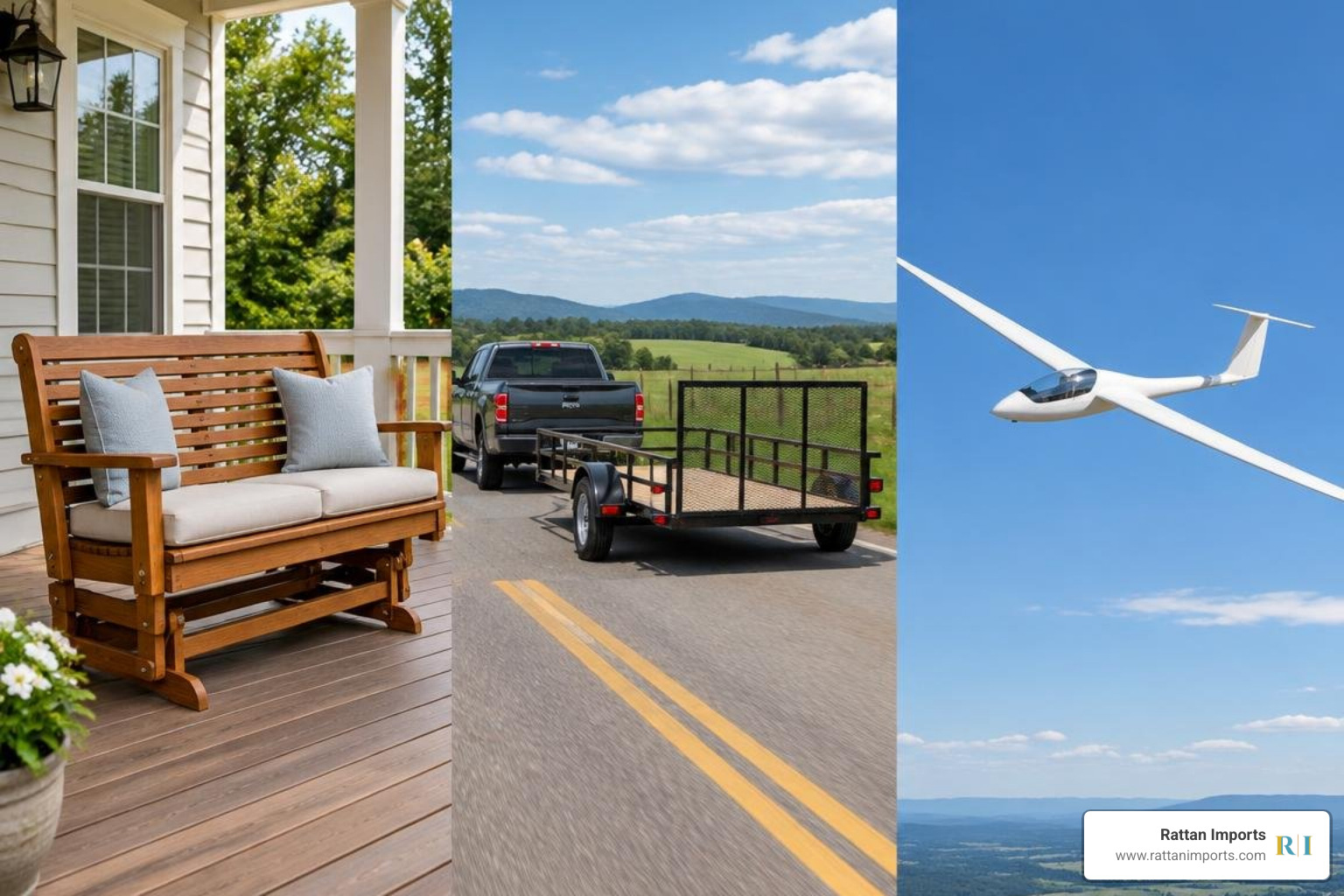
Outdoor Patio and Porch Seating Gliders
Outdoor seating gliders provide the comforting motion of a traditional porch swing without requiring overhead ceiling joists or suspension chains. Built as two-person loveseats or expansive three-person benches, these units often feature center consoles and integrated cup holders. For outdoor living, our RT-77 Rockport loveseat glider combines all-weather durability with deep seating comfort.
Indoor Living and Nursery Comfort Gliders
Indoor models prioritize quiet, 360-degree swivel mechanisms and plush, full-body ergonomic support. Designed for soothing infants or relaxing in living spaces, high-traffic nursery gliders incorporate heavy-duty steel base rings that eliminate clicking sounds. For a full breakdown of nursery options, check out our nursery glider chairs buying guide and our gliders with ottoman buying guide to find your perfect match.
Heavy Payload Cargo and Ground Gliders
Beyond residential seating, heavy-duty utility gliders haul substantial cargo across rough terrain:
- Heavy-Duty Ground Utility Carts: Versatile multi-carts like the RockNRoller R14G Mega Ground Glider support up to 700 pounds across grass, gravel, and carpet with foam-filled no-flat tires.
- Ultra-High-Molecular-Weight (UHMW) Utility Sleds: Industrial hauling sleds such as the Yard Glider Extreme 60 feature thick UHMW polymer sheets that handle a standard 3,750-pound pull capacity, reaching up to 5,000 pounds when outfitted with a 5-point towing harness.
Aviation and Aerodynamic Heavy-Load Gliders
In aviation, high-payload gliders are engineered for unpowered flight carrying substantial weights:
- Tandem Hang Gliders: High-capacity recreational gliders like the Freedom 220 Tandem hang glider feature carbon-fiber reinforced sail ribs and heavy-duty 7075-T6 aluminum control frames to support up to 500-pound payloads safely.
- Paramotors & Paragliders: Heavy-payload wings and equipment available through ParamotorDepot provide steady lift for powered tandem touring.
- Historical Military Air-Landing: During World War II, unpowered military gliders transported troops, jeeps, and heavy artillery into combat zones without engine noise.
- Modern Flight Simulation Physics: Modern software recreates these dynamics with extreme fidelity; as covered in TechCrunch's report on how Microsoft brings helicopters and gliders to Flight Simulator, physics engines now model airflow, thermals, and rotor aerodynamics hundreds of times per second.
Buyer's Comparison: Choosing the Best Glider for Your Space
Selecting the right heavy-duty glider involves balancing frame footprint, weight ratings, and ergonomic styling.

If you love the versatility of full-swivel rotation paired with smooth gliding, explore our handcrafted options:
- The Mayfair swivel glider offers plush, tailored comfort for covered outdoor areas.
- The St-Tropez swivel glider brings refined coastal elegance with deep-seated resilience.
- The Arcadia swivel glider provides structured support with premium woven styling.
Key Features and Ergonomic Upgrades
When shopping for high-capacity seating, look for these quality features:
- Flip-Down Consoles & Cup Holders: Built-in consoles provide convenient spaces for drinks and books, folding up smoothly when you need space for an extra guest.
- Contoured Lumbar Seating: Rolled front edges (waterfall seats) and curved backrest slats relieve pressure behind the knees and support lower back posture.
- High-Resiliency Cushions: Multi-layer foam wrapped in water-resistant batting retains its loft without bottoming out under heavy loads.
Safety Considerations and Proper Weight Distribution
To ensure safe operation over years of use:
- Level Placement: Always set your glider on a flat, level surface (decking, concrete, or packed stone) to prevent uneven stress on the glider arms.
- Pinch-Point Clearance: Maintain at least 12 to 18 inches of clearance in front of and behind the glider to allow full travel without hitting railings or walls.
- Load Distribution: Encourage even seating across double and triple benches to balance tension on the bearing brackets.
Maintenance, Care, and Longevity for Extreme Durability
A heavy-duty glider is a lasting investment in comfort. Following a seasonal maintenance routine protects moving parts and keeps the frame pristine.
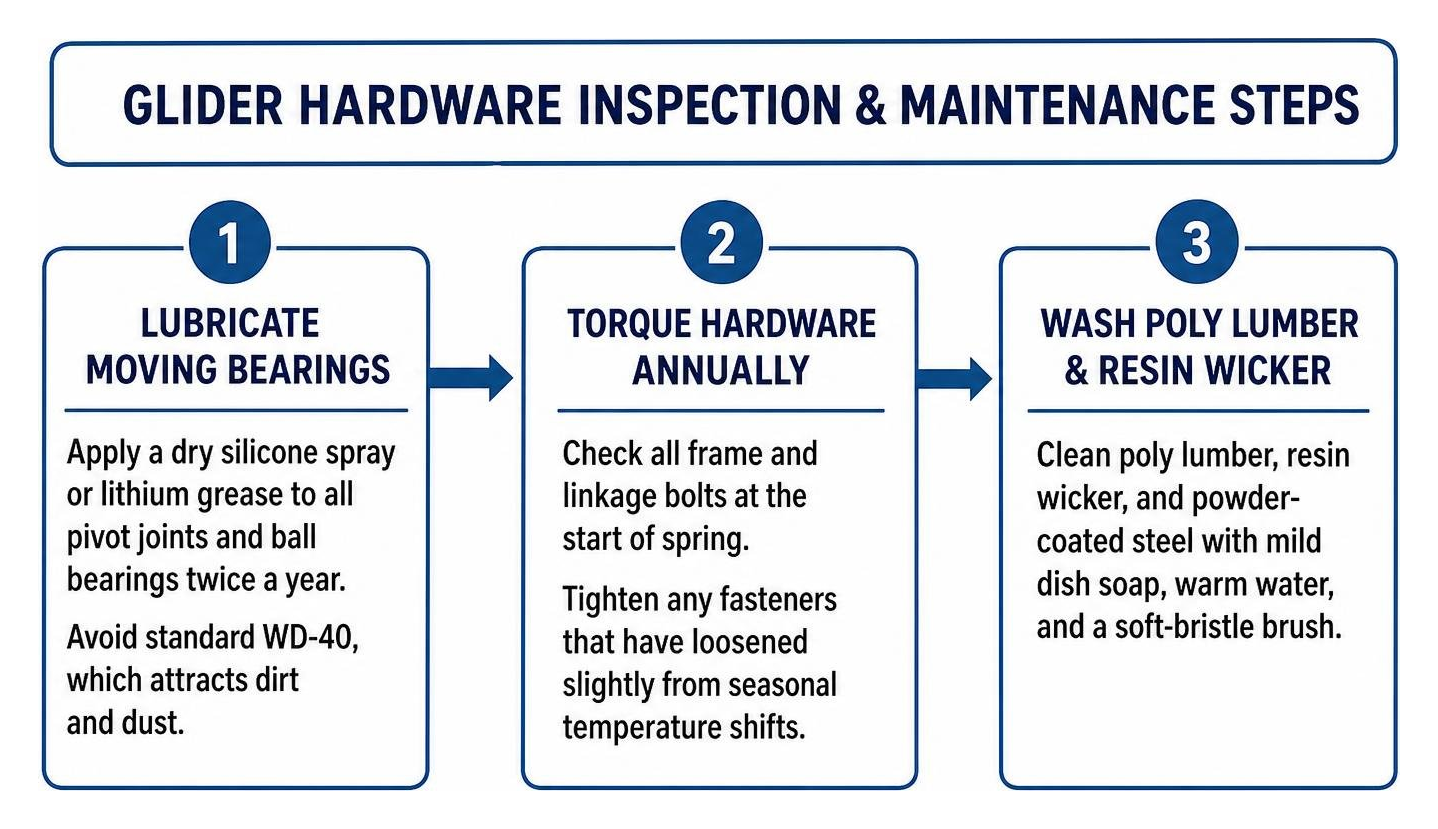
Maintenance Best Practices to Extend the Lifespan of Heavy Duty Gliders
- Lubricate Moving Bearings: Apply a dry silicone spray or lithium grease to all pivot joints and ball bearings twice a year. Avoid standard WD-40, which attracts dirt and dust.
- Torque Hardware Annually: Check all frame and linkage bolts at the start of spring. Tighten any fasteners that have loosened slightly from seasonal temperature shifts.
- Wash Poly Lumber & Resin Wicker: Clean poly lumber, resin wicker, and powder-coated steel with mild dish soap, warm water, and a soft-bristle brush.
- Protect Outdoor Fabrics: Wash cushion covers with a gentle soap solution, air dry thoroughly, and cover furniture during extreme winter conditions to maximize fabric vibrancy.
Frequently Asked Questions About Heavy Duty Gliders
How much weight can a heavy-duty porch glider typically hold?
Most heavy-duty two-person porch gliders support between 600 and 800 pounds, while reinforced poly lumber three-seater benches can hold up to 900 pounds. Always check the manufacturer's verified weight rating to ensure it accommodates multiple adult occupants with a comfortable safety margin.
What is the difference between a traditional rocking chair and a heavy-duty glider?
A traditional rocking chair balances on curved bottom rails that arc across the flooring, requiring more open space and potentially scratching wood decks. A heavy-duty glider sits on a stationary, level base frame and uses internal suspension arms with ball bearings to glide smoothly on a horizontal plane.
How do I prevent squeaking and wear on heavy-duty glider mechanisms?
Squeaking is typically caused by dry bearings or accumulated dust in the swing arm joints. To eliminate noise, wipe away debris from the mechanical linkages and spray each pivot point with a clean silicone-based lubricant while gently rocking the frame to distribute the coating.
Conclusion
Finding the perfect heavy duty gliders comes down to solid engineering, heavy-gauge hardware, and high-quality weatherproofing. Whether you are adding an inviting bench to your front porch, updating your living room, or outfitting a patio retreat, investing in serious load capacity ensures quiet, dependable relaxation for years to come.
At Rattan Imports, we pride ourselves on offering premium home décor and furniture sourced from Southeast Asia and assembled right here in the U.S. We back our products with free mainland shipping, our transparent price guarantee, and dedicated customer care. Explore our handcrafted Spice Islands seating, view our elegant South Sea Rattan collections, or check out our guide on nursery gliders for soothing comfort to find the perfect seating for your home.