



Understanding Cane: Material Origins, Construction, and Wicker Comparison
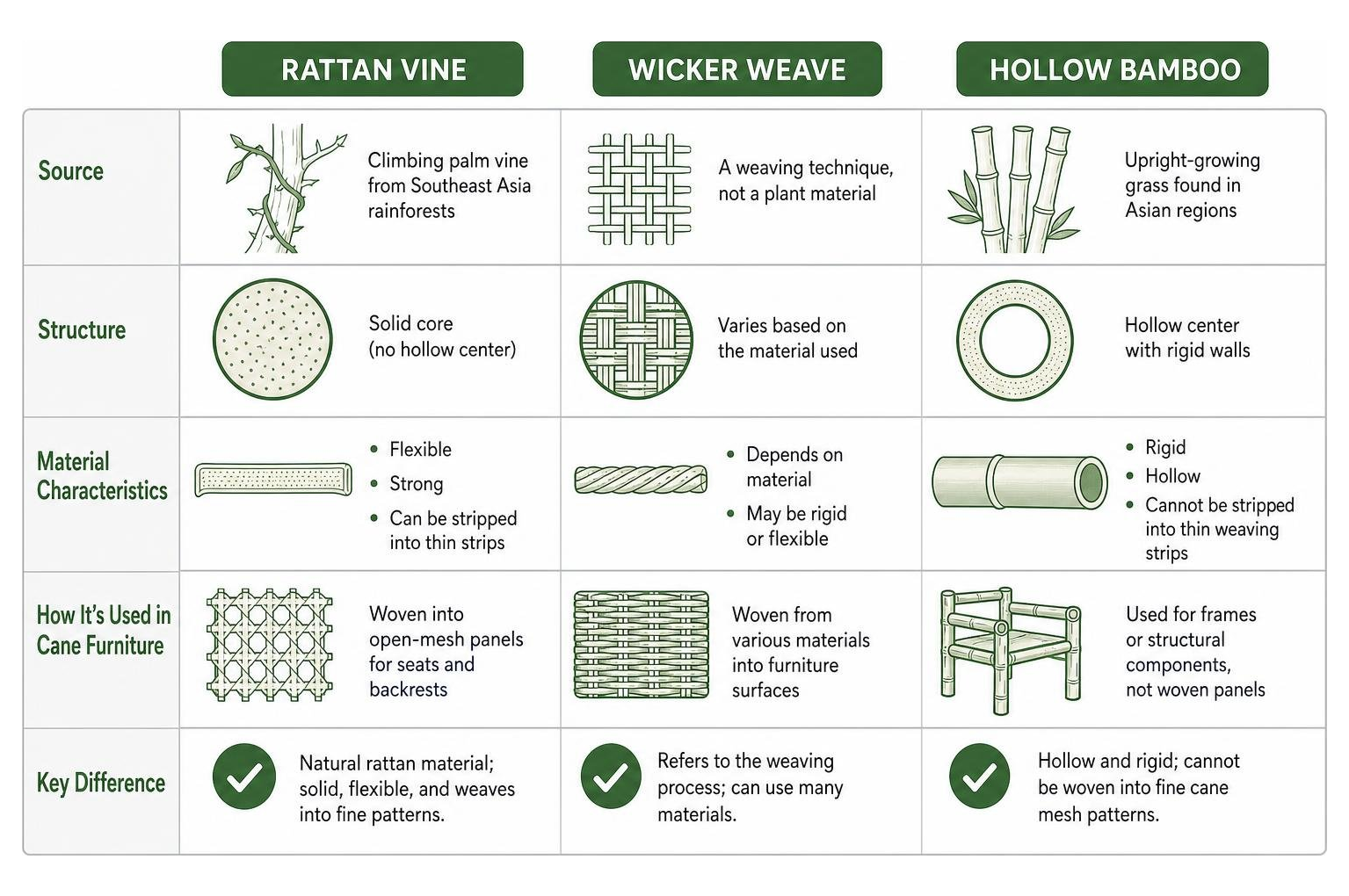
To appreciate the longevity and beauty of cane furniture chairs, it helps to understand where the raw material originates. Cane is not a synthetic creation, nor is it manufactured from standard wood timber. Instead, it is harvested from tropical rattan vines growing natively in the dense rainforests of Southeast Asia--primarily across Indonesia, the Philippines, and Malaysia. For broader botanical context, rattan is part of a group of climbing palms commonly described as rattan.
Unlike standard trees, rattan is a climbing palm vine that relies on surrounding forest canopy trees for structural support. It uses rugged, barbed thorns to grip adjacent trees, climbing upward toward sunlight. These vines regularly reach impressive lengths of 100 to 300 feet (30 to 90 meters), while maintaining a remarkably slim stem diameter of less than 1 inch (25 mm).
Because cane is derived directly from the strong outer layer of these vines, it provides incredible tensile strength combined with natural flexibility.
| Material / Method | Structural Characteristics | Key Differences |
|---|---|---|
| Cane | Flexible, narrow bark strips stripped from outer rattan vines. | Used primarily for fine, open-mesh woven panels, seat surfaces, and chair backrests. |
| Wicker | A style or technique of weaving, not a plant material. | Can be crafted using willow, reed, rattan core, synthetic resin, or paper cord. |
| Bamboo | Hollow, rigid, upright-growing grass. | Cannot be bent into tight woven mesh patterns; self-supporting and non-climbing. |
Rattan Vine vs. Bamboo and Wicker Mechanics
A common point of confusion for shoppers is distinguishing between rattan cane, wicker, and bamboo. The essential mechanical difference lies in the inner structure of the plant itself.
Bamboo is a hollow grass that grows upright on its own. Because it is rigid and hollow, bamboo cannot be easily stripped and woven into fine, intricate chair panels. Rattan, on the other hand, is completely solid on the inside. This solid, fibrous composition gives rattan vine its pliable nature, allowing artisans to bend, weave, and shape it without breaking the core fibers.
Wicker is frequently confused with cane, but wicker refers strictly to the process of weaving materials together rather than the raw material itself. A wicker chair might be woven from synthetic resin, paper cords, or willow shoots. Cane, by contrast, is always the natural outer peel of the rattan vine.
Chair Caning Construction and Stripping Techniques
The process of turning raw rattan vines into seating panels requires meticulous craftsmanship. Before export, workers remove the glossy outer bark from the rattan stems in narrow, continuous strips measuring roughly 1/16 to 3/16 inch (2 to 5 mm) wide. These flexible strands are then smoothed and prepped for weaving.
In traditional hand-caning, an artisan weaves these thin strips thread-by-thread directly through small holes drilled along the border of a solid wood chair frame. This creates the classic octagonal open-mesh pattern known for its strength and light appearance. Modern furniture production also utilizes pre-woven sheet cane, where the mesh pattern is machine-woven or hand-loomed into sheets and pressed securely into a groove on the chair frame using a rubber spline.
Whether hand-woven or set with a spline, the result is a flexible, resilient mesh panel that distributes weight evenly across the seat or backrest. If you are exploring how woven elements elevate total bedroom and home design, take a look at our guide from cane to wicker your perfect woven bed awaits to see how these techniques translate across different furniture frames.
The Benefits and Aesthetics of Cane Furniture Chairs
Choosing cane furniture chairs for your living space delivers an ideal balance of practical function and visual charm. Because cane panels feature open geometric weaves, they allow light and air to pass straight through. This unique characteristic prevents smaller rooms from feeling overcrowded, making cane an exceptional choice for urban apartments and compact dining nooks alike.
Key benefits of incorporating cane chairs into your home include:
- Breathable Ergonomics: The flexible mesh panel yields slightly to your body, offering springy support that remains cool and ventilated even during warmer summer months.
- Lightweight Strength: Despite their delicate visual appearance, natural cane fibers possess high tensile strength, creating lightweight chairs that are easy to move without sacrificing load-bearing durability.
- Organic Texture and Warmth: The golden, earthy hues of natural cane break up cold, hard surfaces like glass, tile, or metal, adding instant warmth to neutral spaces.
Popular Interior Styles Using Cane Furniture Chairs
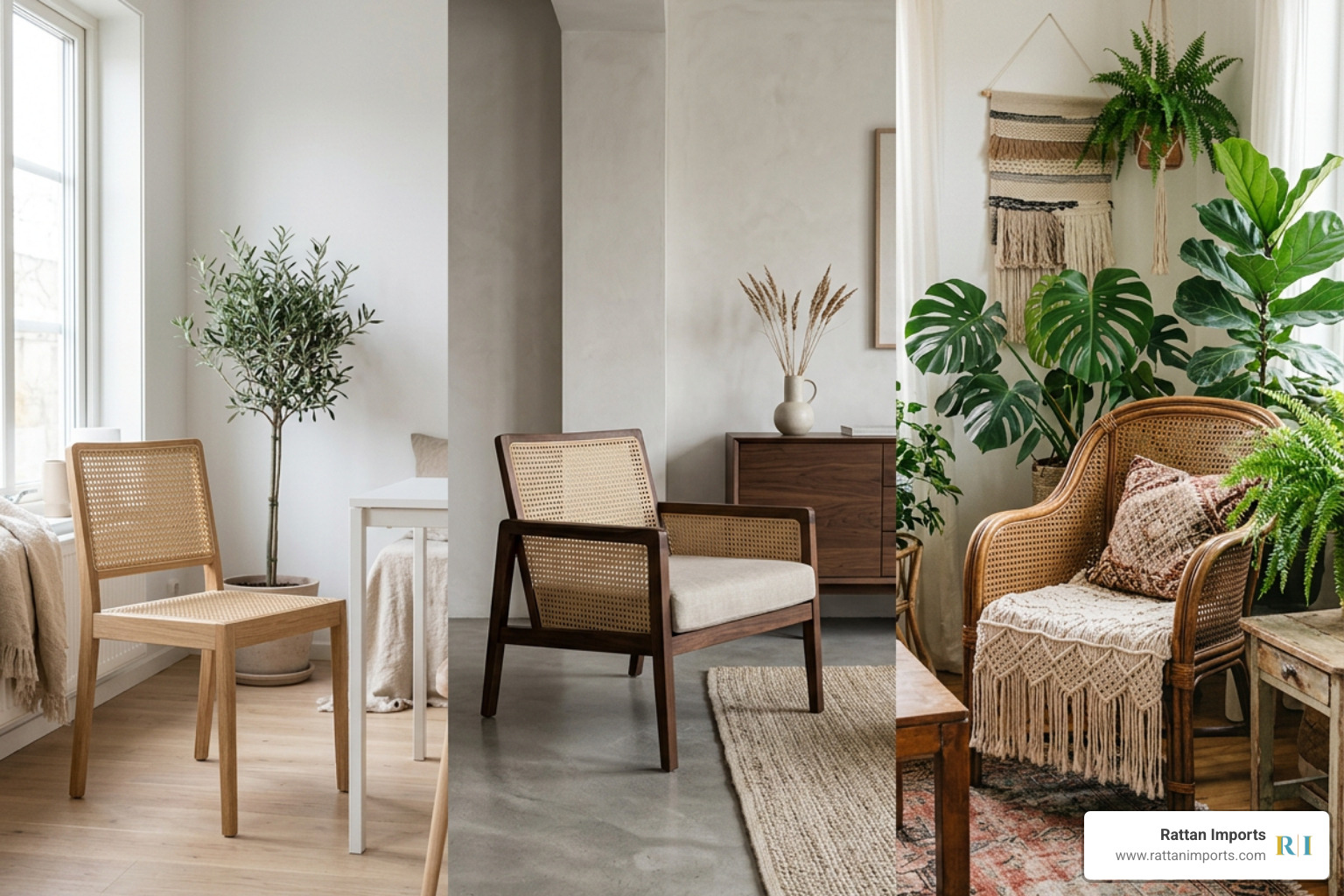
One reason cane furniture chairs remain popular year after year is their versatile design aesthetic. Rather than being tied to a single design era, cane effortlessly adapts to various interior design movements:
- Scandinavian Minimalism: Paired with light oak frames and simple lines, woven cane introduces warmth without cluttering clean minimalist spaces.
- Japandi Design: The blend of Japanese functionality and Rustic Scandinavian warmth relies heavily on natural materials. Dark walnut frames paired with natural woven cane side panels create ideal harmony in Japandi living rooms.
- Bohemian Chic: Combined with lush indoor plants, textured throws, and vintage rugs, cane chairs amplify relaxed boho vibes.
- Modern Contemporary: Sleek steel or black solid wood single-seater frames featuring woven cane accents add tactile contrast to ultra-modern apartments.
Styling Dining Rooms and Accent Nooks
Integrating cane seating into your existing floor plan is straightforward. In the dining area, a set of cane dining chairs instantly elevates formal or casual meals. The open mesh backs keep sightlines open across the table, making your dining space feel larger and more inviting.
When selecting a centerpiece, pairing these seating options with a matching cane furniture dining table creates a cohesive look grounded in tropical elegance.
Beyond dining spaces, cane seating excels in quiet corners. Placing a cane armchair in a sunlit corner creates an inviting reading nook. If you want to transform an underutilized bedroom space, read our article on beyond the bed top cane wicker chairs for bedroom nooks for layout ideas and inspiration.
Exploring Types, Designs, and Frames
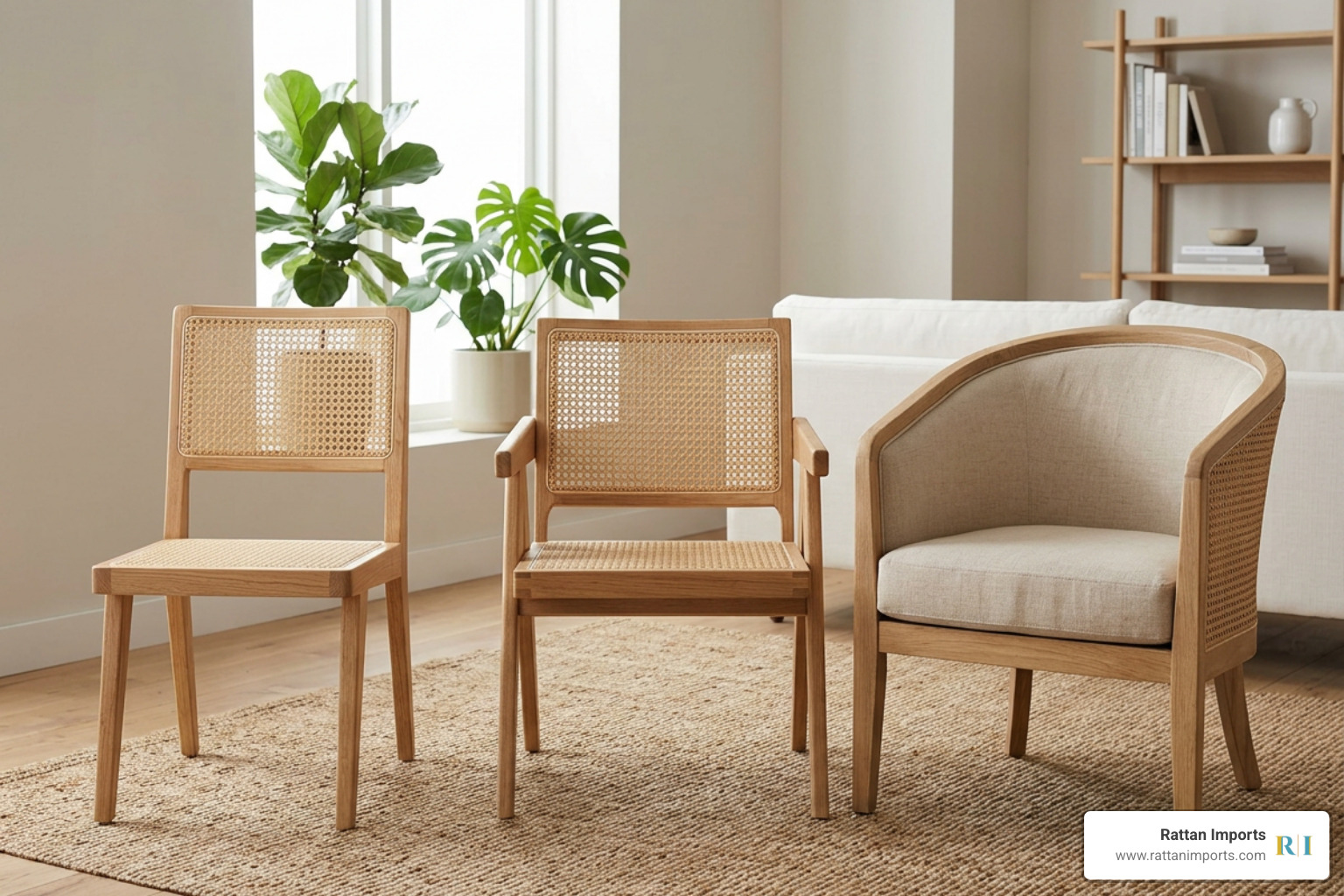
When shopping for cane furniture chairs, you will encounter a wide variety of silhouette options, structural frames, and cushion combinations. Choosing the right style depends on how often the chair will be used and where it will sit in your home.
Types of Cane Accent and Dining Seating
- Cane Side Chairs: Lightweight and armless, side chairs are perfect for dining tables or secondary desk seating. Their compact profile allows them to slide neatly under tabletops.
- Cane Armchairs: Featuring supportive armrests, these chairs bring comfort to long dinner conversations or living room seating layouts.
- Cane Bergère Chairs: Inspired by classical French design, a cane bergere chair features an upholstered seat cushion paired with a cane-paneled back and wooden frame, offering an elegant mix of formal structure and casual texture.
- Cane Back Dining Chairs with Arms: Providing extra stability and comfort, these pieces work wonderfully as head-of-table accent chairs. Explore our curated selection of top picks for cane back dining chairs with arms to find the right height and finish for your space.
Buyer's Guide: Choosing Quality Cane Furniture Chairs
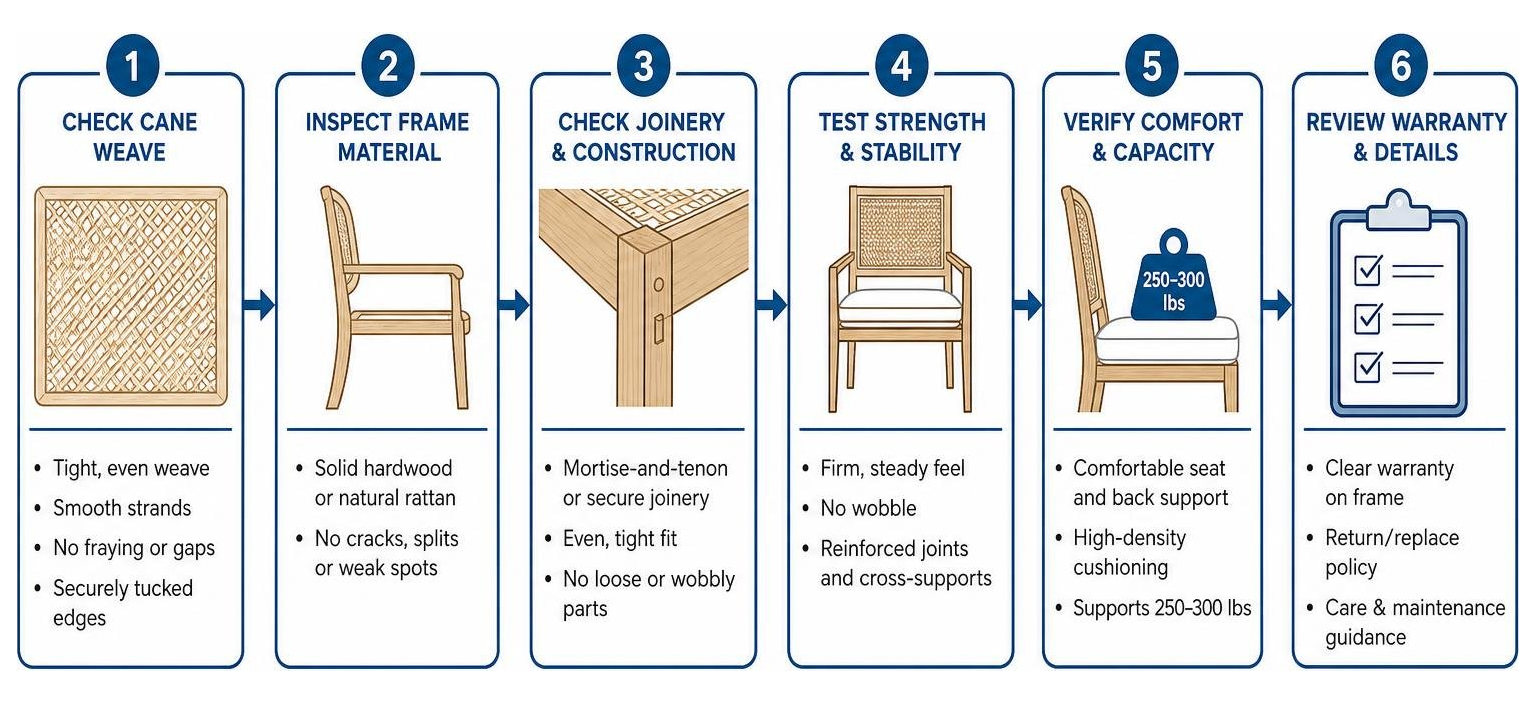
Investing in well-made cane seating requires looking closely at both the woven mesh and the supporting frame. Here are key markers of quality to check before making your purchase:
- Weave Tightness and Uniformity: Inspect the cane panel closely. High-quality cane features smooth, uniformly sized strands woven tightly without fraying, gaps, or split edges.
- Solid Wood Frame Joinery: Ensure the structural frame is crafted from solid hardwoods like teak, ash, oak, or sturdy natural rattan poles. Check for secure joinery like mortise-and-tenon joints rather than simple glued seams.
- Weight Capacity and Comfort: Confirm the chair’s weight rating. Quality accent and dining chairs should comfortably support 250 to 300 lbs. High-density foam cushions added to woven cane bases prevent excessive stretching over time.
- Warranty and Satisfaction: Look for reliable manufacturer warranties covering structural frames against defects. We at Rattan Imports take pride in offering transparent pricing and long-lasting quality; be sure to check out our price guarantee when planning your purchases.
Sustainability and Eco-Friendly Sourcing
A major advantage of natural cane furniture is its minimal environmental footprint. Rattan vines grow at extraordinarily fast rates compared to hardwood trees, often reaching maturity and full length within 5 to 7 years. Hardwood trees, by comparison, can take decades to mature.
Because rattan relies on standing forest trees to climb, local communities are financially incentivized to preserve surrounding rainforests rather than clear-cutting them for timber or agriculture. Harvesting rattan vine is done manually by hand cutting, which leaves the main root systems intact to sprout new growth. Choosing natural cane furniture supports sustainable forestry and renewable furniture practices.
Maintenance, Longevity, and Care Tips
With proper care, high-quality cane furniture chairs can easily last for generations. Natural cane is a live organic material that benefits from basic moisture balance and occasional cleaning.
Daily Cleaning and Dusting Routines
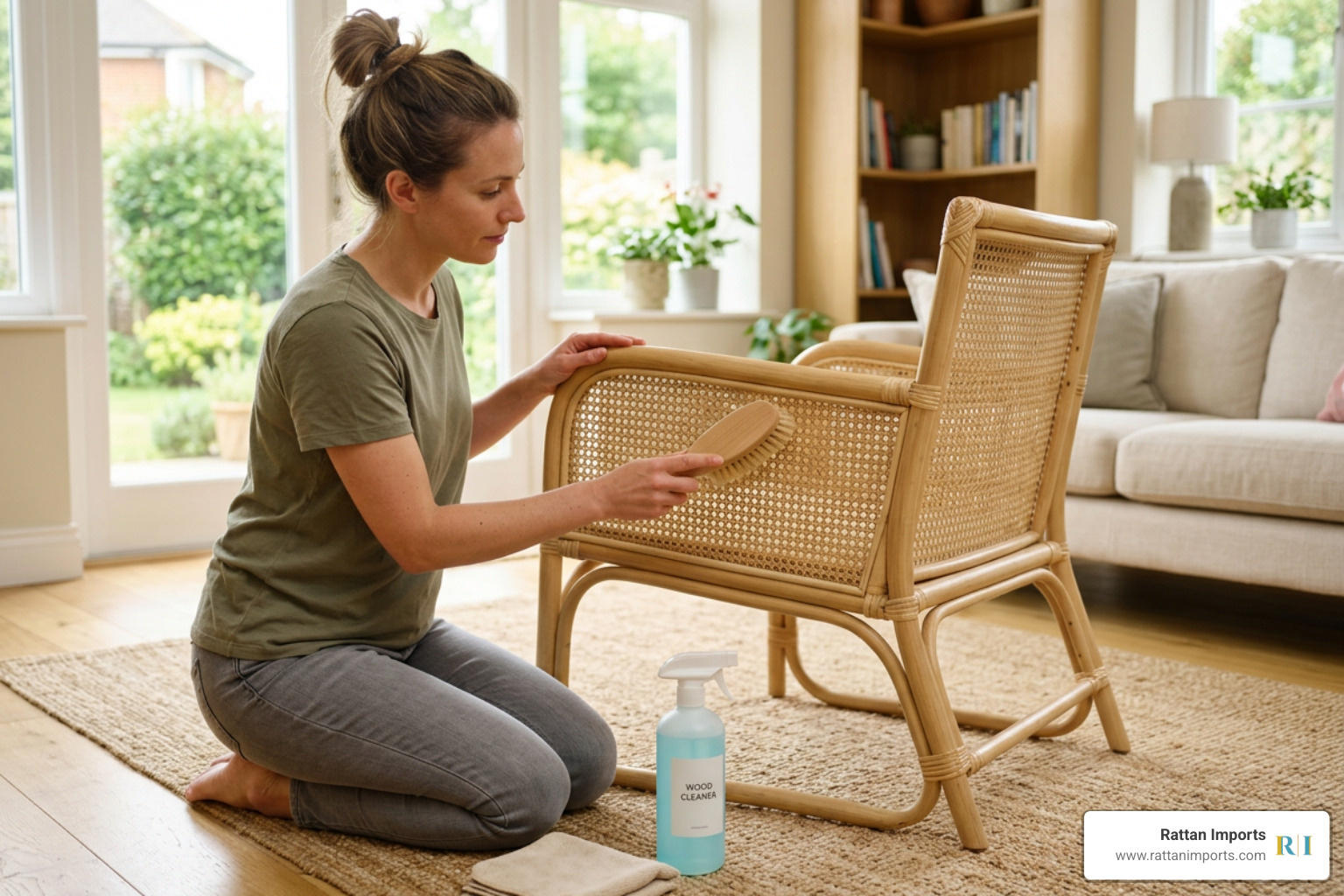
Dust and fine particles naturally gather in the small openings of woven cane panels. Establishing a light cleaning routine keeps the fibers clean and supple:
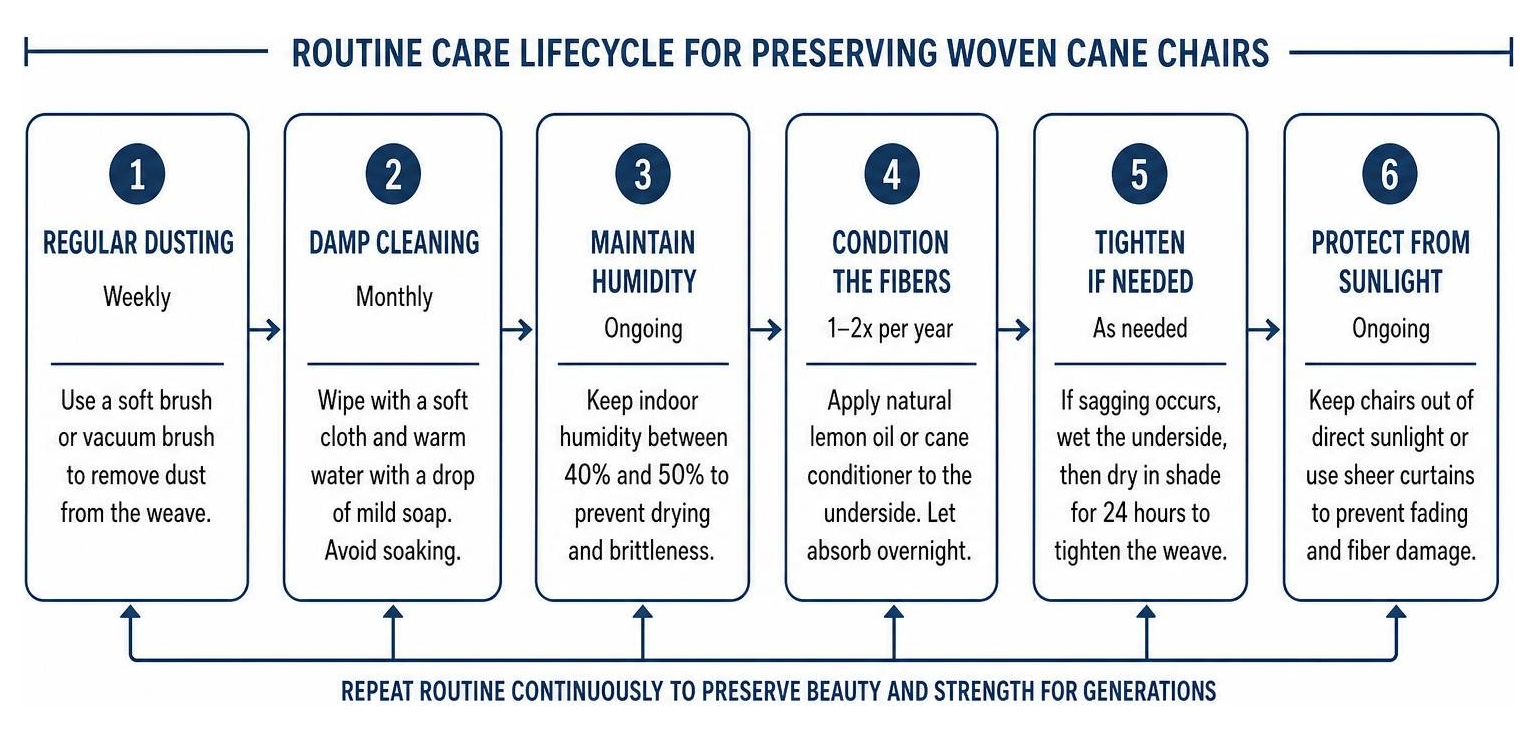
- Regular Dusting: Use a soft-bristle dusting brush or the brush attachment on your vacuum cleaner to gently lift dust from the open-mesh pattern once a week.
- Damp Cloth Cleaning: Wipe the cane panel down monthly with a soft cloth lightly dampened with warm water and a drop of mild dish soap. Avoid soaking the cane, as excessive water can weaken the underlying glue or spline retainers.
- Avoid Harsh Chemicals: Never use abrasive scrubbers, bleach, or ammonia-based glass cleaners on natural cane, as these will strip away protective natural oils and dry out the fibers.
Repairing and Preserving Caned Seats
Because natural cane relies on ambient atmospheric humidity to remain pliable, dry air is its biggest enemy. When cane becomes dry, it turns brittle and can snap under pressure.
- Maintain Humidity Levels: Keep your home’s relative indoor humidity between 40% and 50%. In dry winter months or air-conditioned rooms, operating a humidifier prevents dry rot.
- Condition the Fibers: Apply a thin layer of natural lemon oil or specialized cane conditioner to the back or underside of the woven mesh once or twice a year. Allow the oil to absorb overnight before sitting on the chair.
- Prevent Sagging: If a woven seat panel begins to stretch or sag after years of use, wet the underside of the cane panel thoroughly with warm water using a sponge. Allow the panel to dry naturally outdoors in a shaded, warm area for 24 hours. As the water evaporates, the fibers contract and pull tight again.
- Sunlight Protection: Direct sunlight bleaches natural cane and breaks down fiber strength over time. Position your chairs away from direct sunlight or use sheer curtains to filter light.
Frequently Asked Questions About Cane Seating
Is cane furniture durable enough for daily seating?
Yes, high-quality cane chairs are remarkably strong and resilient enough for everyday dining and living room use. The open-mesh weaving technique distributes body weight across hundreds of intersecting strands. When paired with a solid hardwood or rattan frame and kept away from extreme dryness, cane seating easily withstands daily family use.
What is the main difference between cane and wicker chairs?
Cane refers specifically to the strong, flexible outer bark peeled from rattan vines, which is woven into open geometric patterns for panels and seat backs. Wicker is a general term describing the process of weaving various materials—such as willow, reed, synthetic resin, or paper cord—around a full furniture frame. In short: cane is the precise natural material, while wicker is the style of weaving.
How do you prevent woven cane chairs from drying out and snapping?
To keep natural cane fibers flexible and prevent snapping, maintain indoor humidity around 40–50% and keep your furniture away from direct heating vents or wood-burning stoves. Conditioning the underside of the woven cane once or twice a year with a small amount of lemon oil or cane conditioner will keep the natural strands hydrated and resilient.
Conclusion
Choosing cane furniture chairs is a simple way to bring natural texture, airy comfort, and timeless warmth into your home decor. From breezy dining rooms to cozy living room nooks, cane seating seamlessly connects function with beautiful craftsmanship across Scandinavian, Japandi, Boho, and contemporary styles.
At Rattan Imports, we focus on bringing you exceptionally crafted woven furniture sourced directly from Southeast Asia and assembled in the U.S. We back every order with free mainland U.S. shipping, full price guarantees, identity theft protection, and dedicated customer service every step of the way.
Ready to find the ideal woven seating for your home? Explore our hand-crafted furniture collection, browse our distinct Spice Islands collection, or discover handcrafted favorites in our South Sea Rattan collection today!