




Why Antique Wicker Porch Furniture Remains a Timeless Choice
Antique wicker porch furniture offers a unique blend of historical charm and functional elegance that continues to captivate homeowners and designers alike. Whether you're searching for a Victorian-era settee, a Bar Harbor-style rocker, or an Art Deco lounge chair, understanding the history and characteristics of these pieces can help you make informed decisions.
Quick Guide to Antique Wicker Porch Furniture:
- Victorian Era (1860s-1890s): Features elaborate ornamentation, curlicues, and woven motifs made from natural rattan reed
- Turn of the Century (1900s-1920s): Introduced Mission-style straight lines and paper fibre materials due to WWI shortages
- Machine Age (1920s-1940s): Brought mass production via Lloyd Loom, Art Deco patterns, and upholstered cushions
- Porch Wicker: Simple, durable, utilitarian designs built for outdoor use
- Bar Harbor Style: Open-weave construction with an airy, resort-inspired feel (1900s onward)
Wicker refers to the weaving technique, while rattan is one of the natural materials used in that weave. This distinction matters when identifying authentic pieces. Antique wicker was crafted primarily between 1890 and 1925, during America's golden age of wicker furniture production.
The timeless appeal of antique wicker lies in its craftsmanship and versatility. From the ornate Victorian pieces with their spider-web cane work to the sleek Art Deco designs with geometric patterns, each era tells a distinct story. These pieces were built to last, designed for front porches where families gathered and entertained guests.
I'm Nino Russo Alesi, founder of Rattan Imports, and I've spent years helping clients curate beautiful spaces that honor both traditional craftsmanship and modern living, including sourcing and advising on antique wicker porch furniture that brings character to any home. My background in hospitality and customer service has taught me the importance of understanding each client's unique vision and providing the guidance needed to make confident purchasing decisions.
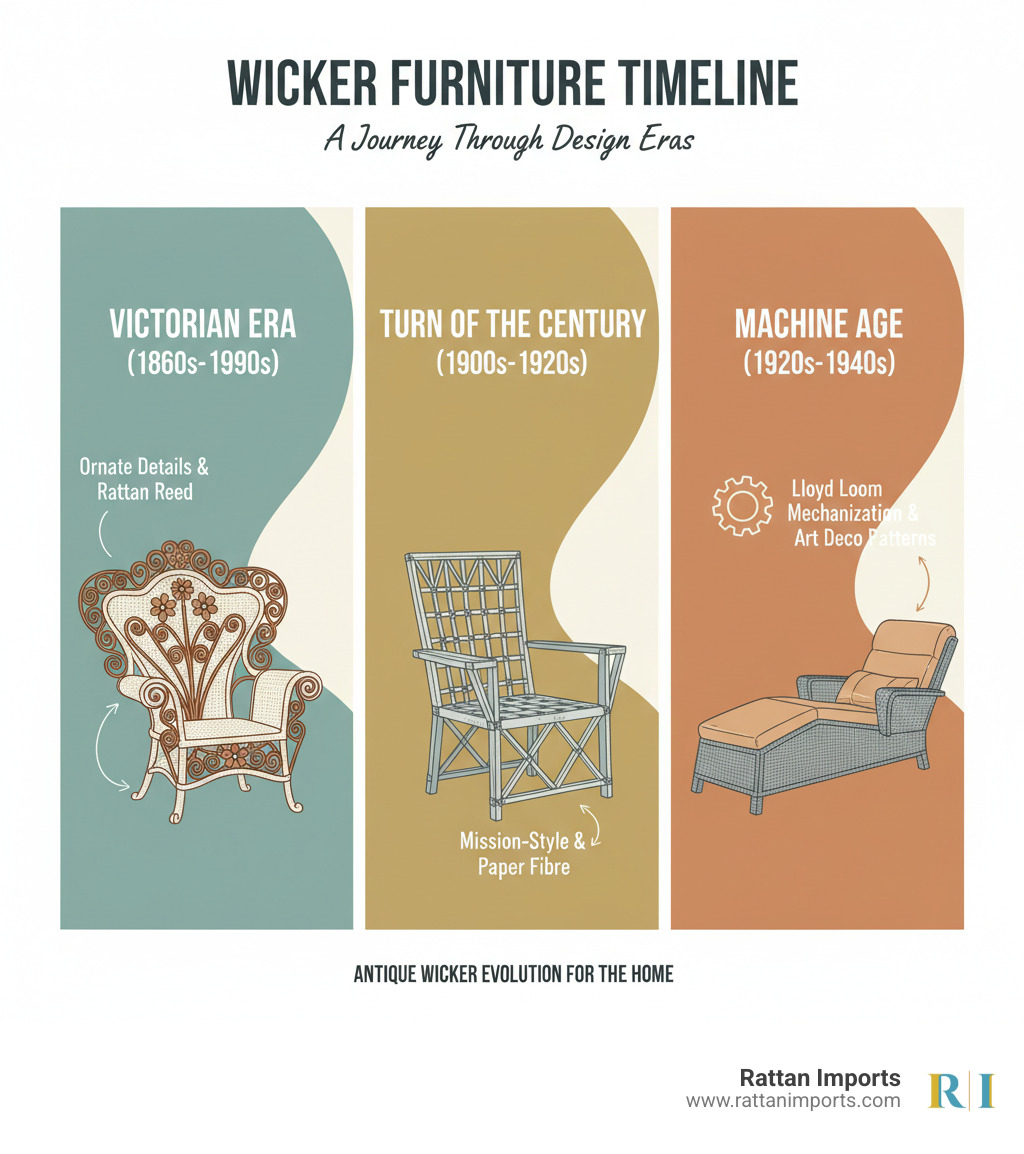
A Journey Through Time: The Eras of Antique Wicker
Wicker's history is ancient, with pieces found in Egyptian tombs, but the story of antique wicker porch furniture begins in 19th-century America. In 1851, Cyrus Wakefield founded the Wakefield Rattan Company after realizing the potential of discarded rattan on Boston's docks. His company grew and later merged with Heywood Brothers & Company in 1897, creating the powerhouse Heywood-Wakefield Company. This firm dominated the industry for decades, producing the highly sought-after collector's pieces we see today.
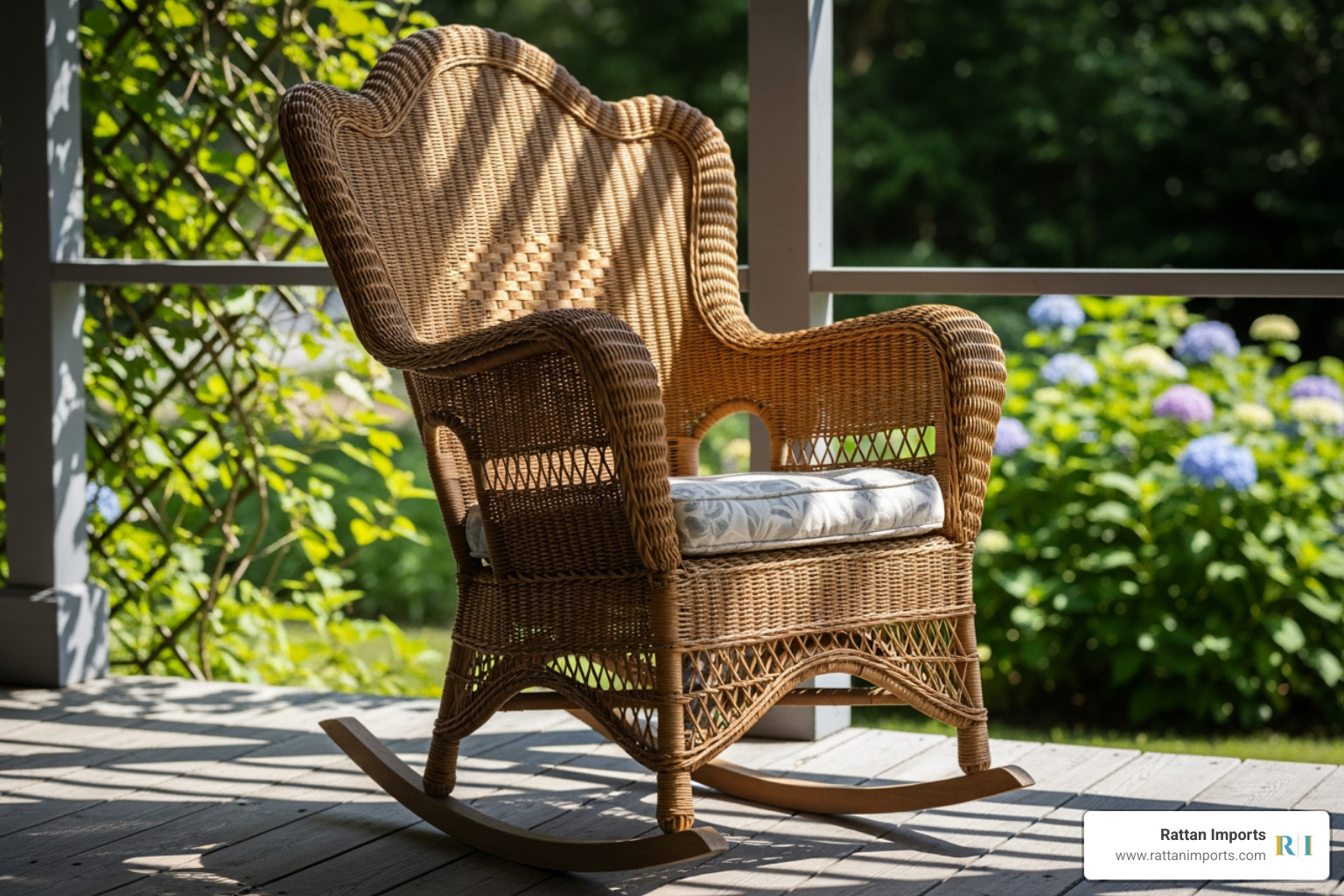
Most of the antique wicker porch furniture you'll find today was crafted between 1890 and 1925—a remarkably creative period that saw wicker evolve through several distinct design movements.
The Victorian Era (1860s-1890s): Ornate and Romantic
If you love intricate details and romantic flourishes, Victorian wicker (1860s-1890s) will make your heart sing. This "Golden Era" is defined by its ornate details. Craftsmen adorned their work with elaborate curlicues, delicate beads, and woven motifs featuring sailboats, hearts, and stars, which significantly increase a piece's value. The construction relied on natural materials like rattan reed poles or steam-bent hardwood frames. An interesting historical twist: a rattan shortage around 1856 pushed manufacturers to use more flexible, paintable reed, allowing for even more elaborate designs. Seats typically featured close-woven, solid sheet cane webbing, and the overall aesthetic was romantic, with curved spirals and distinctive spider-web cane work.
The Turn of the Century (1900s-1920s): New Materials and Styles
As America entered a new century, wicker furniture evolved. The period from 1900 to 1920 brought fresh influences like Art Nouveau's flowing lines, a gentler alternative to Victorian rigidity. The real game-changer was the 1904 invention of twisted paper fibre. This man-made material became popular during World War I reed shortages, as it was affordable and could be shaped in new ways. This era also introduced Mission-style wicker, which emphasized simplicity. It featured straight lines, open latticework, and designs that highlighted the material's natural beauty, creating an understated elegance. For more about this influential design movement, you can explore the history of Mission style and its lasting impact on American furniture.
The Machine Age (1920s-1940s): Mass Production and Art Deco
The 1920s through 1940s brought wicker into the modern age. This period's star was the Lloyd Loom, a machine that mass-produced wicker using paper rush wrapped around a wire core. This made wicker furniture accessible to middle-class families. Style-wise, Art Deco took center stage, with pieces featuring bold geometric diamond patterns and multi-colored designs. They were solid, strong, and modern-looking. Comfort also got an upgrade, with Machine Age wicker often incorporating upholstered backs and spring seats. "Stick wicker"—made from simple round rattan poles—also became popular for indoor and covered porch use. This era proved wicker could be both beautiful and practical, which is why wicker living room furniture that weaves comfort and style remains popular today.
How to Identify and Value Your Antique Wicker Porch Furniture
There's something thrilling about finding whether that wicker rocker in your grandmother's attic is a genuine Victorian treasure or a charming reproduction. Identifying authentic antique wicker porch furniture is part detective work, part art appreciation, and entirely rewarding. The clues are there in the materials, the construction, and those distinctive design elements that whisper stories from decades past.
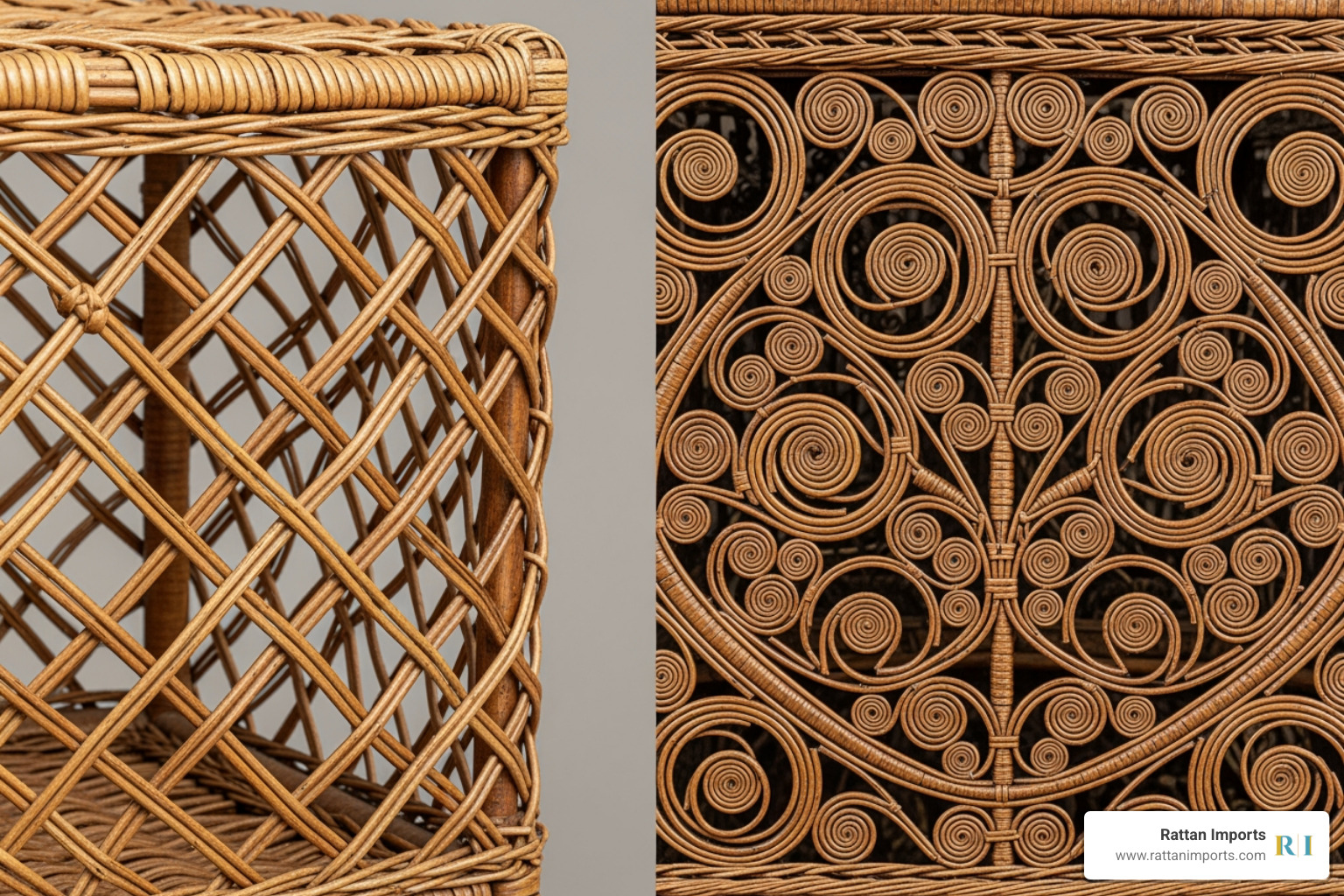
Decoding the Clues in Antique Wicker Porch Furniture
Start by getting up close with the material itself. Early Victorian pieces, particularly those crafted before World War I, were woven from natural rattan reed. This material has a slightly irregular texture and natural variations. As the decades progressed, especially after 1904, paper fibre entered the scene. This man-made material, often reinforced with a wire core, feels smoother and more uniform. Next, examine how the piece was put together. Handmade wicker from the Victorian era carries the fingerprints of its maker, with slight imperfections and an organic quality that no machine can replicate. In contrast, machine-made pieces from the 1920s onward display remarkable consistency. The decorative elements tell their own story. Elaborate curlicues, woven hearts, or intricate spider-web patterns are pure Victorian romance. Geometric diamond patterns and streamlined designs indicate Art Deco influence. And don't forget to search for maker's marks—stamps or labels from companies like Heywood-Wakefield can significantly help with identification and dating. Understanding these characteristics can even inform how you style vintage pieces, offering 7 vintage dining tips for beginners who want to blend old and new seamlessly.
Distinguishing Porch Wicker and Bar Harbor Styles
Not all antique wicker porch furniture is the same, and two key terms are "porch wicker" and "Bar Harbor style." Porch wicker is practical, durable furniture designed for covered porches. These pieces were built with a utilitarian mindset: comfortable and sturdy enough for daily family life, with designs tending toward simplicity. Bar Harbor style, emerging around 1900, is more specific and distinctive. It features a notably open weave that creates an airy, almost lacy appearance. The name comes from the resort town of Bar Harbor, Maine, where this style became synonymous with leisurely seaside living. The open weave isn't just aesthetic—it allowed air to circulate, perfect for warm coastal afternoons. While both were for outdoor use, Bar Harbor furniture brings a more refined, resort-inspired sensibility. If you're drawn to this aesthetic, you might enjoy exploring how modern pieces capture that same feeling—sit pretty outdoors with these top patio wicker sofas that echo these timeless resort styles.
What's It Worth? Understanding Value and Pricing
The value of antique wicker porch furniture is active and varied, with prices spanning an enormous range from under a dollar for materials to CA$15,000 for exceptional Victorian sets. The collector market is active and engaged. To give you a realistic sense, here's a general overview of price ranges:
| Era | Single Chair (Est. Price Range) | Rocker (Est. Price Range) | Settee (Est. Price Range) |
|---|---|---|---|
| Victorian (1860s-1890s) | $500 - $2,500+ | $700 - $3,000+ | $1,000 - $5,000+ |
| Turn of the Century (1900s-1920s) | $300 - $1,500 | $400 - $2,000 | $800 - $4,000 |
| Machine Age (1920s-1940s) | $200 - $1,000 | $300 - $1,500 | $600 - $3,000 |
Note: These are estimated ranges. Actual prices can vary dramatically based on condition, rarity, specific maker, and current market demand. For reference, new Victorian-style reproduction chairs typically cost around $1,073, rockers about $1,194, and loveseats around $1,440.
Several key factors determine a piece's value. Condition matters enormously—a pristine piece commands premium prices. Rarity plays a crucial role, with unusual motifs or designs attracting higher bids. The maker also influences value; furniture from renowned manufacturers like Heywood-Wakefield typically fetches more. An original finish adds authenticity and is preferred by collectors. Finally, completeness matters, as full matching sets are more desirable. To understand current values in your area, review recent auction results, dealer catalogs, and certified appraisal guides.
A Collector's Guide: Buying and Restoring Wicker
There's something magical about bringing antique wicker porch furniture into your home. Each piece carries stories from decades past, and preserving these treasures connects us to craftsmanship that's increasingly rare today. Whether you're just starting your collection or looking to restore a cherished family heirloom, the journey requires patience, knowledge, and sometimes a bit of detective work.
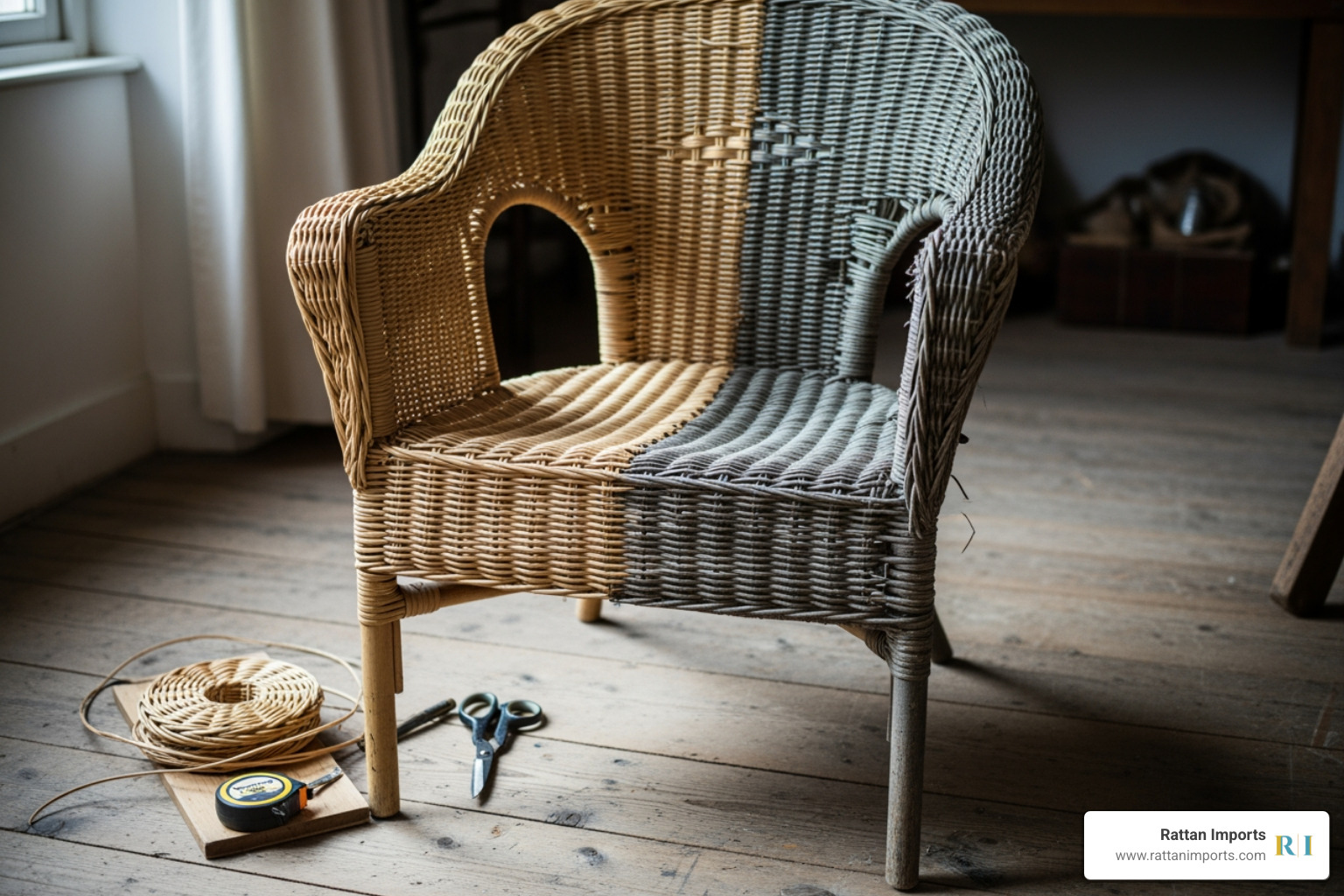
Where to Find Authentic Pieces
The hunt for authentic antique wicker is half the adventure. We've found that antique stores, particularly those specializing in vintage furniture, offer the advantage of seeing pieces in person. You can examine the weave up close, test the structural integrity, and often chat with knowledgeable owners who can share a piece's provenance.
Estate sales remain one of our favorite hunting grounds. These events often feature well-preserved pieces at reasonable prices, especially when families are downsizing or clearing out summer homes. The key is arriving early and knowing what to look for.
For broader selection and convenience, reputable online marketplaces have transformed how we shop for antique wicker. These platforms connect us with sellers worldwide, offering everything from single chairs to complete porch sets. When shopping online, we always zoom in on photos to examine the weave pattern and material condition. Read every word of the description, and don't hesitate to message sellers with specific questions about age, repairs, or original finishes.
Auctions, both online and in-person, can yield remarkable finds, though they require quick decision-making and a clear budget. Set your maximum bid beforehand and stick to it—it's easy to get caught up in bidding excitement.
Before making any purchase, consider what you're really looking for. Are you seeking a museum-quality Victorian piece, or a charming but slightly worn rocker that adds character to your porch? Understanding your goals helps focus your search. For those interested in learning more about selecting quality pieces, whether antique or new, our guide on shopping for quality wicker and rattan furniture offers helpful insights.
Common Repair Challenges for Antique Wicker Porch Furniture
Even the sturdiest antique wicker porch furniture shows its age eventually. Understanding common issues helps us assess whether a piece is worth buying and what restoration it might need.
Broken strands are perhaps the most frequent problem we encounter. Individual reeds or paper fibre strands snap, particularly in high-stress areas like seat edges, armrests, and where people naturally grip the furniture. A few broken strands aren't a deal-breaker, but extensive breakage signals more intensive repair work ahead.
Solving weaves happen when the tension that once held everything taut gradually loosens. Seats begin to sag, backs develop gaps, and the overall structure feels less secure. This is especially common in pieces that have supported generations of family gatherings. While solveing looks concerning, it's often repairable by a skilled restorer.
Paint and finish damage affects nearly every antique piece to some degree. Original paint chips away, varnish yellows and cracks, and exposure to sun and moisture takes its toll. White wicker shows every nick and scratch, while natural finishes can fade unevenly. Sometimes this patina adds character; other times, it detracts from the piece's beauty.
Structural weakness in the underlying frame poses the most serious concern. The rattan poles or steam-bent hardwood frames can crack, split, or rot, particularly if the furniture sat outdoors without protection. Loose joints compromise stability, making chairs wobble or rockers feel unsafe.
For everyday maintenance, we recommend gentle care. Spot clean cushions using a soft bristle brush with mild soap and water, then rinse and air dry thoroughly. For the wicker itself, especially outdoor pieces, regular cleaning with soap and water followed by a hose rinse keeps dirt from embedding in the weave. Natural wicker and rattan benefit from occasional misting with water and wiping down with a damp cloth, which keeps the material supple and prevents brittleness in dry climates.
For minor cosmetic issues like small nicks or scratches on white wicker, a quick touch-up with white-out or Krylon spray paint works surprisingly well. If you're interested in more extensive refinishing, our article on how to spray paint wicker for a natural finish walks through the process step-by-step. Understanding proper care and maintenance of rattan and wicker furniture extends the life of these treasured pieces significantly.
Restoration Resources and Expert Guidance
Deciding between DIY restoration and professional help depends on the damage extent, your skill level, and the piece's value. We've seen beautiful results from both approaches when matched appropriately to the project.
For DIY repairs, success starts with careful documentation. Take detailed photos from multiple angles before touching anything. These photos become your roadmap for replicating original patterns and techniques. When replacing broken strands, matching materials precisely matters enormously—use rattan reed for reed wicker and paper fibre for paper wicker. Mixing materials compromises both authenticity and structural integrity.
Sourcing appropriate materials used to be challenging, but resources like the Cane & Basket Supplies Directory™ now connect us with specialized suppliers. For comprehensive guidance, we can't recommend highly enough "How to Buy and Restore Wicker Furniture" by Thomas Duncan. This definitive repair manual walks through everything from basic strand replacement to complex weave reconstruction.
However, some projects demand professional expertise. If your piece has significant structural damage, features complex decorative weaves you can't replicate, or holds considerable sentimental or monetary value, calling in an expert makes sense. The cost of professional restoration often proves worthwhile when it preserves a family heirloom or valuable antique.
For inspiration and practical advice, we love following Cathryn Peters, known as "The Wicker Woman." She's a renowned chair caning and wicker restoration specialist whose work showcases what's possible with skill and patience. You can find her restoration projects and helpful tips on Instagram, Pinterest, Facebook, and Youtube. Her before-and-after changes are truly inspiring.
To locate restoration professionals in your area, the National Furniture Repair Directory™ on sites like WickerWoman.com provides vetted specialists who understand antique wicker's unique requirements. While professional restoration requires investment, it preserves not just the furniture itself but the history and craftsmanship it represents—something we believe is worth protecting for future generations.
Frequently Asked Questions about Antique Wicker
What is the difference between wicker and rattan?
This is one of the most common questions we hear, and we're always happy to clarify! The simple answer is that wicker describes the weaving technique, while rattan is a specific natural material that can be woven. Think of it this way: wicker tells you how something is made, and rattan tells you what it's made from.
Rattan is a vine-like plant native to tropical regions, prized for its flexibility and remarkable strength. It's one of the most popular materials for wicker weaving, which is why the terms sometimes get confused. However, the wicker technique can actually be used with many different materials. Reed, willow, bamboo, raffia, and even banana leaf have all been woven into beautiful wicker furniture throughout history. In the early 1900s, twisted paper fibre became another important material for wicker construction, especially during wartime shortages.
So while all rattan furniture uses the wicker weaving technique, not all wicker furniture is made from rattan. Other materials like reed, bamboo, and paper fibre can also be used in wicker furniture.
How can I tell if my wicker furniture is a genuine antique?
Identifying genuine antique wicker porch furniture requires a bit of detective work, but it's absolutely worth the effort. We recommend examining several key aspects of any piece you're considering.
Start by looking at the materials themselves. Victorian-era pieces, especially those from the 1860s through the 1890s, were typically crafted from natural rattan reed. As you move into the Turn of the Century and Machine Age periods (1900s through 1940s), you'll often find twisted paper fibre, sometimes reinforced with a wire core. Modern wicker, particularly pieces made for outdoor use, typically uses synthetic resins that feel distinctly different from natural materials when you touch them.
Construction details tell their own story. Handmade pieces from earlier eras often show slight irregularities, hand-tied knots, and visible joinery that adds character. Machine-made wicker from the 1920s onward displays a more uniform, consistent weave pattern thanks to the Lloyd Loom invention. Neither is inherently better—they're simply different manufacturing approaches from different time periods.
The style and design provide crucial clues about age and authenticity. Victorian pieces showcase elaborate ornamentation with curlicues and woven motifs like sailboats, stars, or animals. Turn of the Century furniture might display Art Nouveau's flowing lines or Mission-style's characteristic straight lines and open latticework. Art Deco wicker from the 1910s to 1925 features strong geometric patterns, particularly diamond shapes, with a solid, substantial construction.
Natural signs of age—gentle fading, minor wear patterns, and a soft patina—are actually good indicators of authenticity. Be cautious of pieces that look suspiciously perfect, as they might be modern reproductions. If you're fortunate enough to find a maker's mark or label, perhaps from renowned manufacturers like Heywood-Wakefield, that can definitively date and authenticate your piece.
Most American antique wicker was made between 1890 and 1925, so understanding the materials and styles prevalent during that golden era is your best guide to identifying genuine pieces.
Can I use antique wicker furniture on an open porch?
Absolutely! After all, much of antique wicker porch furniture was originally designed precisely for this purpose—to grace the front porches where families gathered and guests were welcomed. These pieces were built with outdoor use in mind, crafted to be durable and handle reasonable exposure to the elements.
Victorian-style wicker, for instance, can handle light moisture and wind-blown rain quite well. We've even learned that small amounts of water can actually strengthen the natural fibers. However, the key word here is "reasonable" exposure.
We strongly recommend protecting your antique pieces from constant, direct exposure to heavy rain, intense sun, or extreme temperature swings. Prolonged dampness creates conditions for mold or rot to develop, while harsh UV rays can dry out the natural fibers, making them brittle and prone to breaking. If your porch is completely open and regularly exposed to heavy downpours, consider moving your furniture to a more sheltered spot during storms or investing in protective covers.
Bringing cushions indoors when they're not in use is always a smart practice. This protects them from moisture damage and prevents fading from sun exposure. If your porch faces particularly harsh weather conditions year-round, you might want to reserve your antique pieces for more protected areas and explore modern weather-resistant synthetic wicker options for the most exposed spots.
The good news is that antique wicker can absolutely handle some moisture, but it should be protected from constant, direct exposure to heavy rain and sun to prevent deterioration. With a bit of mindful care, your antique wicker can continue gracing your porch just as it did over a century ago.
Conclusion
As we've explored antique wicker porch furniture together, I hope you've finded that these pieces are so much more than furniture—they're storytellers. Each curlicue on a Victorian rocker, every geometric pattern on an Art Deco settee, and the simple, honest construction of Bar Harbor-style pieces all speak to us across decades, carrying whispers of summer evenings, family gatherings, and quiet moments of reflection on sun-dappled porches.
We've walked through nearly a century of design evolution, from the elaborate romanticism of the 1860s through the practical innovations brought on by wartime shortages, right up to the sleek modernization of the Machine Age. Along the way, we've learned to read the clues hidden in materials and construction techniques—the difference between natural rattan reed and paper fibre, the telltale signs of handcrafted versus machine-made pieces, and the distinctive characteristics that help us date and authenticate these treasures.
Understanding value and pricing helps us make informed decisions, whether we're investing in a statement piece or starting a collection. And knowing how to care for and restore these heirlooms ensures they'll continue to bring beauty and function to our homes for years to come. After all, the best antique pieces aren't museum artifacts—they're meant to be lived with, loved, and passed down.
Bringing antique wicker porch furniture into your space is about more than decorating. It's about honoring craftsmanship, celebrating history, and creating rooms that feel authentic and welcoming. There's something special about sitting in a chair that has held generations before you, or serving tea from a table that once graced a Victorian parlor. These pieces add soul to our homes in ways that brand-new furniture simply can't replicate.
At Rattan Imports, we share your appreciation for quality craftsmanship and timeless design. While we specialize in premium home décor and furniture sourced from Southeast Asia and assembled right here in the U.S., we understand the allure of vintage charm. That's why we're committed to offering pieces that blend traditional techniques with modern durability, all backed by free shipping across the U.S. mainland, our price guarantee, and the exceptional customer service we're known for.
Whether you're drawn to the romance of antique pieces or prefer contemporary interpretations of classic styles, we invite you to find furniture that tells a story. Explore our curated collections of high-quality wicker and rattan furniture and find the perfect pieces to make your house feel like home.