



Why the Base Makes or Breaks Your Rattan Dining Table

A rattan base dining table is a dining table where the structural base — the legs, pedestal, or frame — is crafted from rattan, wicker, or a combination of natural and synthetic rattan materials, typically paired with a glass or wood top.
Here is a quick breakdown of what to know before you buy:
| Feature | What to Look For |
|---|---|
| Base material | Natural rattan, PE/synthetic rattan, or a hybrid with aluminum or wood |
| Top options | Tempered glass (1/2" thick recommended) or solid wood |
| Best for indoors | Natural rattan with pole or pedestal construction |
| Best for outdoors | Synthetic PE or rod rattan on rust-proof aluminum frames |
| Common sizes | 36" to 72"+ depending on seating (4 to 8+ people) |
| Price range | Entry-level (~$100–$500), mid-range ($500–$2,000), premium ($2,000+) |
| Key maintenance | Wipe with a damp cloth, avoid harsh chemicals, store indoors or covered |
Most people focus on the tabletop — the shape, the finish, the color. But the base is where the real decisions happen. It determines stability, style, indoor or outdoor suitability, and how long your table will actually last.
Whether you are furnishing a coastal breakfast nook, a bohemian dining room, or a sun-drenched patio, the base design shapes everything.
I'm Nino Russo Alesi, founder of Rattan Imports, and my background in hospitality and years of sourcing quality rattan furniture have given me a hands-on understanding of what separates a well-built rattan base dining table from one that disappoints. In the sections below, I'll walk you through every base option so you can make a confident, informed choice.
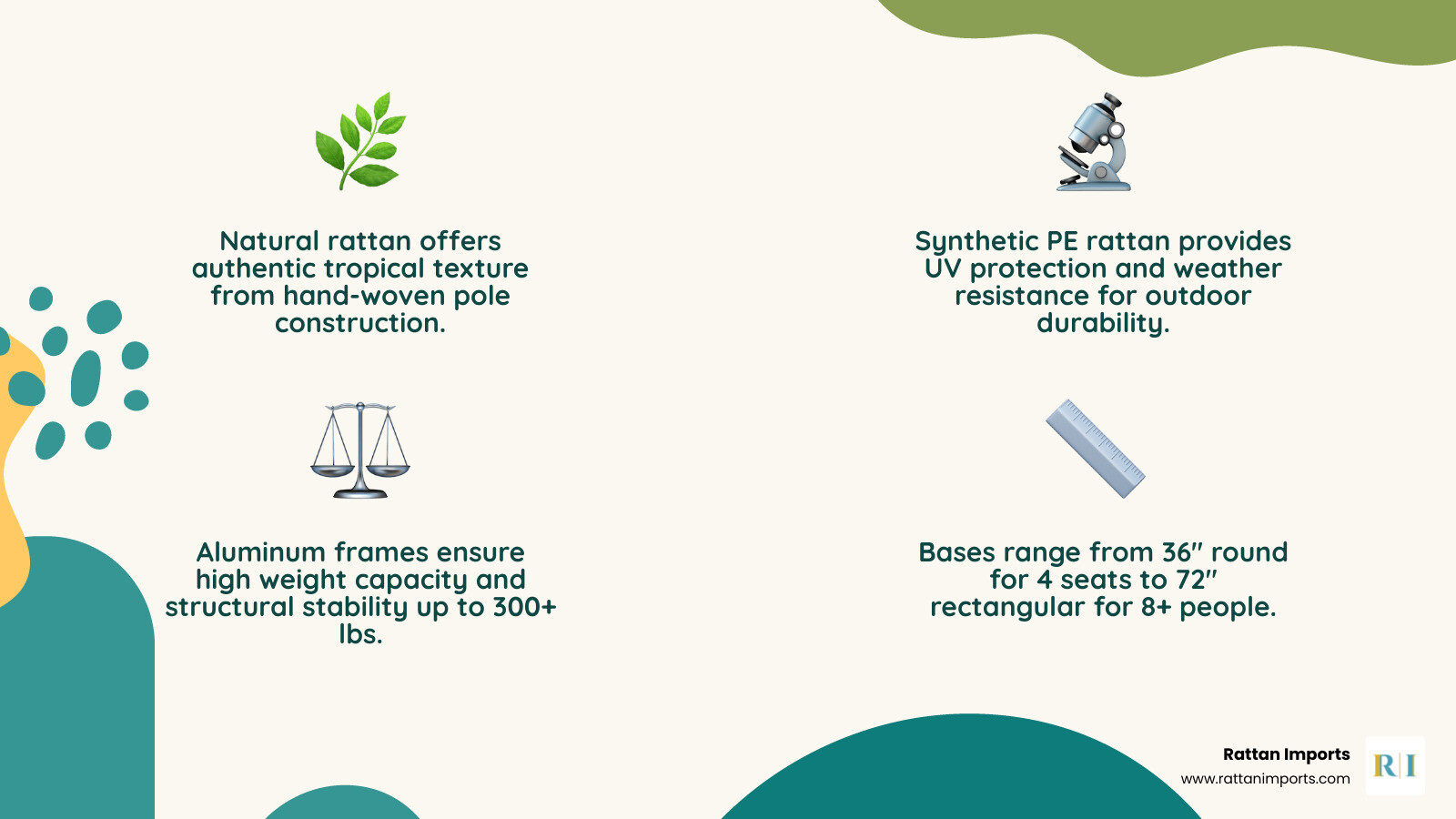
Rattan base dining table helpful reading:
The Anatomy and Materials of a Rattan Base Dining Table
When we talk about a rattan base dining table, we are looking at a piece of furniture that relies on the incredible tensile strength and flexibility of the rattan vine. Unlike solid wood, which is carved, rattan is steamed and bent into shape.
The anatomy of a high-quality base usually starts with "pole rattan." These are thick, solid stalks of rattan that form the primary structural skeleton. In premium designs, you will often see "four-pole construction." This means each leg or support pillar is actually comprised of four individual rattan poles bundled together. This doesn't just look beautiful and tropical; it provides the massive weight-bearing capacity needed to support heavy glass or wood tops.

Beyond the main poles, look for reinforced supports. These are smaller rattan pieces cross-braced underneath the tabletop area and near the floor. To finish the look, artisans use "cane" (the outer skin of the rattan stalk) or "wicker" (the weaving technique) to wrap joints and create decorative patterns. If you want to dive deeper into how these structures enhance your home, check out our guide on how rattan table bases elevate your dining experience.
Natural vs. Synthetic Rattan Bases
Choosing between natural and synthetic materials is the most important fork in the road.
- Natural Rattan: This is the real deal—authentic, organic, and full of character. It is perfect for indoor environments where you want that warm, bohemian, or coastal vibe. However, natural rattan is "breathable" and porous, meaning it can be sensitive to extreme humidity and direct sunlight.
- Synthetic/PE Rattan: Often called "All-Weather Wicker," this is made from Polyethylene (PE). It is designed to mimic the look of natural fiber but is built to withstand rain, UV rays, and temperature swings. High-end synthetic options, like rod rattan, are incredibly durable and won't fade or crack like cheaper plastics.
For a deep dive into these differences, our complete guide to choosing the perfect wicker dining table covers everything from weave types to longevity.
Frame Construction and Stability
While the rattan on the outside provides the aesthetic, what’s on the inside matters for safety. For outdoor tables, we almost always recommend a powder-coated aluminum frame. Aluminum is lightweight and, crucially, rust-proof.
For indoor tables, you might find solid wood cores or even heavy-duty steel frames wrapped in rattan. Stability is key—especially with round pedestal designs. A well-constructed rattan base dining table will have a wide footprint or weighted bottom to prevent tipping. Scientific research into the tensile strength of rattan fibers shows that when properly bundled, these fibers can rival the strength of some hardwoods while remaining much lighter.
Popular Styles and Designs for Every Space
Rattan is incredibly versatile, fitting into styles ranging from "Modern Zen" to "Island Oasis." The base design dictates the "personality" of the table.
| Base Style | Best Suited For | Aesthetic |
|---|---|---|
| Pedestal | Small rooms, round tops | Elegant, airy, classic coastal |
| Trestle | Large rectangular tops | Robust, farmhouse-meets-boho |
| Four-Legged | Standard dining rooms | Traditional, sturdy, familiar |
| Nesting/Modular | Multi-purpose spaces | Practical, modern, space-saving |
If you are looking for a piece that truly pops, explore our rattan roundup of dining tables that make a statement.
Choosing a Round Rattan Base Dining Table for Small Spaces
In smaller apartments or breakfast nooks, a round rattan base dining table is your best friend. The lack of sharp corners makes the room feel larger and improves "traffic flow."
Common sizes for small spaces include:
- 36-inch (Bistro): Perfect for two people.
- 42 to 48-inch: Comfortably seats four.
Some innovative designs even feature nesting ottomans. These wedge-shaped stools tuck completely under the table base when not in use, effectively disappearing and saving precious floor space. For those who love a bit of history in their decor, you can also look into antique and vintage circular dining tables to find inspiration for classic pedestal shapes.
Large Capacity Rattan Base Dining Table Options
Think rattan is only for small bistro sets? Think again. Large-capacity tables (seating 6 to 8 people) often utilize double pedestal bases or reinforced trestle designs. A 72-inch rectangular table with a seagrass-wrapped or pole rattan base can act as a stunning centerpiece for a family dining room.
When choosing a larger table, ensure the base is substantial enough to support the length. We often see these paired with "Dune" or "Seagrass" finishes to create a tropical resort environment right in your home. If you're looking for something unique for a larger crowd, vintage oval tables often provide that extra length without the bulk of a standard rectangle.
Practical Considerations: Glass Tops and Maintenance
The most common pairing for a rattan base dining table is a tempered glass top. Why? Because glass allows you to see the beautiful hand-woven artistry of the base through the surface.
The Importance of Glass Thickness
We always recommend a glass thickness of at least 1/2 inch. Thinner glass (like 1/4 inch) can feel flimsy and is more prone to breaking. A 1/2-inch top with a 1-inch beveled edge provides a high-end, heavy feel that stays in place using clear suction grips. This ensures the top doesn't slide, even if someone bumps into the table. For more on this pairing, read our article on the rattan dining table with glass top.
Cleaning and Longevity Tips
Maintaining your rattan table is simpler than you might think, but consistency is key to ensuring it lasts for decades.
- Dust Regularly: Use a soft brush or a vacuum with a brush attachment to get into the nooks and crannies of the weave.
- Damp Cloth Only: For spills, use a clean, damp cloth. Avoid furniture polishes, sprays, or harsh chemicals, as these can damage the natural finish or cause the rattan to become brittle.
- Soapy Water for Stains: If you have a stubborn spot, a tiny bit of mild dish soap in warm water works wonders. Just be sure to wipe it dry afterward.
- Check the Feet: Most quality rattan tables come with levelers or glides. Check these occasionally to make sure they haven't worn down, protecting both your table and your floors.
Indoor vs. Outdoor Rattan Base Selection
This is where many homeowners make a mistake. A table that looks great in a sunroom might fall apart after one season on an open deck.
Material Differences for Longevity
- Indoor (Natural): Natural rattan and seagrass are perfect for climate-controlled rooms. They can handle a covered porch if there is excellent ventilation and no direct exposure to rain or harsh afternoon sun.
- Outdoor (Synthetic): For the patio, you want HDPE (High-Density Polyethylene) rattan. This material is non-porous. When paired with a powder-coated aluminum frame, it is virtually "hose-off" maintenance.
If you're curious about the specific styles available for outdoor living, our guide on wicker dining tables breaks down the best weather-resistant options. And remember, we stand by our quality with a price guarantee to ensure you're getting the best value for your investment.
Frequently Asked Questions about Rattan Dining Tables
How do I choose the right size for my seating capacity?
As a rule of thumb, allow 24 to 30 inches of table edge per person.
- 4 People: 42" to 48" round.
- 6 People: 54" to 60" round or 60" to 72" rectangular.
- 8 People: 72"+ rectangular or 60"+ round (though round tables this large can make it hard to reach the center!).
Can I use a natural rattan base on a covered porch?
Yes, but with caution. It must be a "three-season" or well-protected porch. Natural fibers hate "standing water" and extreme humidity, which can lead to mildew. Ensure the area is well-ventilated and that the table is moved indoors during harsh winter months.
What is the typical price range for high-quality rattan?
- Entry-Level ($100–$500): Typically includes smaller accent tables or mass-produced sets with lighter frames.
- Mid-Range ($500–$2,000): Features high-quality pole rattan, 1/2" glass tops, and detailed artisanal weaves.
- Premium ($2,000–$5,000+): High-end designer collections, custom finishes, intricate hand-tied rope accents, and large-scale structural designs.
Conclusion
At Rattan Imports, we believe that a rattan base dining table is more than just a place to eat—it's a way to bring a bit of the serene, tropical outdoors into your daily life. By focusing on the "bones" of the table—the material, the construction, and the base design—you ensure that your dining set remains a centerpiece of your home for years to come.
From our Southeast Asian roots to our U.S.-based assembly, we are committed to providing furniture that balances artisanal craftsmanship with modern durability. Whether you are looking for a stylish modern dining table or a classic pedestal piece, we offer free shipping across the U.S. mainland, a price guarantee, and identity theft protection to make your shopping experience as relaxing as a coastal breeze.
Ready to transform your dining space? Explore our collections today and find the base that supports your style.