



Why Mid Century Dining Arm Chairs Still Belong at Every Table

Mid century dining arm chairs are among the most sought-after seating styles in interior design today — and for good reason.
Here's a quick overview of what makes them stand out:
| Feature | What to Know |
|---|---|
| Era | Designed primarily in the 1950s–1960s |
| Style | Clean lines, tapered legs, organic curves |
| Materials | Teak, rosewood, walnut, molded plastic, cane |
| Key Designers | Hans Wegner, Arne Vodder, Børge Mogensen |
| Price Range | ~$75 (modern) to $45,000+ (rare vintage sets) |
| Best For | Dining rooms, open-concept spaces, eclectic interiors |
Born out of a postwar design movement that prized function as much as beauty, these chairs blended craftsmanship with everyday livability. Designers in Scandinavia — and later across Europe and North America — stripped away the ornate and replaced it with something quieter and more human. The result was furniture that felt both sculptural and deeply practical.
Decades later, that balance still resonates. Whether you're sourcing a set of authentic Danish rosewood chairs or exploring modern reproductions that capture the same spirit, the choices available in 2026 span a wide range of budgets, materials, and design intentions.
I'm Nino Russo Alesi, founder of Rattan Imports, and my background in hospitality and e-commerce has given me a deep appreciation for the way well-chosen furniture — including mid century dining arm chairs — transforms a shared space into something memorable. In this guide, I'll walk you through everything you need to know to find the right chairs for your home or your clients.
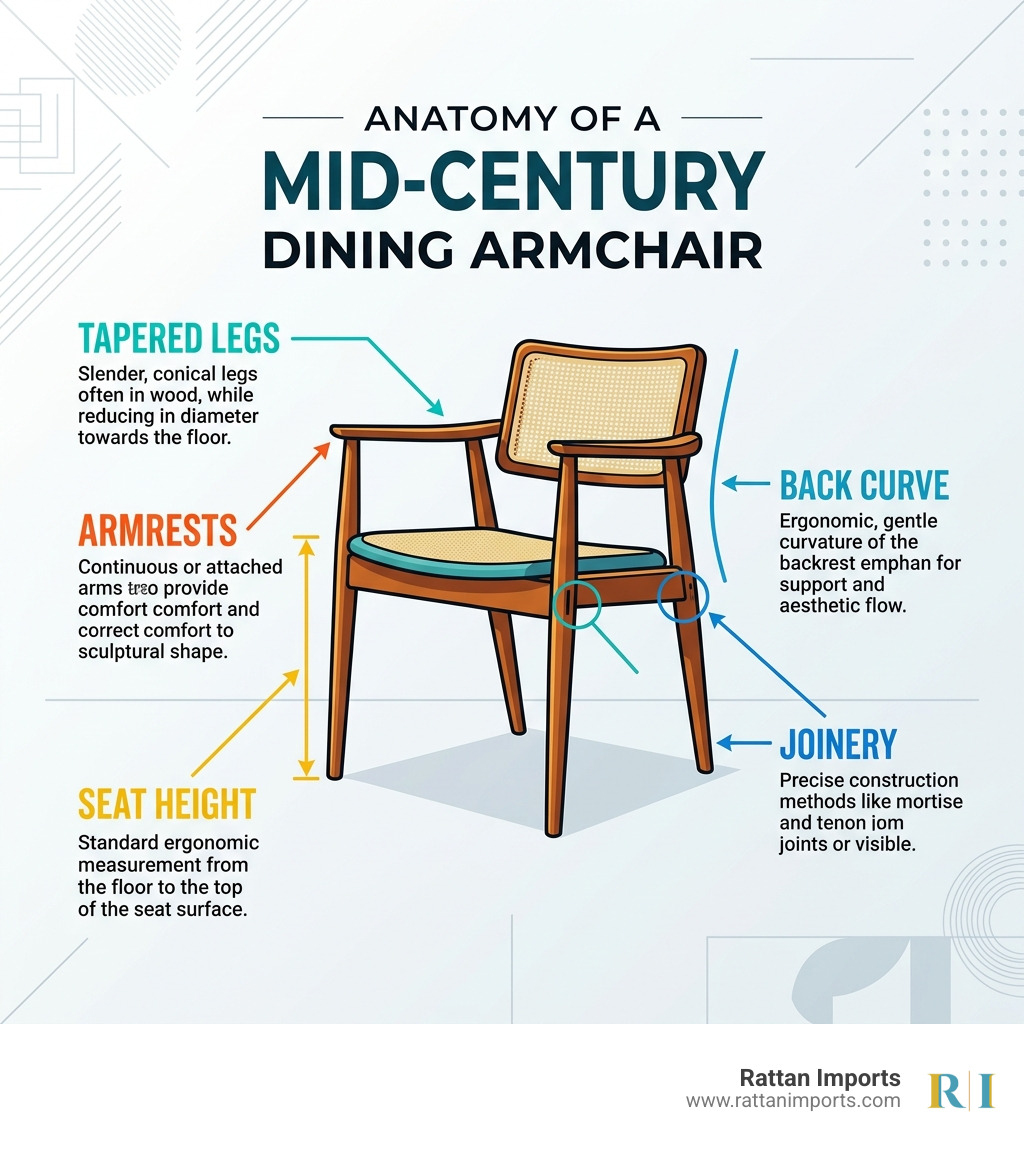
Quick look at mid century dining arm chairs:
Defining the Mid Century Dining Arm Chairs Aesthetic
When we talk about the mid-century modern (MCM) aesthetic, we are looking at a specific design language that emerged between the late 1940s and the late 1960s. The primary goal of this era was "organic minimalism"—creating furniture that felt natural and easy to live with, yet looked like a piece of art.
The hallmark of mid century dining arm chairs is the silhouette. You won't find heavy, chunky bases here. Instead, you'll see:
- Tapered Legs: Often referred to as "stiletto" or "compass" legs, these grow thinner as they reach the floor, giving the chair a sense of lightness and "lift."
- Minimalist Profiles: The lines are clean and purposeful. Every curve serves a function, whether it's supporting the lumbar or providing a comfortable place to rest your elbows.
- Ergonomic Curves: Mid-century designers were pioneers in ergonomics. They used steam-bending and molded materials to follow the natural shape of the human body.
- Sculptural Forms: Many of these chairs look different from every angle. A backrest might flow seamlessly into the armrests, creating a single, fluid line.
If you are just starting your search, our Dining Arm Chair Buying Guide is an excellent resource for understanding how these dimensions fit into your specific home layout.
Iconic Materials in Mid Century Dining Arm Chairs
The materials used in the mid-20th century were a mix of traditional hardwoods and "space-age" innovations.
- Teak and Walnut: These were the darlings of the Danish and American markets. Teak offers a warm, golden-red hue and high oil content that makes it incredibly durable. Walnut provides a darker, more sophisticated grain that fits perfectly in formal settings.
- Rosewood: In the 1960s, Brazilian rosewood was the pinnacle of luxury. Known for its dramatic, dark "spider-web" grain, it was used by high-end manufacturers. Today, authentic rosewood pieces are highly collectible and often command premium prices.
- Molded Plastic and Fiberglass: Designers like the Eameses or Eero Saarinen utilized these materials to create "shell" chairs that could be mass-produced while maintaining high-design standards.
- French Cane and Rattan: Natural textures were often used to soften the hard lines of wood frames. We see this frequently in "cane back" designs which offer breathability and a lighter visual weight. You can see some of our favorites in this list of Top Picks For Cane Back Dining Chairs With Arms.
- Bentwood: Using steam to curve wood allowed for the iconic rounded backs seen in many Scandinavian designs.
Influential Designers and Their Legacy
To truly understand mid century dining arm chairs, you have to know the names behind the sketches. These individuals didn't just make chairs; they defined a lifestyle.
- Hans Wegner: Known as the "Master of the Chair," Wegner designed over 500 chairs in his lifetime. His work, like the "The Chair" (Model JH501), focused on joinery so beautiful it didn't need to be hidden.
- Arne Vodder: A student of Finn Juhl, Vodder’s designs are characterized by their elegance and use of natural materials. The Model 431 Armchair by Arne Vodder is a prime example of his work, featuring a stunning rosewood frame and leather upholstery.
- Børge Mogensen: Mogensen believed in "furniture for the people." His designs, like the Spanish Dining Chair, are robust, functional, and often feature leather straps and solid wood.
- Richard Schultz: While many MCM designers focused on the indoors, Schultz brought the aesthetic outside. His 1966 Collection, commissioned for design visionaries of the era, used aluminum and breathable mesh to create the first truly modern outdoor furniture.
- Yrjö Kukkapuro: A Finnish legend, Yrjö Kukkapuro is famous for the Karuselli chair, but his influence on ergonomic dining and office seating helped bridge the gap between mid-century and postmodernism.
Comparing Authentic Vintage vs. Modern Reproductions
When shopping for mid century dining arm chairs in 2026, you'll face a choice: do you go for the "real deal" vintage piece or a high-quality modern production?
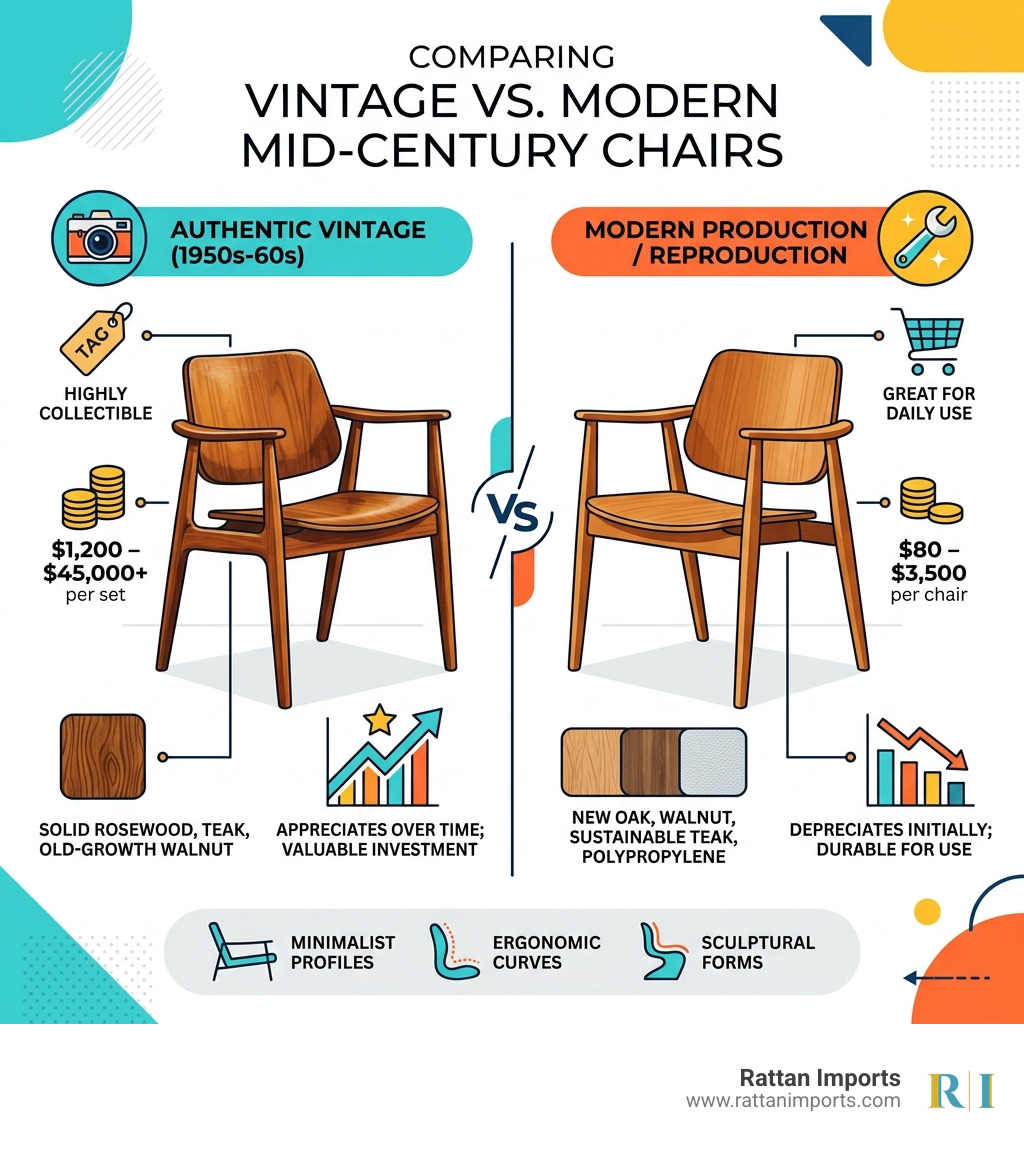
| Feature | Authentic Vintage (1950s-60s) | Modern Production / Reproduction |
|---|---|---|
| Price | $1,200 – $45,000+ per set | $80 – $3,500 per chair |
| Materials | Solid Rosewood, Teak, Old-growth Walnut | New Oak, Walnut, Sustainable Teak, Polypropylene |
| Value | Appreciates over time; highly collectible | Depreciates initially; better for daily heavy use |
| Condition | May require restoration or "patina" | Flawless, new upholstery, modern warranties |
| Authentication | Paper labels, designer stamps, specific joinery | Manufacturer branding, modern certificates |
Authentic Danish sets from designers like Kai Kristiansen or Arne Vodder are often sold in sets of 4, 6, 8, or even 10. Prices reflect rarity; for instance, a set of eight structural modern chairs can reach up to $45,000 at specialized antique dealers.
On the other hand, various modern manufacturers offer alternatives starting as low as $87. These are fantastic for families who want the look without the stress of damaging a museum-quality antique. You can browse various styles in our collection of Dining Chairs For Sale.
Selecting Mid Century Dining Arm Chairs for Comfort and Durability
A chair can look like a masterpiece, but if it's uncomfortable after twenty minutes of dinner, it's failed its primary job. Here is what we recommend looking for:
- Seat Height: The standard for mid-century chairs is usually around 18 inches. Ensure this aligns with your dining table height (typically 29-30 inches).
- Armrest Clearance: This is the most common mistake buyers make! Measure the distance from the floor to the top of the chair's arms. Then, measure the distance from the floor to the underside of your table's apron. You want at least an inch of clearance so the chair can tuck in.
- Upholstery Choice: If you have a busy household, look for performance fabrics or high-quality leather. Leather is a classic MCM choice because it develops a beautiful patina over time.
- Support for All Ages: Many mid century dining arm chairs feature curved backrests that provide excellent lumbar support. For those looking for specific accessibility, we have a guide on Dining Chairs With Arms For Elderly that highlights the importance of armrest stability.

Integrating Mid-Century Style into 2026 Interiors
In 2026, we are seeing a move away from "matching sets." The most stylish homes today mix and match. You might have a rustic oak table paired with sleek, black mid century dining arm chairs.
- Eclectic Mixing: Don't be afraid to mix a mid-century armchair at the heads of the table with armless side chairs along the lengths. This creates a "Captain's Chair" effect that feels intentional and high-end.
- Open-Concept Living: Because MCM chairs often have "airy" profiles (you can see through the backrests and under the legs), they are perfect for open-concept apartments. they don't block the visual flow of the room.
- Color Play: While wood tones are traditional, many modern productions come in vibrant hues. Consider a Navy Blue Dining Arm Chair or explore our Comfort Color Blue Upholstered Dining Chairs With Arms to add a pop of personality to a neutral room.
If you prefer a more traditional look with a modern twist, you might also enjoy our Modern Windsor Chair With Arms Guide.
Care and Maintenance for Longevity
Whether you've invested in a vintage rosewood Model 431 or a new set of oak chairs, maintenance is the key to making them last for another 60 years.
- Wood Oiling: Mid-century wood (especially teak) loves moisture. Use a high-quality teak oil or furniture wax every 6-12 months to prevent the wood from drying out and cracking. For more on specific wood types, check out our Oak Windsor Chairs With Arms Guide.
- Fabric Protection: For upholstered seats, apply a fabric protector spray to ward off stains from spills.
- Aluminum and Metal: If you have metal-framed chairs, like the Richard Schultz 1966 collection, these are often powder-coated. Simply wipe them down with a damp cloth. Avoid abrasive cleaners that could scratch the finish.
- Leather Conditioning: Real leather needs to breathe. Use a leather conditioner once a year to keep it supple and prevent it from peeling or cracking.
Frequently Asked Questions about Mid Century Seating
How do I authenticate a genuine Danish armchair?
Look for "Maker's Marks." These are often found on the underside of the seat frame. Common marks include "Made in Denmark," "Danish Control" (a circular stamp), or specific manufacturer labels and designer signatures. Also, examine the joinery; authentic pieces use mortise-and-tenon joints rather than simple screws.
What is the typical price range for quality mid-century seating?
As of April 2026, expect to pay:
- Budget/Mass Market: $100 - $300 per chair.
- High-End New Production: $800 - $3,000 per chair.
- Vintage Sets: $2,500 - $15,000 for a set of 6, depending on the designer and wood (Rosewood is always the most expensive).
Are mid-century armchairs suitable for small dining rooms?
Yes, but choose wisely. Look for chairs with "sledge" bases or thin tapered legs. These have a smaller "visual footprint," meaning they don't make the room feel crowded. If space is very tight, consider stackable options that maintain a slim visual profile.
Conclusion
At Rattan Imports, we believe that your home should be a reflection of your story. Mid century dining arm chairs are more than just a place to sit; they are a bridge between the craftsmanship of the past and the functionality of the future.
Whether you are drawn to the tropical vibes of our Spice Islands Collection or the timeless durability of South Sea Rattan, we are here to help you find the perfect fit. We offer free shipping across the U.S. mainland and a Price Guarantee to ensure you get the best value for your investment.
Ready to transform your dining space? Explore our Rattan Wicker Dining Chairs: Your Ultimate Guide for even more inspiration on blending natural textures with iconic mid-century silhouettes.