



Why Proper Space Planning Transforms Your Outdoor Dining Experience
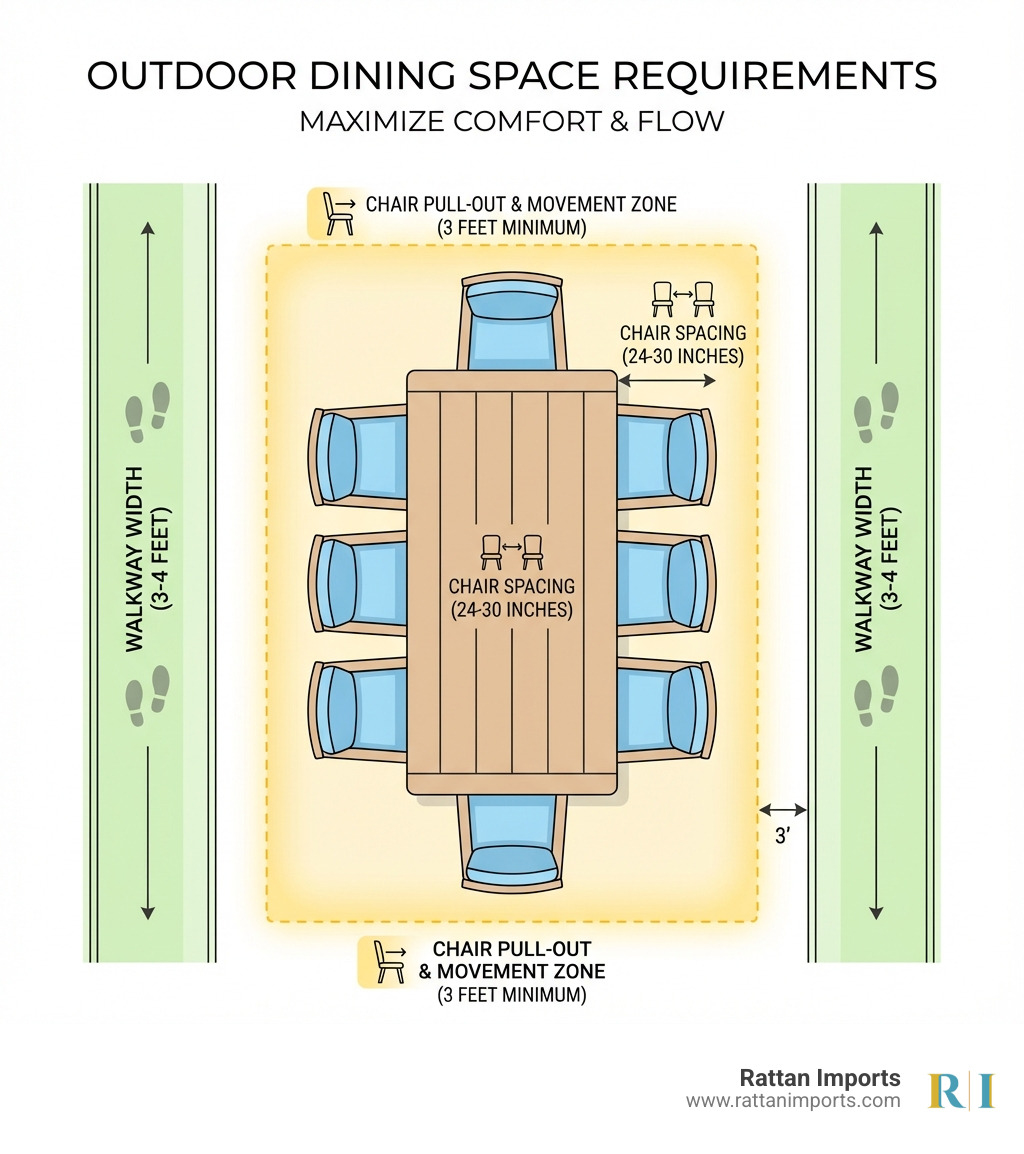
How much space for outdoor dining depends on your seating needs and furniture configuration. Here's what you need at minimum:
| Seating Capacity | Minimum Space Required | Table Type |
|---|---|---|
| 2-4 people | 6' x 8' (bistro) to 10' x 10' | Small round or square |
| 4-6 people | 10' x 10' to 12' x 12' | Round or rectangular |
| 6-8 people | 12' x 12' or 9' diameter | Large round or rectangular |
Key clearance rules:
- Leave 3 feet minimum on all sides of the table for chair pull-out and movement
- Allow 24-30 inches between individual chairs
- Maintain 3-4 feet wide pathways for comfortable traffic flow
With nearly 300 days of sunshine in many regions, outdoor dining has evolved from a seasonal luxury to a year-round lifestyle choice. The pandemic accelerated this shift, with more families choosing to create comfortable alfresco dining spaces at home. But here's the challenge: many homeowners purchase beautiful dining sets only to find they've miscalculated the space requirements, resulting in cramped, uncomfortable areas that rarely get used.
The difference between a functional outdoor dining space and a frustrating one often comes down to just a few feet. Too little clearance, and guests feel squeezed. Too much empty space, and the area loses its intimate appeal. Getting it right means understanding not just the footprint of your furniture, but the breathing room around it.
I'm Nino Russo Alesi, and my Sicilian roots taught me that gathering around a table outdoors is sacred—which is why understanding how much space for outdoor dining is essential to creating those memorable moments. Through Rattan Imports, I've helped hundreds of clients transform their patios into functional, beautiful dining spaces that perfectly balance comfort and style.
Must-know how much space for outdoor dining terms:
- 6 seater outdoor setting
- outdoor booth seating
- outdoor dining
The Foundations: Planning Your Outdoor Footprint
Before we even dream of placing a single chair, the first step in creating any functional outdoor area is to measure, measure, measure! Think of your outdoor space as another room in your home – because, with the right planning, it absolutely can be. Understanding how much space for outdoor dining truly begins with a tape measure.
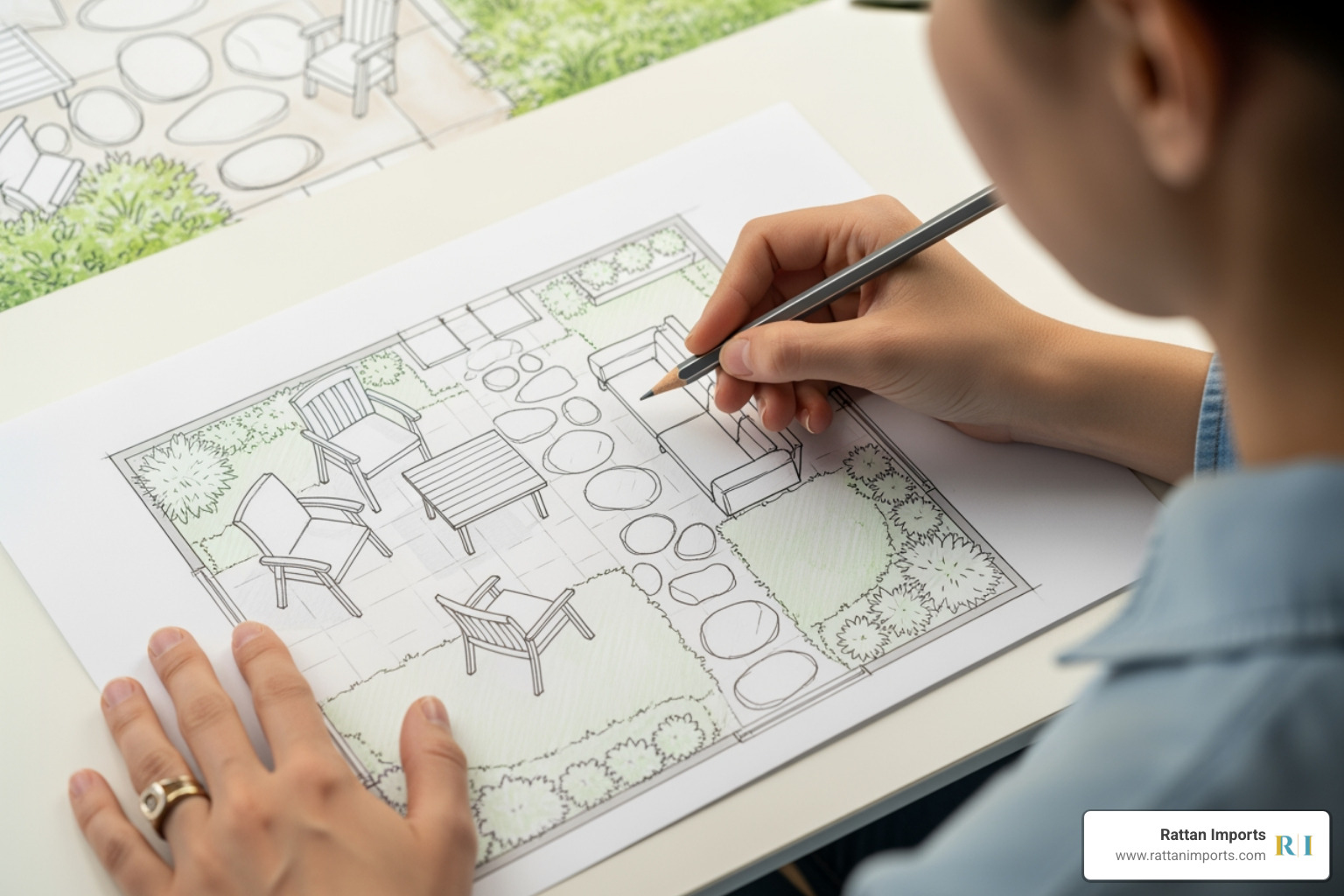
When we talk about maximizing your meals, we're really talking about maximizing your space. Grab a notepad, a tape measure, and let's get down to business. Measure the length and width of your patio, deck, or designated outdoor area. Don't forget to note any existing features like doors, steps, planters, or built-in seating. These are your immovable objects, and they dictate the flow.
Next, consider the principles of scale and proportion. Scale refers to how large your furniture looks in relation to the overall property and garden. You don't want a tiny bistro set swallowed up by a sprawling lawn, nor a massive dining table overwhelming a modest home. Proportion, on the other hand, is about the size relationships between all the elements on your patio – the furniture, pathways, plants, and hardscaping. Everything should harmonize. A common mistake we see is buying furniture that's either too big, making the space feel cramped, or too small, making it feel sparse and uninviting.
Good traffic flow is paramount. Imagine your guests moving around – pulling out chairs, carrying plates of delicious food, heading to the grill, or just mingling. Pathways should be clear and wide enough for comfortable movement. We recommend pathways between activity areas to be at least 3 to 4 feet wide at all points. While a narrower 2 to 2.5-foot path can make you slow down and be mindful, for high-traffic zones, 3 to 4 feet is ideal to prevent bottlenecks and ensure safety.
A fantastic way to visualize your planned layout is to use painter's tape, string, or even chalk to mark out the dimensions of your desired furniture on the ground. This allows you to walk around, simulate pulling out chairs, and get a real feel for the space before making any purchases. It's like a dry run for your dream patio! For a deeper dive into comparing different outdoor furniture options, check out our guide, "Beginners Guide to Comparing Outdoor Patio Furniture Options".
How Table Shape Impacts Your Space
The shape of your dining table isn't just an aesthetic choice; it significantly influences how much space for outdoor dining you'll need and how your guests interact.
- Round tables for conversation: These are champions for fostering intimacy and conversation. Everyone is equidistant, making it easy to engage in group discussions. A typical round table with six chairs, for example, requires a circular area with a diameter of at least 9 feet for comfortable seating and movement.
- Square tables for small groups: Perfect for compact spaces and intimate gatherings of two to four people. They offer a neat, symmetrical look and fit well into square patio footprints.
- Rectangular dining tables for classic layouts: Ideal for longer, narrower patios and for accommodating larger groups. They create a more traditional dining setup and can be great for serving multiple dishes down the center. A rectangular table generally requires an area 5 to 6 feet wider and longer than the table itself to ensure ample clearance.
- Oval dining tables for better flow: These offer a wonderful compromise, combining the conversational aspect of a round table with the elongated capacity of a rectangular one. Their rounded edges also make it easier to steer around the table, improving traffic flow in your dining area.
When choosing, consider the shape of your patio. A rectangular table will look right at home on a long deck, while a round table can soften the edges of a square patio. For more insights into selecting the perfect center for your outdoor meals, explore "The Complete Guide to Choosing the Perfect Wicker Dining Table".
Sizing by Seating: How Much Space for Outdoor Dining?
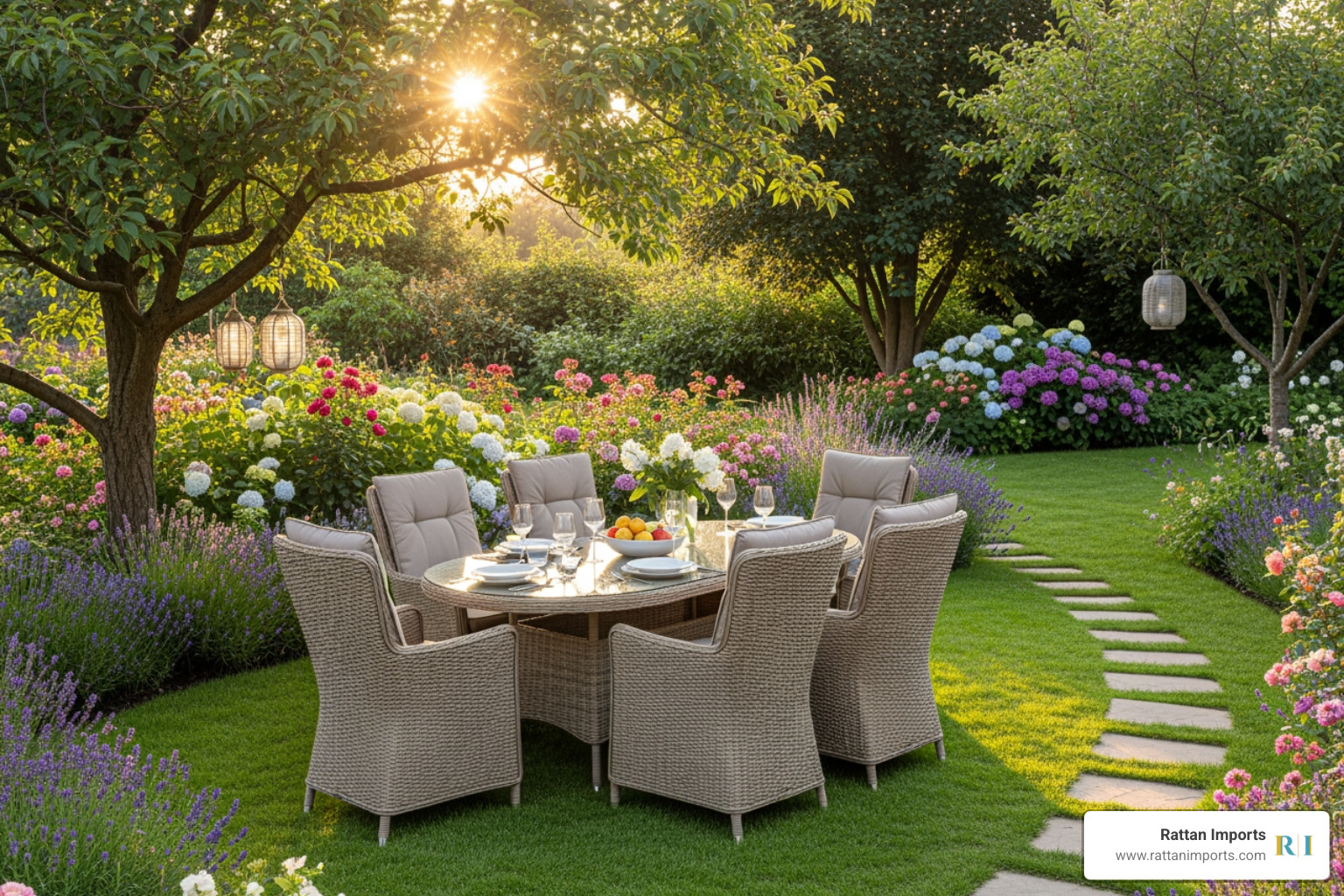
Once you have a clear picture of your outdoor footprint and desired table shape, the next crucial step is determining the seating capacity. This directly influences how much space for outdoor dining you'll ultimately need. It's not just about the table and chairs fitting, but about ensuring everyone can comfortably sit, stand, and move around without bumping elbows or feeling trapped.
We recommend aiming for at least 24 inches of space between individual chairs to prevent collisions and allow for comfortable dining. But the real magic number comes when considering chair clearance and push-back space. Guests need to be able to pull their chairs out to sit down and push them back in without hitting a wall, another piece of furniture, or someone else. This is where the "3-foot rule" comes in handy: plan for an extra 3 feet of space on all sides of your dining table. This ensures comfortable chair pull-out and allows for easy movement and access around the entire dining set. You'll also want to leave 30-36 inches between the table and any walls or other stationary furniture.
For a comprehensive look at fitting dining sets into various outdoor spaces, from the coziest nooks to the grandest gatherings, take a peek at our guide, "From Cozy Corners to Grand Gatherings: Finding Your Perfect Outdoor Wicker Dining Set".
Here’s a breakdown of general space requirements by guest count:
- 2-4 people: Ideal for intimate settings or smaller patios. A bistro set or a small round/square table works well.
- 4-6 people: Suitable for medium-sized patios. Rectangular or oval dining tables are popular choices.
- 6-8 people: Great for larger gatherings. Consider an extendable table for flexibility.
- 8+ people: For expansive spaces and frequent large parties. Modular or custom setups might be appropriate.
How much space for outdoor dining for small groups (2-4 people)?
Even if your outdoor space is modest, you can still create a charming and functional dining area. For a bistro set with two chairs, including the necessary circulation space, you can fit this cozy setup into a space that’s about 6 by 8 feet. This makes bistro sets absolutely perfect for compact balconies or small patios where space is a premium.
If you're looking to host four people comfortably, you'll need a bit more room. For a dining area designed for four, we generally recommend an area of about 10x10 feet. This allows for a small square or round table with chairs and enough clearance for movement. For a typical 4-seater garden dining set, including the table, chairs, and all that essential working and walking space, you should aim for a patio area between approximately 2.3m x 2.3m to 3m x 3m (which is about 9.8 feet x 9.8 feet). This ensures your guests aren't constantly apologizing for bumping into each other.
For more inspiration on making the most of your compact outdoor areas, check out our guide, "Bistro Bliss: Top Rattan Sets for Your Outdoor Oasis".
How much space for outdoor dining for larger groups (6+ people)?
When your guest list grows, so do your space requirements. For a dining area accommodating six to eight people, a 12x12-foot space is a good starting point. This provides ample room for a larger rectangular or oval table and the necessary chair clearance.
If you prefer a round table for six, it creates a more intimate setting but still needs its dedicated footprint. To comfortably accommodate a typical round table with six chairs, you'll need a circular area with a diameter of at least 9 feet. This ensures chairs can be pulled out and guests can move around the table.
Rectangular tables are excellent for larger groups and can often fit more people in a given linear space. As a rule of thumb, a rectangular table requires an area 5 to 6 feet wider and longer than the table itself. This accounts for the table's dimensions plus the crucial 3 feet of clearance on each side.
Consider an extendable table if your guest numbers fluctuate. These clever designs offer flexibility, allowing you to expand your dining surface only when needed, saving space during more intimate meals. For those who love to host grand gatherings, selecting the right set is key. Our guide, "Feast in Style: Finding Your Perfect Outdoor Rattan Dining Set", offers even more insights into choosing a set that can handle your biggest parties.
Beyond the Table: Spacing for Other Outdoor Zones
Your outdoor space is more than just a dining area; it's an extension of your home, a place for relaxation, conversation, and perhaps even some culinary adventures. Understanding how much space for outdoor dining is just one piece of the puzzle. To create a truly functional and inviting outdoor haven, we need to consider how different activity zones coexist and flow together.
Creating distinct zones for dining, lounging, and cooking is a smart move. This can be achieved through clever furniture placement, the use of planters, trellises, or even subtle changes in decking patterns. Separating these activity areas visually and physically helps define their purpose and prevents one from encroaching on another.
For example, a dedicated conversation area for three to six people typically requires a 10x10-foot space. This allows for comfortable seating arrangements like a sofa, a couple of chairs, and a coffee table, all with adequate circulation around them. And let's not forget the heart of many outdoor gatherings: the cooking station. A simple cooking area with a grill and a small prep table usually needs an area of about 6 feet square. If you're dreaming of an elaborate outdoor kitchen with a counter or island, you'll naturally need significantly more room.
To ensure your lounging spots are as comfortable and stylish as your dining area, read our guide, "Sit Pretty Outdoors with These Luxury Rattan Garden Sofas".
Lounge and Relaxation Area Clearances
When it comes to unwinding outdoors, comfort is king, and comfort demands space. Here's a look at the clearances needed for popular lounge and relaxation furniture:
- Chaise Lounges: These are built for serious relaxation! A typical chaise lounge is around 80 inches long and 24 inches wide. To ensure easy access, you'll want at least 24 inches of room on at least one side – though 36 inches offers even more comfort. Don't forget space for a small side table; allow at least 18 inches for that essential drink or book.
- Recliners: For a single reclining chair, allocate an area of about 4x7 feet. If you're planning for a pair of recliners for synchronized relaxation, a 7x7-foot space should do the trick. Remember to account for the full recline!
- Sofas and Loveseats: These are the anchors of your outdoor living room. Loveseats typically range from 52-60 inches long, while sofas can be 70-94 inches long. Standard depths are 30-32 inches, but deep-seat options (34-42 inches deep) offer extra plushness and, you guessed it, require more space. When pairing with a coffee table, allow about 24 inches between the coffee table and the seating for easy access and comfortable legroom.
- Porch Swings: There's nothing quite like the gentle sway of a porch swing. To ensure a smooth, unobstructed arc of movement, plan for about 4 feet of clearance behind the swing and 5 feet in front. Also, allow 14 to 16 inches on each side for comfortable entry and exit. Gliders, while not swinging, still need about 30 inches away from the wall behind them and a foot or two in front for easy access.
- Hammocks: For ultimate relaxation, your hammock needs room to breathe (and sway!). The anchors for a hammock should be 10 to 15 feet apart. And for that perfect, gentle sag, you'll want the hammock itself to hang about 18 inches above the ground when occupied.
Creating a harmonious outdoor lounge is an art! Find more ways to blend style and comfort in your relaxation zones with our guide, "Rattan Deck Furniture Roundup: Style and Comfort for Your Patio".
Functional and Safety Clearances
Beyond dining and lounging, other outdoor elements require specific spatial considerations for both functionality and, more importantly, safety.
- Grill Clearance: If you're the designated grill master, you need room to work safely and comfortably. A 4-foot clearance between the front of your grill and any other furniture or structure is essential. This prevents accidental burns and gives you ample space to flip burgers without feeling cramped.
- Fire Pit Seating Distance: The warmth and ambiance of a fire pit are undeniable, but proximity is key. A distance of about 18 to 24 inches between your fire pit and the seating area is ideal. This is close enough to feel the warmth but far enough to avoid excessive heat or stray sparks.
- Swimming Pool Walkways: For those lucky enough to have a pool, safety around the water is paramount. A 5-foot walking area around an in-ground swimming pool provides plenty of room for people to maneuver, preventing accidental slips or falls into the water.
- Pathways: We've mentioned pathways before, but their role in safety and flow can't be overstated. Whether it's from a door to stairs or simply connecting different activity areas, pathways should be 3 to 4 feet wide at all points. While some paths can be as narrow as 2 to 2.5 feet to encourage a slower, more mindful stroll, high-traffic areas demand wider clearance. Always prioritize accessibility and unimpeded movement, especially when carrying food, drinks, or pool towels.
A Note on Commercial and Public Outdoor Dining
While our focus at Rattan Imports is often on residential spaces, it's worth noting that the principles of how much space for outdoor dining become even more stringent and regulated in commercial and public settings. Restaurants, cafes, and bars expanding onto sidewalks (sidewalk cafes) or even into parking lanes (roadway cafes or parklets) face specific city guidelines. These regulations are designed to ensure public safety, accessibility, and harmonious coexistence with urban infrastructure.
For instance, in cities like New York, the "Dining Out NYC" program outlines detailed requirements for how sidewalk and roadway cafes are designed, built, and operated. These aren't just suggestions; they are legally mandated rules to protect pedestrians, ensure emergency access, and maintain urban aesthetics. You can explore examples of such regulations on the Dining Out NYC Requirements website. Similar rigorous guidelines exist in other major cities, ensuring that public outdoor dining spaces are safe and accessible for everyone.
A critical aspect of these commercial guidelines is ADA (Americans with Disabilities Act) compliance. This means ensuring that outdoor dining areas are accessible to individuals with disabilities, including clear paths, appropriate table heights, and accessible seating options.
Key City Guideline Examples
Across different municipalities, specific numerical clearances are common. These aren't just arbitrary rules; they're carefully calculated to ensure public well-being.
- Pedestrian Access Route (PAR): Many cities mandate a minimum pedestrian clear path on sidewalks. For example, a 6-foot minimum pedestrian clear path must often be maintained, ensuring that even with outdoor dining, there's ample room for walkers, strollers, and wheelchairs. In some wider sidewalks (e.g., 21 feet or more), this path might even need to be 8 feet wide.
- Crosswalk Clearance: Outdoor dining structures must maintain specific distances from crosswalks to ensure clear sightlines for both pedestrians and drivers.
- Fire Hydrant Access: Emergency access is non-negotiable. Many cities require a minimum 3-foot clearance from fire hydrants to ensure they are always accessible to firefighters.
- Buffer Zones: Often, a buffer of 4 feet is required between the outdoor seating area and the main pedestrian clear path. This buffer can sometimes incorporate decorative elements like planters, but its primary purpose is separation.
- Spacing Between Tables: To prevent overcrowding and allow for comfortable movement, commercial regulations often specify minimum distances between tables (e.g., 6 feet from the back of one chair to the back of a chair at an adjacent table).
- Tents and Overhead Structures: Even temporary overhead coverings like tents have size restrictions. For instance, tents larger than 10x10 feet might be prohibited without special permits, or specific materials might be mandated for safety.
These examples highlight the meticulous planning and adherence to regulations required for commercial outdoor dining. While residential spaces offer more flexibility, these commercial standards underscore the importance of thoughtful spatial design for any outdoor area.
Frequently Asked Questions about Outdoor Dining Space
We often hear similar questions from our customers as they start on their outdoor dining journey. Let's tackle some of the most common ones to ensure your planning is foolproof!
What is the golden rule for clearance around a dining table?
The golden rule, hands down, is the 3-foot clearance rule. You need to allow an extra 3 feet of space on all sides of your dining table. This isn't just for aesthetics; it's the magical number that ensures guests can comfortably pull their chairs out to sit, push them back in, and move around the table without feeling like they're playing a game of Tetris. It also provides enough space for someone to walk behind a seated guest without causing a disturbance. So, when measuring your patio, always add 6 feet to both the length and width of your table to get its true functional footprint.
How much space do I need for a simple 4-person patio set?
For a simple 4-person patio set, you're looking at a minimum area of approximately 10x10 feet. This comfortably accommodates a square or round table with four chairs and the essential 3-foot clearance on all sides. If you're working with a very compact space, a bistro set designed for two, including its circulation space, can fit into an area as small as 6x8 feet. However, for a truly comfortable 4-seater experience where guests can fully enjoy their meal and conversation, that 10x10 foot (or roughly 9.8 x 9.8 feet / 3m x 3m) footprint is our top recommendation.
Can I use different shapes of tables to save space?
Absolutely! The shape of your table can be a strategic tool in optimizing your outdoor space.
- Round tables are excellent for promoting conversation and can sometimes feel less "blocky" in a square space, making movement feel more fluid.
- Oval tables offer a fantastic compromise. They provide the linear capacity of a rectangular table but with softened edges, which can improve traffic flow and make a space feel less cramped than a sharp-cornered rectangle. They're particularly good for patios that are long but also need to maintain a sense of openness.
- Rectangular tables are best for longer, narrower patios, fitting snugly into the space and providing ample seating. They are also ideal if you frequently host larger gatherings, as they can often accommodate more guests than a round table of comparable area.
- Square tables are perfect for intimate settings and fit neatly into square or smaller rectangular patios, making the most of every inch.
By understanding how each shape interacts with your patio's dimensions and your desired guest experience, you can select a table that not only looks great but also functions efficiently within your available space.
Conclusion
Designing the ideal outdoor dining space is truly about striking a harmonious balance between your aspirations and your available square footage. It's not just about fitting furniture; it's about crafting an experience. We've explored the critical elements of how much space for outdoor dining – from meticulous measuring and understanding scale and proportion, to ensuring ample clearance for chairs, pathways, and adjacent activity zones.
Remember these key takeaways: always measure your space first, prioritize comfortable traffic flow for both guests and hosts, and choose your furniture wisely, considering both its footprint and its functional requirements. Whether you're planning a cozy nook for two or a grand feast for many, thoughtful planning is the secret ingredient to a successful outdoor dining area.
At Rattan Imports, we believe your outdoor space should be as inviting and functional as your indoor living areas. We specialize in premium home décor and furniture, sourced from Southeast Asia and assembled right here in the U.S., offering free shipping, a price guarantee, and exceptional customer service. We're here to help you turn your outdoor dining dreams into a comfortable, stylish reality.
Ready to transform your patio? Discover your perfect set with our guide, "Al Fresco Fabulousness with Outdoor Wicker Dining Table and Chairs".