



The Timeless Appeal of Ladder Back Chairs with Arms

Ladder back chairs with arms are one of the most enduring chair styles in furniture history — and for good reason. They blend classic craftsmanship with everyday comfort in a way few other chair styles can match.
Quick answer: What is a ladder back chair with arms?
- A ladder back chair has a back made of horizontal slats stacked between two vertical posts — resembling a ladder
- An arm version adds side rails, or armrests, that extend from the back posts to the front legs
- They differ from standard side chairs by offering lateral support, making them more comfortable for longer meals or relaxed seating
- Common uses include dining rooms, kitchens, and accent seating
- They are available in wood, rattan, upholstered, and mixed-material styles
These chairs date back to the Middle Ages in Europe. By the 17th century, they were among the most common chair styles in England. Today, they remain just as popular — and the arm version has become a go-to choice for head-of-table seating and accent placements.
Whether you are furnishing a formal dining room or refreshing a casual kitchen nook, ladder back arm chairs offer a rare mix of style, structure, and comfort that works across many interior design aesthetics.
I'm Nino Russo Alesi, founder of Rattan Imports, and my background in hospitality and home décor has given me a deep appreciation for seating that combines beauty with function — including ladder back chairs with arms, which remain a cornerstone of well-curated dining spaces. Let's walk through everything you need to know to choose the right one.
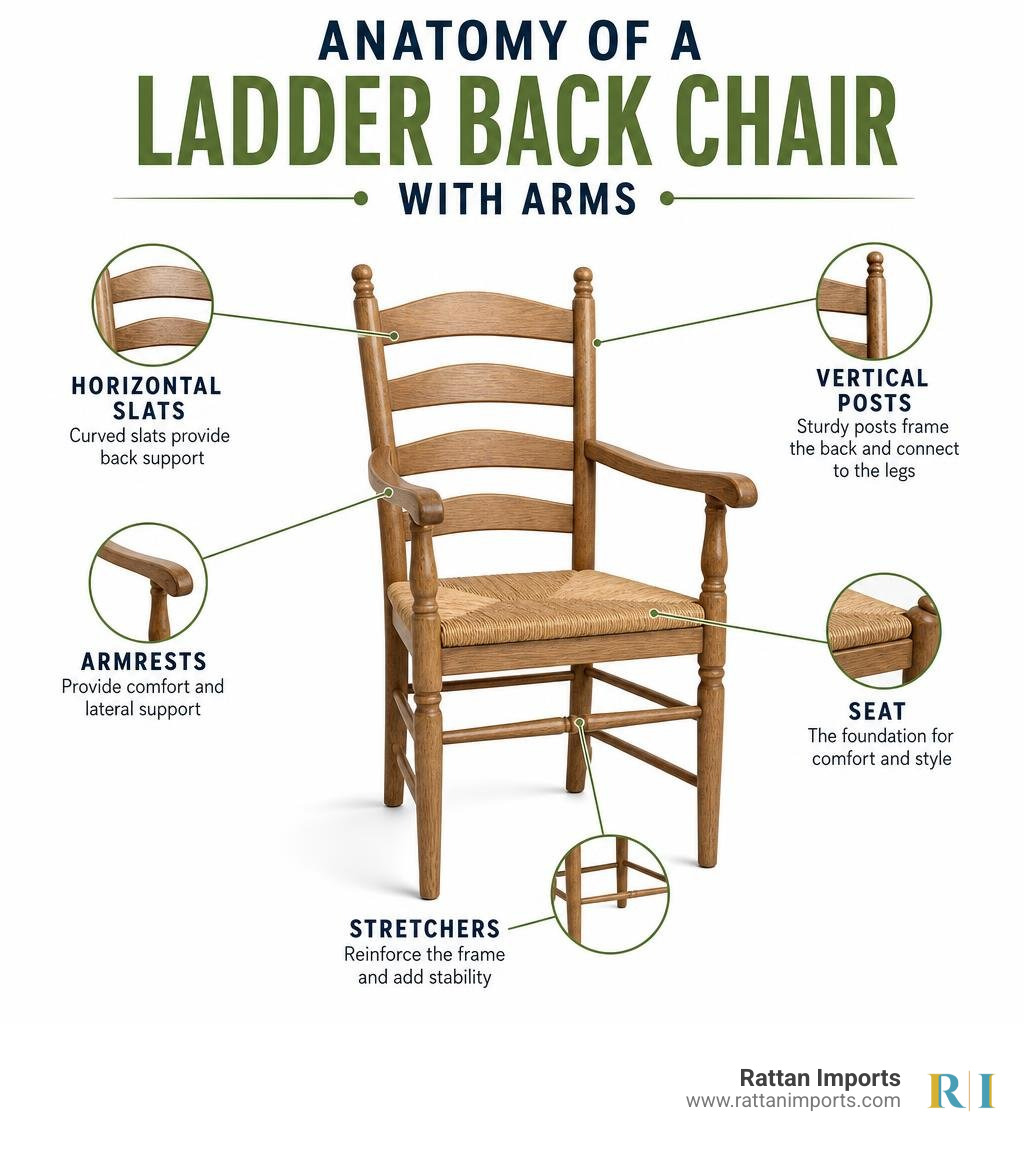
Ladder back chairs with arms terms explained:
Understanding the Design of Ladder Back Chairs with Arms

At its core, the ladder back chair is defined by its horizontal slats—or rails—stretched between two upright back posts. This creates a clean, open look that keeps a room feeling airy rather than weighed down by bulky upholstery. But when you introduce armrests to this classic silhouette, the dynamic changes in both form and function.
Standard ladder back side chairs are excellent for sliding neatly under a table and maximizing seating capacity. However, ladder back chairs with arms add a layer of physical and visual structure. The armrests extend forward from the back uprights, anchoring to either the front legs or the seat frame. This design provides essential upper-body support, allowing you to rest your elbows and shoulders during long, lingering dinner conversations.
Historically, armchairs were reserved for the "head of the table" to signify status. In modern 2026 dining design, we love mixing and matching. Placing two prominent armchairs at the ends of a rectangular table while lining the sides with matching side chairs creates a beautiful, balanced focal point. If you want to explore how these designs elevate a room, take a look at our curated rattan dining chair collection.
Key Features and Materials of Traditional and Modern Styles
The beauty of the ladder back design is its incredible versatility. It can lean rustic, traditional, transitional, or even ultra-modern depending on the materials used and how the details are styled.
Traditional styles often feature turned front posts, elegant finials at the top of the back uprights, and a gentle "rake" or backward slant to the seat back for better lumbar support. To ensure these chairs survive the daily wear and tear of family life, premium manufacturers use leg stretchers that are both screwed and glued. This extra reinforcement prevents the legs from wobbling over time.
Modern iterations simplify these details. You will find clean, straight lines, square posts, and minimalist slats. Whether you prefer the cozy warmth of a French country kitchen or the sleek lines of a contemporary dining space, there is a ladder back arm chair to match your vision.
Material Variations in Ladder Back Chairs with Arms

The choice of wood or framing material dictates both the durability and the overall vibe of your chairs. Here are the most common materials you will encounter:
- Solid Hardwoods: Cherry, red oak, white oak, maple, walnut, and hickory are the gold standards for traditional, heirloom-quality furniture. They offer beautiful natural grains and can be finished with a commercial-grade catalyzed conversion varnish to protect against spills and scratches.
- Parawood, also known as Rubberwood: An incredibly eco-friendly choice. Parawood trees are first harvested for latex. Once their latex-producing cycle ends, the wood is harvested for furniture. It features a dense grain, minimal shrinkage, and takes paints and stains beautifully.
- Rattan and Cane: Perfect for bringing a warm, coastal, or bohemian texture into your home. High-quality rattan poles provide lightweight yet incredibly strong frames, while hand-woven cane details on the back or seat offer flexible, breathable comfort. If you love natural textures, explore our full range of rattan furniture collections.
Upholstery and Seat Options for Ladder Back Chairs with Arms
Your choice of seat material directly impacts how long your guests will want to sit and chat. Traditional ladder backs often featured woven rush or fiber seats, which offer a firm but slightly yielding sit. Modern designs give you the flexibility to choose what works best for your lifestyle.
For instance, the 297C2001A by Liberty Furniture Industries - Uph Ladder Back Arm Chair | Faller's Furniture features a tobacco leather-like fabric upholstery over a padded seat, offering a plush, formal feel. On the other hand, customizable options like the Venosa Ladder Back Chair - Countryside Amish Furniture allow you to choose between a classic scooped hardwood seat, premium fabrics, or full-grain leather.
Similarly, the Elgin Ladder Back Kitchen Chairs - Countryside Amish Furniture showcase how a clean, transitional wooden seat can bring a sleek, timeless look to a busy kitchen.
Here is a quick look at how different seat materials compare:
| Seat Type | Comfort Level | Maintenance | Best Style Fit |
|---|---|---|---|
| Scooped Hardwood | Surprisingly ergonomic due to contouring; firm. | Extremely easy; wipe and go. | Farmhouse, Traditional, Shaker |
| Woven Rush / Cane | Flexible and breathable; medium firmness. | Needs occasional dusting; avoid excess moisture. | Coastal, French Country, Bohemian |
| Padded Upholstery | Plush and comfortable for hours of sitting. | Requires fabric protection or spot cleaning. | Formal, Transitional, Modern |
To dive deeper into choosing the perfect texture and material for your home, check out our ultimate guide to rattan and wicker dining chairs.
Historical Evolution and Craftsmanship
To truly appreciate ladder back chairs with arms, it helps to look back at their journey. These chairs date back to the Middle Ages in Europe, where they served as simple, utilitarian seating. By the 17th century, they had become one of the most common chair styles in England, appreciated for their efficient use of lumber and lightweight design.
When European settlers came to colonial America, they brought these designs with them. Shaker communities refined the style, stripping away excess ornamentation to focus on pure utility, perfect proportions, and lightweight strength. The historical significance of these chairs is undeniable; for example, the Metropolitan Museum of Art purchased a stunning pair of Philadelphia-made ladder back chairs, dated between 1785 and 1795, back in 1908, cementing the design as a true piece of decorative art. You can read more about the fascinating history of ladder back chair designs to see how they evolved.
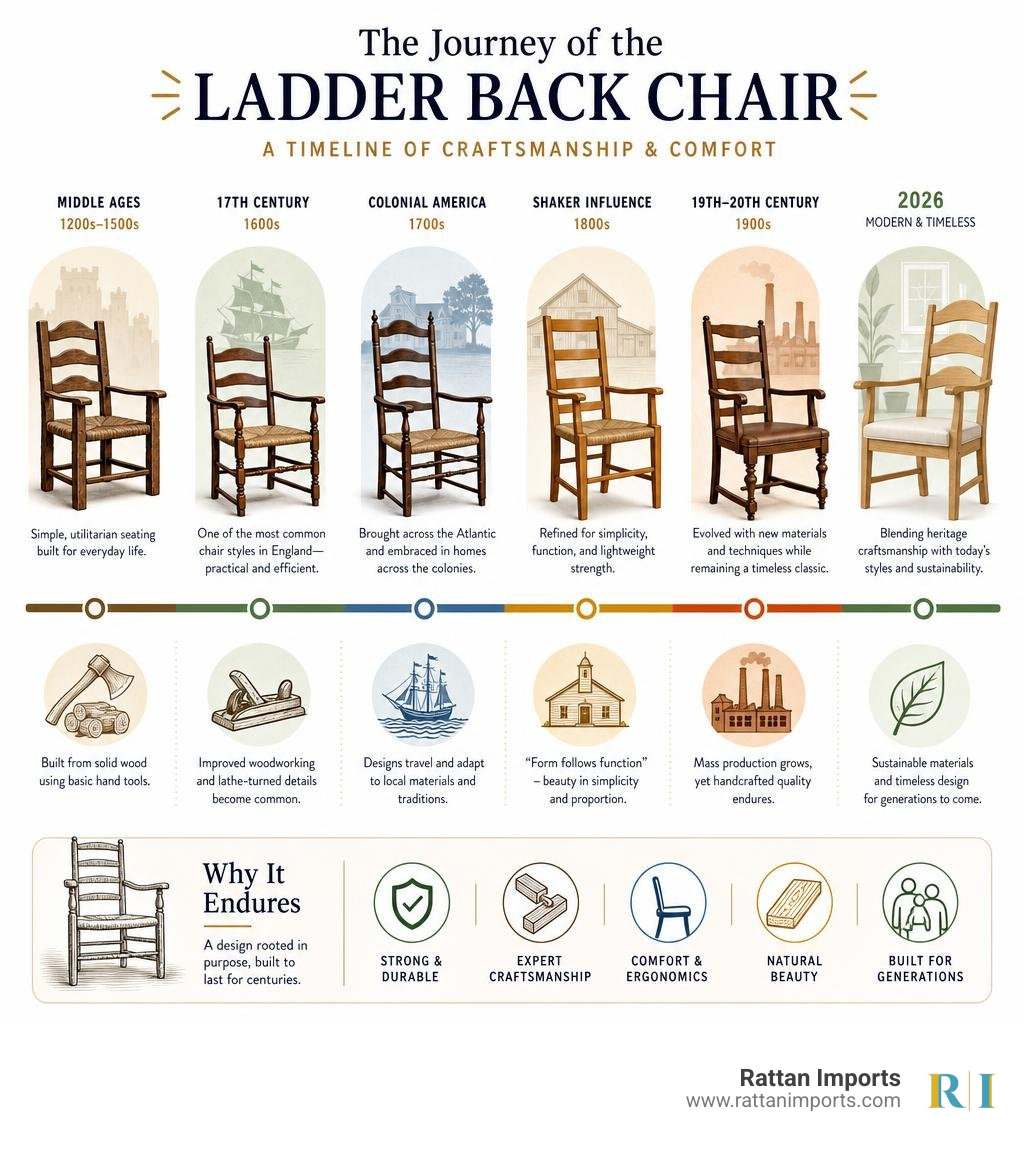
The secret to their multi-century survival lies in the craftsmanship. Traditional woodworkers rely on mortise and tenon joinery—where a projecting tongue, or tenon, on one piece of wood fits snugly into a hole, or mortise, carved into another. When combined with modern techniques like tongue-and-groove joinery and premium finishes, these chairs are built to last for generations. At Rattan Imports, we blend these time-honored wood-joining principles with meticulous rattan weaving techniques to create furniture that honors the past while standing up to modern life.
Frequently Asked Questions about Ladder Back Armchairs
What are the standard dimensions of a ladder back chair with arms?
While dimensions vary slightly by manufacturer, typical measurements for a comfortable, ergonomic dining experience include:
- Overall Height: 40 to 44 inches, as the tall back provides excellent upper-back and lumbar support.
- Width: 22 to 24 inches, which is wider than side chairs to accommodate the armrests.
- Depth: 20 to 23 inches.
- Seat Height: 17.5 to 19 inches, which is the standard height to pair with a typical 30-inch-tall dining table.
- Arm Height: 24.5 to 25.5 inches.
Design Tip: Always measure the clearance between the bottom of your dining table apron and the floor to ensure the armrests can slide neatly underneath when the chairs are not in use!
How do you maintain and clean wooden and rattan ladder back chairs?
Keeping your chairs looking pristine is simple if you follow a few basic rules:
- Dust Regularly: Use a dry, soft, lint-free cloth to wipe down the slats, arms, and legs.
- Clean Gently: For wooden surfaces, use a slightly damp cloth, wiping in the direction of the wood grain. Dry immediately with another clean cloth. Avoid harsh chemical cleaners or spray waxes that can build up over time.
- Protect the Finish: Use felt pads on the bottom of the legs to protect your floors. Keep your chairs away from direct heat sources or prolonged, direct sunlight to prevent the wood or rattan from drying out.
What is the typical weight capacity of these chairs?
Weight capacity is a great indicator of structural integrity. Standard residential chairs typically support 200 to 250 lbs. However, premium handcrafted chairs built with superior joinery often feature weight capacities ranging from 350 lbs up to an impressive 500 lbs. This makes them durable enough for both busy family dining rooms and high-traffic commercial restaurant spaces.
Conclusion
There is a reason ladder back chairs with arms have remained a household staple for hundreds of years. They offer a perfect marriage of structural beauty, historic charm, and ergonomic comfort. Whether you place them at the ends of your dining table, use one as an elegant desk chair, or set a pair in a cozy reading nook, they bring a sense of warmth and character to any space.
At Rattan Imports, we are dedicated to helping you find furniture that makes your home feel complete. We source premium materials from Southeast Asia and assemble our pieces right here in the U.S. to ensure the highest quality. To make your shopping experience seamless, we offer free shipping across the U.S. mainland, identity theft protection, and a comprehensive price guarantee.
Ready to step up your seating? Explore our collections today and find the perfect chairs to welcome your family and guests for years to come!