



Transform Your Backyard into a Memorable Dining Destination

How to create an outdoor dining area starts with understanding the essentials: choose the right location, select weather-resistant furniture, incorporate comfortable shade and lighting, and add personal touches that reflect your style. The process combines practical planning with creative design to transform any outdoor space—whether a small balcony or spacious deck—into an inviting place to gather and dine.
There's something special about dining under the open sky. As one outdoor living enthusiast put it, "meals somehow taste better when enjoyed under the sun." Whether you're brunching with a friend on your balcony or hosting a lavish backyard dinner party, an outdoor dining area extends your living space and creates a setting where memories naturally unfold. The beauty of al fresco dining isn't just about the food—it's about the atmosphere, the fresh air, and the way a simple meal becomes an event when you move it outdoors.
Creating this space doesn't require a massive budget or professional help. With thoughtful planning around location, furniture selection, ambiance, and personal style, you can design an outdoor dining oasis that works for your specific needs and space. From understanding how much clearance you need around your table (24-30 inches per person, plus 36-48 inches for comfortable chair movement) to choosing materials that withstand your local climate, this guide walks you through each decision step by step.
I'm Nino Russo Alesi, founder of Rattan Imports, and my passion for creating beautiful outdoor spaces stems from my Sicilian roots where gathering around the patio with loved ones is a cherished tradition. Through years of helping customers how to create an outdoor dining area that balances style with durability, I've learned what truly makes these spaces work for real families and how to guide people through the process with personalized support.
This guide covers everything from measuring your space and selecting the right furniture materials to layering lighting for ambiance and adding those finishing touches that make the space uniquely yours. Whether you're working with a compact city balcony or a sprawling backyard, you'll find practical advice to create an outdoor dining area that becomes your favorite place to gather.
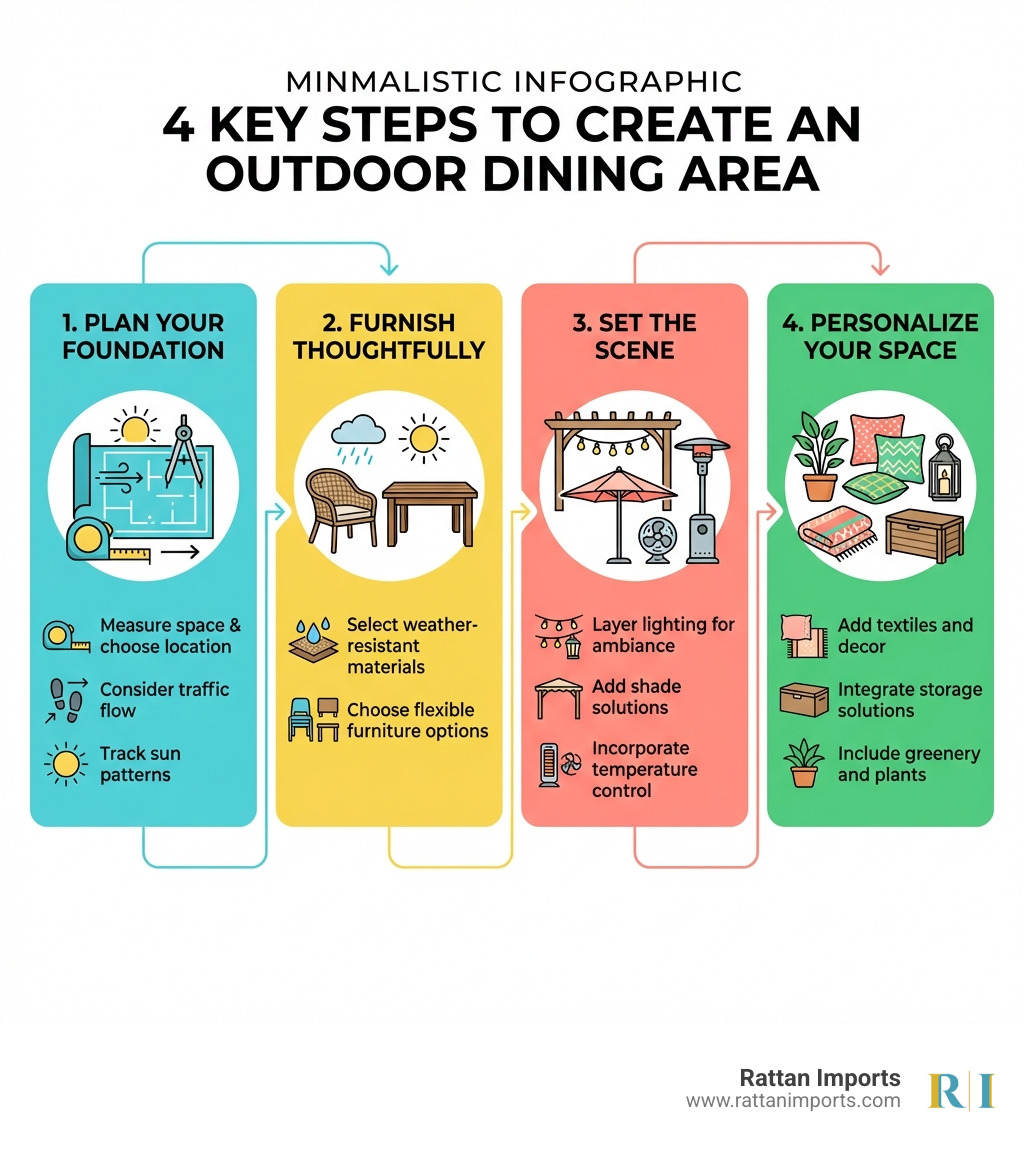
How to create an outdoor dining area glossary:
- covered outdoor seating
- 6 seater outdoor setting
- small outdoor dining
Step 1: Planning Your Foundation - Location, Size, and Layout
Creating an outdoor dining area that truly shines begins long before you pick out furniture. It starts with a well-thought-out plan, considering the practicalities of your space, its natural characteristics, and how you envision using it. This foundational step is crucial for ensuring your al fresco oasis is both functional and inviting.
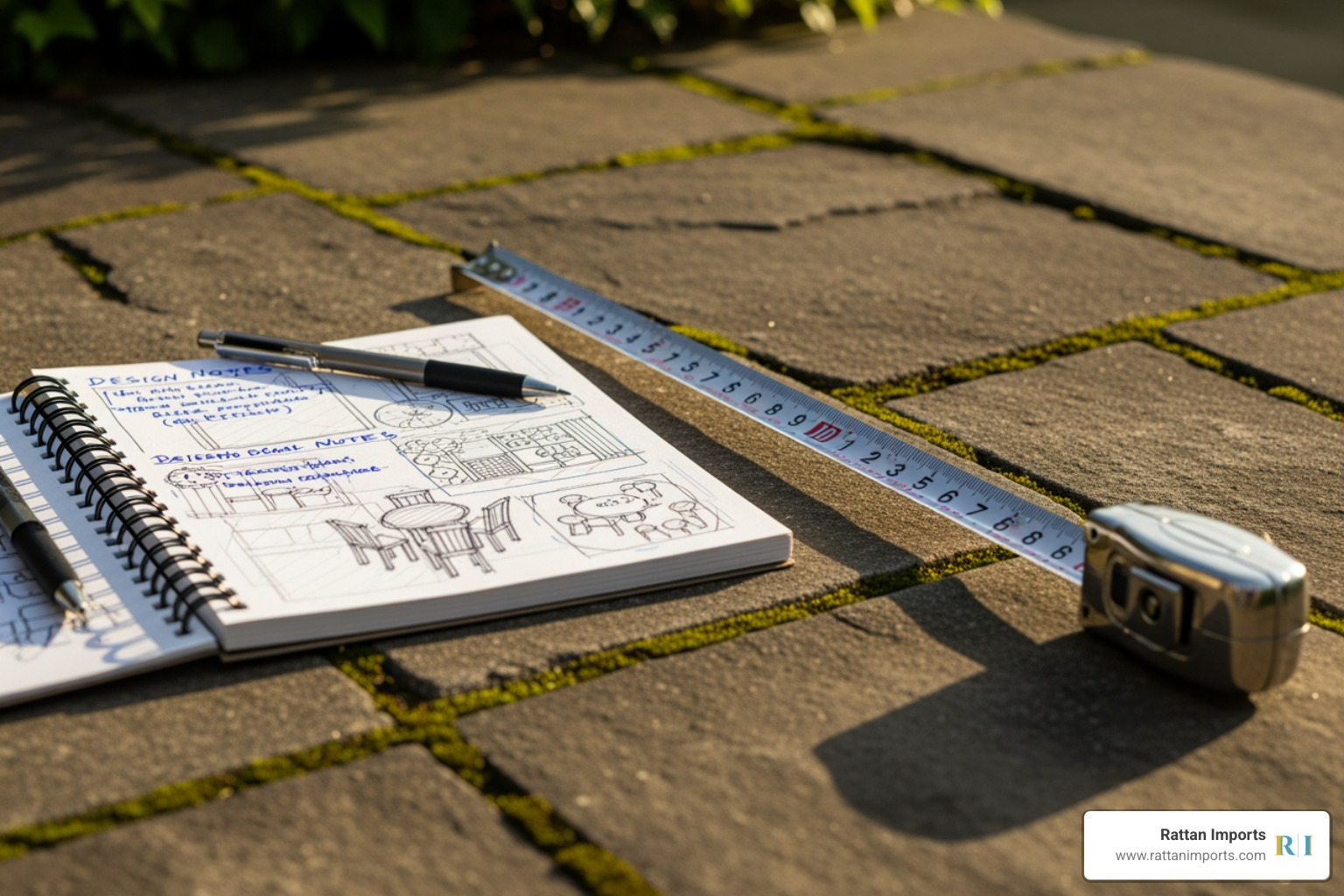
When we approach designing an outdoor dining area, we always begin by evaluating the available space. Think about existing elements like utility lines (electric, plumbing, gas) and how they might influence your layout. An outdoor kitchen, for instance, will require careful planning around these utilities, and consulting a professional for installation is always a wise choice to ensure safety.
Traffic flow is another essential consideration. We want to ensure a seamless path from your indoor kitchen to the outdoor dining table, making serving and clearing a breeze. Picture yourself carrying a tray of delicious food – you wouldn't want to steer a maze of furniture! Allow ample clearance: typically 30-40 inches in heavy foot-traffic areas and 24 inches in lower traffic zones. Around the dining table itself, a good rule of thumb is to allow 24-30 inches of table space per person, plus an additional 36-48 inches around the table for comfortable chair movement and service access. This ensures everyone can get up and down without bumping elbows.
Consider the sun and shade patterns throughout the day. Do you enjoy morning coffee in the sun, or are you more of a sunset dinner person? Knowing these patterns will help you strategically place your dining area and any necessary shade solutions. If your project involves significant construction, remember to check with your local building department for permits. Deck or patio permits typically cost between $220 and $500, while plumbing permits range from $50 to $500. In general, you can expect permits to add an average of $250–$2,000 to your project cost, but it's a small price to pay for peace of mind and compliance.
Choosing the Right Location and Size
The ideal location for your outdoor dining area depends on your home's architecture and yard's natural features. Common spots include patios, decks, garden corners, or even small balconies. For those with limited space, a cozy bistro set can transform a balcony into a charming breakfast nook. If you frequently host larger gatherings, a table that seats six or more might be ideal. But if it's mostly intimate family meals, an average-sized table for four leaves more room for other outdoor furniture.
To determine the right size, measure the length and width of your patio or chosen area to get its total square footage. Then, visualize furniture placement using painter's tape or chalk on the ground. This simple trick helps you see how much seating the area can comfortably accommodate and what furniture dimensions will fit. Statistic: 24-30 inches of table space per person. This will guide your table size. An outdoor rug can also be a fantastic way to visually define your dining zone, even in an open space, adding a touch of warmth and comfort underfoot.
Creating a Functional Layout
A functional layout is all about flow and creating distinct zones. We want to ensure easy access from your house to the dining table, minimizing trips and maximizing convenience. Arranging furniture for conversation is also key; perhaps a smaller seating area nearby with comfortable chairs and a low coffee table for pre-dinner drinks.
For larger outdoor spaces, creating distinct zones can prevent a cluttered feel. You can use elements like planters, screens, or even a well-placed bar table as informal walls to separate your dining area from a lounge space or an outdoor kitchen. For more inspiration on changing various outdoor spaces, explore our guides on topics like improving garden space with small patio ideas and creating the perfect outdoor dining space. A thoughtfully designed layout ensures everyone has space to relax, dine, and enjoy the beautiful outdoors.
Step 2: Choosing Your Furniture - Style Meets Durability
Once your foundation is planned, the exciting part begins: selecting the furniture! This is where your personal style can truly shine, but it's crucial to balance aesthetics with practicality. Outdoor dining furniture needs to withstand the elements, remain comfortable, and require manageable maintenance. After all, we want to enjoy our outdoor meals, not constantly worry about our furniture.
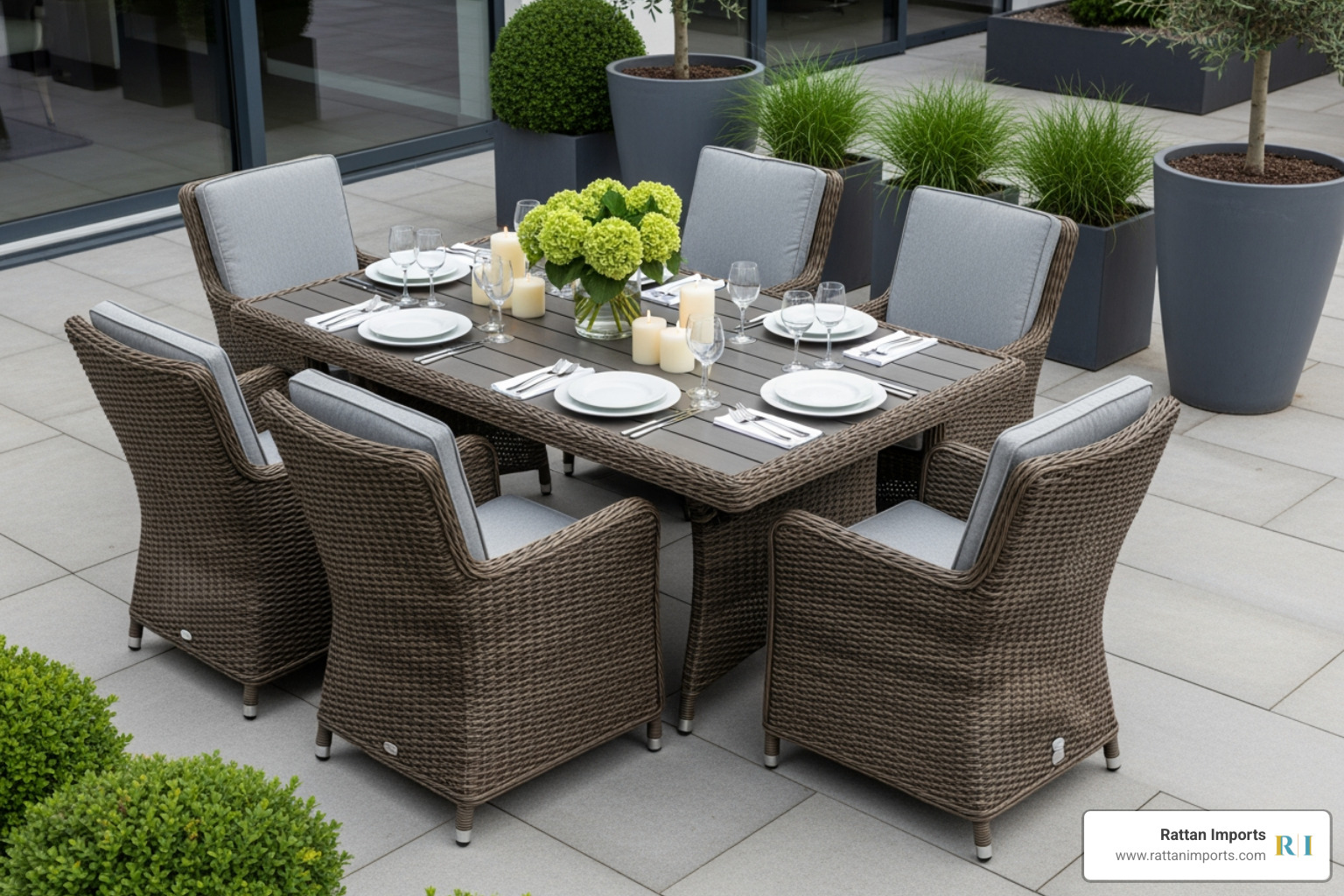
When considering materials, think about your local climate. Does it get scorching hot, very wet, or windy? Each material has its strengths and weaknesses, and choosing wisely will save you headaches (and money!) in the long run. Comfort is also non-negotiable; if your chairs aren't comfortable, no one will want to linger after the meal. And finally, maintenance – some materials require more upkeep than others, so pick what suits your lifestyle.
The Best Materials for Outdoor Dining Furniture
Here at Rattan Imports, we're passionate about all-weather wicker dining furniture that is suitable for every season. This material, often made from woven resin cord or recycled high-density polyethylene (HDPE), is a fantastic choice for its balance of durability, low maintenance, and aesthetic appeal. Unlike natural wicker, synthetic versions are designed to withstand sun, rain, and frost, mimicking the look of natural fibers without the fuss.
Let's look at some popular outdoor furniture materials:
| Material | Durability | Maintenance | Cost (General) | Style |
|---|---|---|---|---|
| All-Weather Wicker/Rattan | Excellent (UV, water, mildew resistant) | Low (mild soap & water) | Mid-High | Classic, modern, coastal, versatile |
| Teak | Excellent (natural oils resist rot, insects) | Medium (periodic cleaning, optional oiling) | High | Classic, natural, ages to silvery patina |
| Aluminum (Powder-Coated) | Very Good (rust-resistant, lightweight) | Low (mild soap & water) | Mid | Modern, contemporary, sleek |
| Recycled Resin Wicker (HDPE) | Excellent (waterproof, fade, mildew resistant) | Very Low (mild soap & water, largely carefree) | Mid | Casual, modern, eco-friendly |
Powder-coated steel is another robust option, offering a protective barrier against the elements. While natural wicker and rattan are beautiful, for outdoor dining, we generally recommend their synthetic counterparts for longevity and ease of care.
How to Choose Furniture That is Both Stylish and Practical
Your outdoor patio should truly be an extension of your home's design. If your interior leans towards a sophisticated, coastal living aesthetic, choose outdoor furniture that complements that design. We believe in furniture that is both stylish and practical.
Consider the benefits of modular and flexible furniture. An extendable dining table, for example, is a game-changer, allowing you to accommodate a large party or fold down for intimate family meals. Stackable chairs are perfect for efficient storage when not in use. And for maximizing space and versatility, don't overlook 4-8 seat rattan cube dining sets, which can neatly tuck away when not needed.
Comfort is paramount for lingering meals. Always opt for chairs with cushions, and ensure those cushions are covered in weatherproof, fade- and mildew-resistant fabric. This simple detail makes all the difference for an enjoyable dining experience.
Maintaining Your Outdoor Furniture
To keep your outdoor dining area looking its best for years to come, regular maintenance is key. Here are some tips for common materials:
- Wood/Teak: Clean with a soft damp cloth. Teak naturally weathers to a beautiful silvery-gray patina; if you prefer to maintain its original honey-brown color, it will require periodic oiling.
- Powder-Coated Aluminum: A mild soap solution and water will do the trick. Avoid abrasive cleaners that can damage the finish.
- Recycled Polyethylene (HDPE): This material is largely maintenance-free. Simply clean with mild soap and water.
- Woven Resin Cord (Synthetic Wicker): Vacuum occasionally, scrub with mild soap and water, or hose it off.
Protecting your furniture from the elements is crucial. Invest in weather-resistant furniture covers for off-season storage, especially those made from solution-dyed all-weather polyester for water, mildew, and sun resistance. For specific guidance on prolonging the life of your pieces, check out our articles on how to preserve your outdoor furniture. Proper care ensures your investment continues to provide joy for many seasons.
Step 3: Setting the Scene - Ambiance, Comfort, and Weatherproofing
With the right location chosen and furniture selected, it's time to infuse your outdoor dining area with personality and ensure it's comfortable in any weather. This step is all about creating the perfect atmosphere, allowing you to transition effortlessly from sunny brunches to starlit dinners.
Creating mood, ensuring day-to-night transitions, and providing year-round comfort are essential. We want your outdoor space to be a haven, no matter the forecast. Strategic weather management and thoughtful ambiance will make all the difference.
How to Create Ambiance and Functionality with Lighting
Lighting is the magic wand for any outdoor space, changing it from merely functional to enchanting. We recommend layering your lighting to achieve both ambiance and functionality.
- Ambient Lighting: This sets the mood. String lights draped overhead or around a pergola create a festive, twinkling canopy. Lanterns placed on tables or hanging from branches add a warm glow. Battery-powered candles are a fuss-free way to add warmth and intimacy without the fire hazard.
- Task Lighting: This ensures you can see your delicious meal! An overhead pendant light (if you have a covered structure) or strategically placed spotlights can illuminate the dining surface.
- Accent Lighting: Use this to highlight features like plants, trees, or architectural elements. Uplighting a favorite shrub or a garden wall can add depth and drama.
Consider solar-powered options for eco-friendly and easy installation, or use battery-powered lights for flexibility. The goal is to create a soft, inviting glow that encourages lingering conversation long after the sun sets.
Managing Sun and Rain for Ultimate Comfort
Comfort in an outdoor dining area means protection from the elements. Nobody enjoys squinting through a meal or rushing indoors at the first drop of rain.
- Shade Solutions: An umbrella is a simple and effective way to provide shade, especially for smaller tables. For a more permanent solution, a pergola offers filtered sunlight and can even be adorned with climbing plants for natural shade. If you're lucky enough to have large, mature trees, their natural canopy provides excellent, dappled shade. For a more structured approach, a ready-to-assemble outdoor pergola can help create defined zones and shelter.
- Rain Protection: Covered patios or pergolas with solid roofs or retractable awnings offer excellent protection from unexpected showers. For an open space, a large, tiltable umbrella can provide temporary shelter. Always ensure proper drainage in your dining area to prevent puddles and discomfort.
Incorporating Temperature Control
We want you to enjoy your outdoor dining area year-round, which means tackling temperature extremes.
- Outdoor Fans: For those hot summer days, an overhead fan can provide a cooling breeze, making dining much more pleasant.
- Misters: In very hot climates, misters can offer refreshing relief, creating a comfortable microclimate.
- Patio Heaters: As evenings cool down, integrated heating solutions like stand-alone patio heaters or built-in elements can extend your dining season.
- Fire Pits: A fire pit isn't just a beautiful focal point; it's also a fantastic source of warmth on chilly nights, encouraging conversation and marshmallow roasting. For more ideas on dining in comfort during cooler months, you can find inspiration from local guides on the coziest heated outdoor dining spots.
By thoughtfully addressing sun, rain, and temperature, you'll create a truly comfortable and versatile outdoor dining space.
Step 4: Adding Function and Flair - Personal Touches and Practical Solutions
The final step in how to create an outdoor dining area is where you infuse it with your unique personality and ensure it's fully equipped for memorable gatherings. This is where the magic happens, turning a functional space into a cherished destination.
Personalization allows your outdoor dining area to feel like a true extension of your home, while smart storage keeps things tidy, and integrated features make entertaining a breeze.
Here are some essential decor items that can lift your outdoor dining space:
- Outdoor rug
- Throw pillows (for added comfort and color)
- Tablecloth or runners
- Centerpiece (florals, candles, decorative items)
- Planters with greenery or herbs
How to Make Your Outdoor Dining Space More Personal
This is your chance to really make the space your own. Reflect your personal style in every choice, from the color palette to the tabletop decor.
- Tabletop Decor: Don't be afraid to bring out the good stuff! Fresh florals, a mix of patterns, and even decorative dinnerware can make a meal feel special. A hand-painted plate, for instance, can add an element of fashion to your brunch settings.
- Textiles: Cushions, napkins, and tablecloths are your best friends here. Linen, while soft to the touch, is a durable and high-quality fabric, making it a perfect choice for outdoor napkins or tablecloths. These elements add comfort, color, and texture.
- Outdoor Art: Consider weather-resistant artwork or sculptures that complement your garden and home's style. A metal-frame mirror on a garden wall can even create the illusion of more space and reflect light beautifully.
Integrating Storage, Greenery, and Entertaining Features
Practicality is just as important as aesthetics. We want your outdoor dining area to be functional and easy to maintain.
- Smart Storage Solutions: Keep things organized with storage benches, deck boxes, or serving carts. Wicker storage ottomans are a stylish way to stash extra cushions or entertaining essentials. Built-in cabinets can house table settings, while weather-resistant storage keeps cushions protected.
- Creating a Convenient Serving Area: Serving trays are invaluable for organizing food and drinks and minimizing trips to the kitchen. A covered cheeseboard is a clever way to keep insects off your brie! Consider a shelving unit that doubles as a food, drink, and prep station, stocked with essentials like oils, vinegar, and serveware.
- Role of Plants and Greenery: Natural elements like plants and greenery play a vital role in creating a serene and inviting atmosphere. An herb garden nearby provides fresh ingredients for cooking and delightful aromas. Planters can add pops of color, define spaces, and even provide privacy.
If you're feeling ambitious, integrating an outdoor kitchen or bar area can truly transform your dining space into an entertainment hub. DIYing an outdoor kitchen can save you an average of 20%–40% or $1,500–$6,000 in labor fees, but remember to factor in permit costs, which can add an average of $250–$2,000 to your project.
Budget-Friendly DIY Ideas for Your Dining Area
Creating a beautiful outdoor dining area doesn't have to break the bank. There are many thrifty ways to create an outdoor dining space.
- Upcycling Furniture: Give secondhand finds a fresh coat of paint and new cushions for a unique, budget-friendly dining set.
- DIY Lighting Projects: String lights are affordable and instantly add charm. You can even make DIY string light planters or use battery-powered lanterns.
- Creating a Gravel Patio: Instead of expensive paving, lay a base of compacted gravel and arrange flagstones, planting low-growing ground cover like woolly thyme in the gaps for a natural, garden-like feel.
- DIY Patio Furniture Plans: For the handy among us, building your own furniture can be incredibly rewarding. You can explore various DIY patio furniture plans for your outdoor space.
Frequently Asked Questions about Creating Outdoor Dining Areas
We often get asked common questions when people are planning their outdoor dining spaces. Here are some of the most frequent ones:
How much space do I need for an outdoor dining area?
A good rule of thumb is to allow 24-30 inches of table space per person. This ensures everyone has enough room to eat comfortably. Beyond the table, you'll need additional clearance for chairs. We recommend leaving 36-48 inches around the table perimeter for comfortable chair movement and service access. This allows guests to pull out their chairs and move around without feeling cramped. For small balconies, a compact bistro set is perfect, while larger decks can accommodate expansive dining sets and separate lounge areas.
What is the most durable material for outdoor furniture?
When it comes to durability, several materials stand out. All-weather resin wicker (often made from HDPE) is an excellent choice for its balance of durability, low maintenance, and stylish appearance, resisting UV rays, moisture, and mildew. Teak is naturally highly durable due to its high oil content, making it resistant to rot and insects, though it will naturally weather to a silvery-gray patina over time. Powder-coated aluminum is another top contender, known for being lightweight, rust-resistant, and strong. For an in-depth look, you can explore articles about all-weather wicker dining furniture suitable for every season.
How can I make my outdoor dining area comfortable in any weather?
Making your outdoor dining area comfortable in varying weather conditions involves a layered approach. For sun protection, incorporate shade solutions like a large market umbrella, a sturdy pergola, or even strategically planted trees. When it gets chilly, patio heaters, integrated heating solutions, or a cozy fire pit can provide warmth. For hot days, overhead fans or misters offer a refreshing breeze. Crucially, opt for quick-drying cushions made with weather-resistant fabrics and choose furniture materials that can withstand your local climate's specific challenges.
Your Dream Al Fresco Oasis Awaits
Creating an outdoor dining area is more than just placing a table outside; it's about designing an experience. By carefully planning your foundation, choosing durable and stylish furniture, setting the perfect scene with lighting and weatherproofing, and adding personal touches, you can transform any outdoor space into a cherished al fresco oasis. This investment not only improves your lifestyle but also adds significant value to your home.
At Rattan Imports, we understand the importance of quality, style, and comfort in your outdoor living spaces. Our premium home décor and furniture, sourced from Southeast Asia and assembled in the U.S., are designed to help you create these unforgettable moments. We're committed to exceptional customer service, offering free shipping across the U.S. mainland and a price guarantee to ensure your satisfaction.
We believe that every meal outdoors is an opportunity for connection and joy. Let us help you bring that vision to life.
Explore our complete collection of outdoor wicker dining tables and chairs to start building your dream space today!