



What Makes an Ergonomic Dining Chair Comfortable?
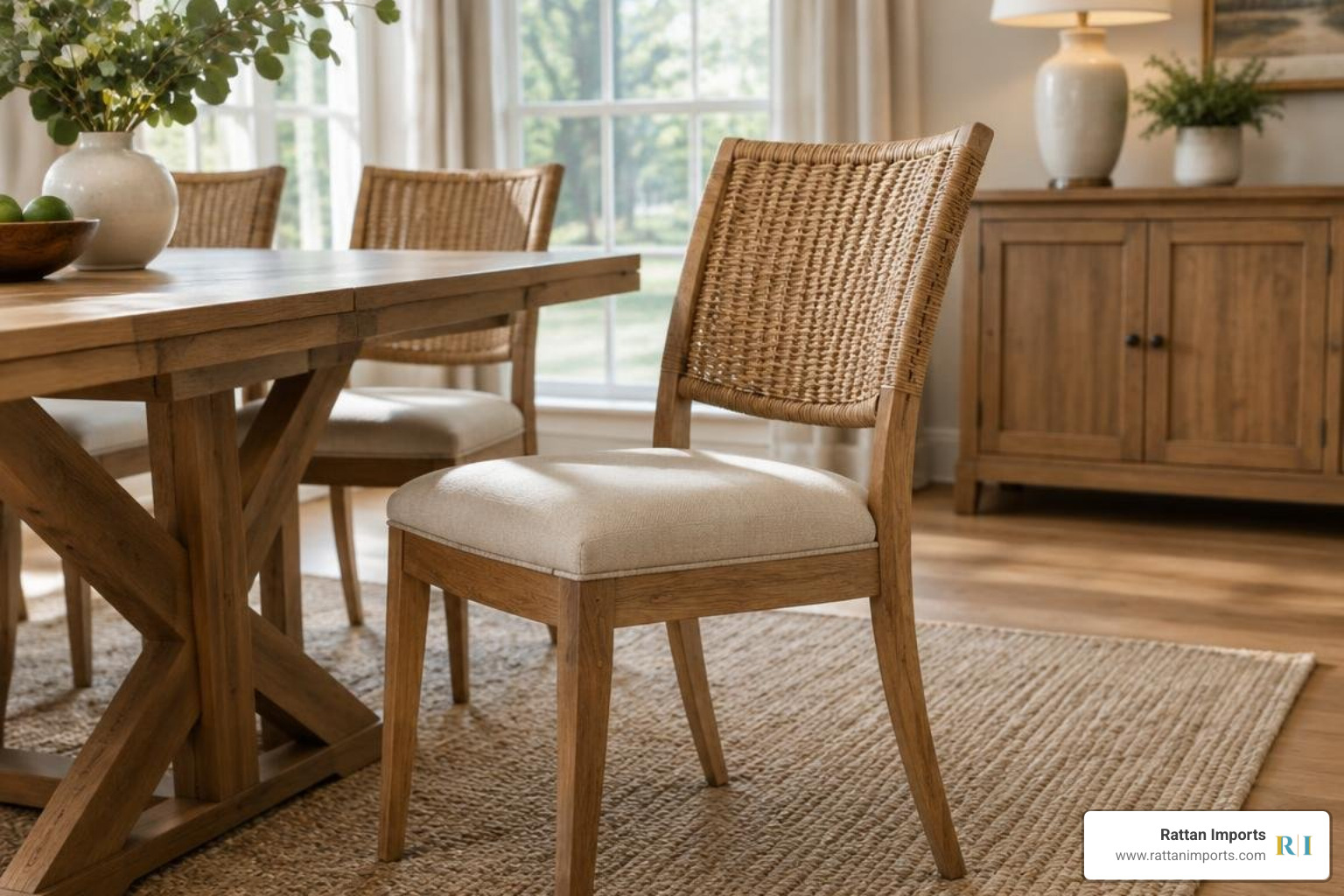
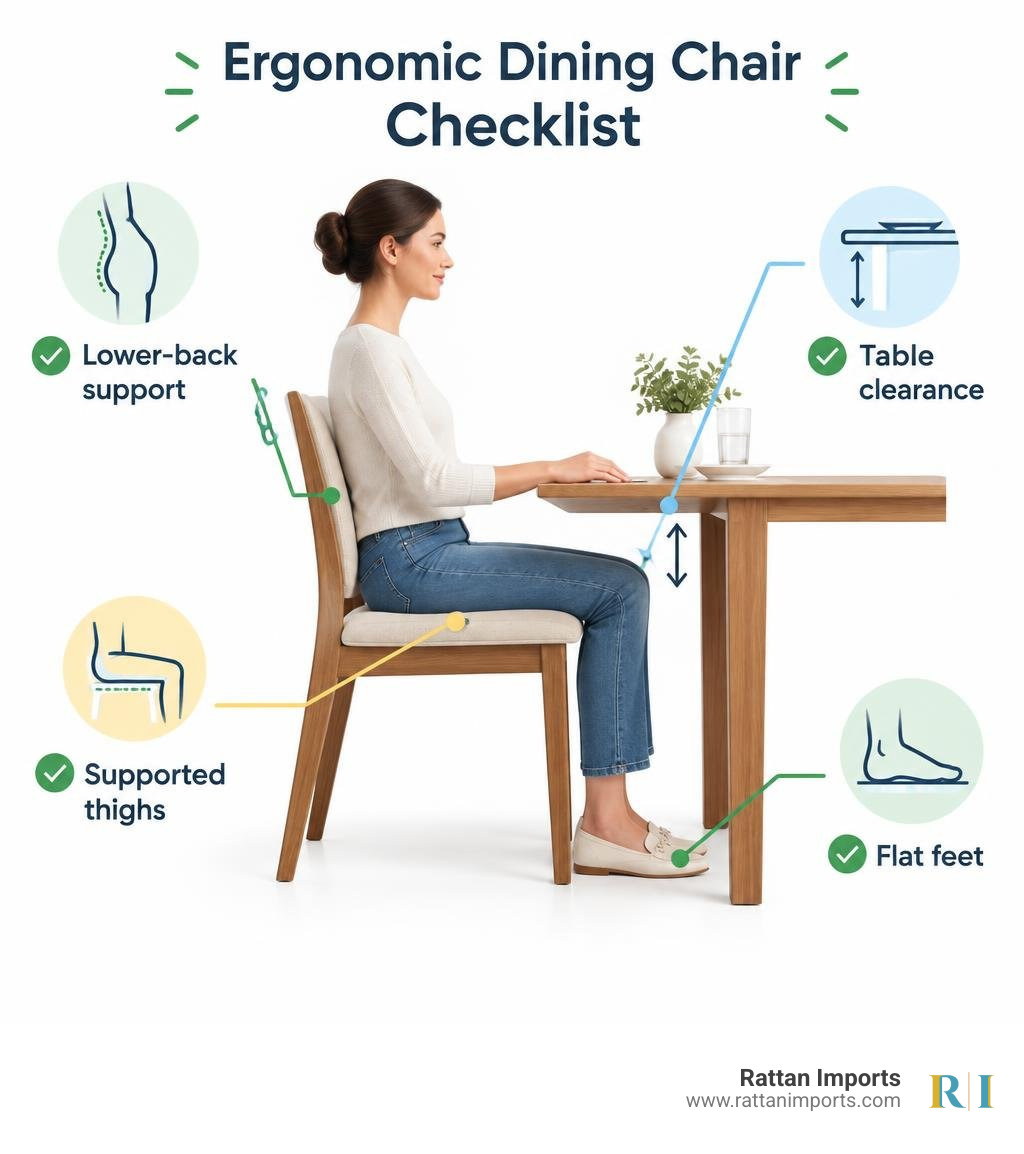
An ergonomic dining chair fits both the person and the table. Look for a seat that lets your feet rest flat on the floor, supports your thighs without pressing behind your knees, and leaves room between your legs and the tabletop. A backrest that supports your lower back helps you sit comfortably through a meal without forcing you into a stiff posture.
I'm Nino Russo Alesi, founder of Rattan Imports. My background in hotel hospitality and customer service shapes how I help shoppers choose an ergonomic dining chair that fits their space as well as the people using it.
Common ergonomic dining chair vocab:
- comfortable dining room chairs with arms
- high back dining chairs with arms
- dining room chairs with arms for elderly
Key Features That Define an Ergonomic Dining Chair
When we think about ergonomics, our minds often jump straight to high-tech office desk chairs. However, the science of supportive seating applies just as critically to the dining room. A standard dining chair is frequently built around aesthetics alone—flat wooden boards, rigid ninety-degree angles, and minimal consideration for human anatomy. In contrast, an ergonomic dining chair prioritizes how your body interacts with the seat, backrest, and surrounding table over long gatherings.
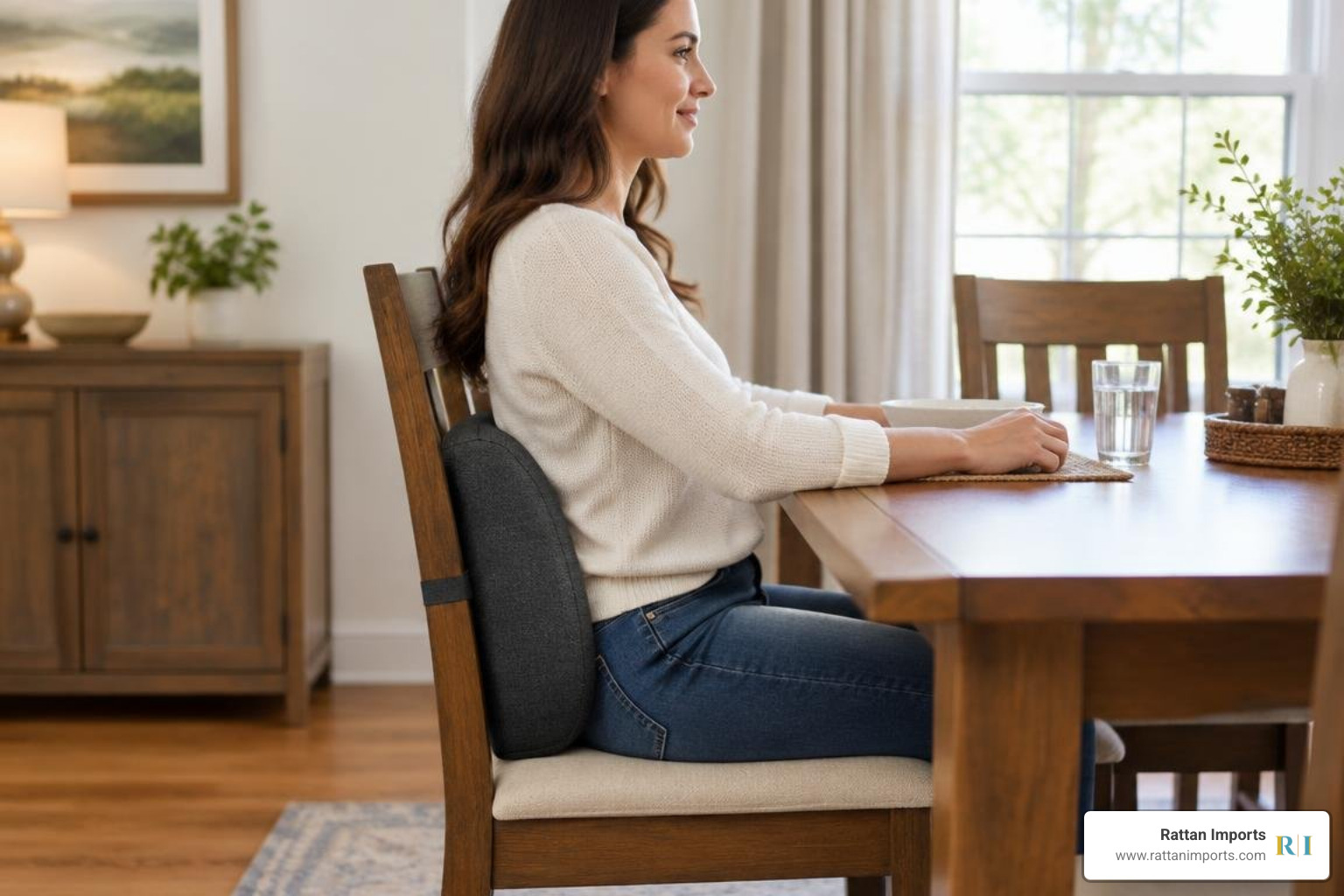
At its core, ergonomic seating encourages natural spine alignment and distributes body weight evenly across the seat pan. Without proper support, your pelvis tends to tilt backward during a meal, flattening your lumbar curve and causing tension across your neck and upper shoulders. As noted in the UCSF chair adjustment guidance, proper seating support allows you to relax into a natural upright posture rather than perching on the edge of your seat.
Essential Dimensions for an Ergonomic Dining Chair
Finding the right balance begins with fundamental seat dimensions:
- Seat Height: The industry standard for supportive dining seating hovers between 17.5 and 18.5 inches from the floor to the top of the cushion. This range allows your feet to plant securely on the floor, stabilizing your lower back.
- Seat Depth: A functional seat depth measures between 16 and 18 inches. If a seat is too deep, the front edge digs into the delicate tendons behind your knees, restricting circulation. A "waterfall" front edge—a subtle downward slope—relieves this under-thigh pressure.
- Seat Width: A width of 18 to 22 inches provides ample room for natural movement. When you opt for wider silhouettes or comfy dining room chairs with arms, verify that the width accommodates generous hip clearance without crowding your adjacent table settings.
Backrest Contours and Armrest Mechanics
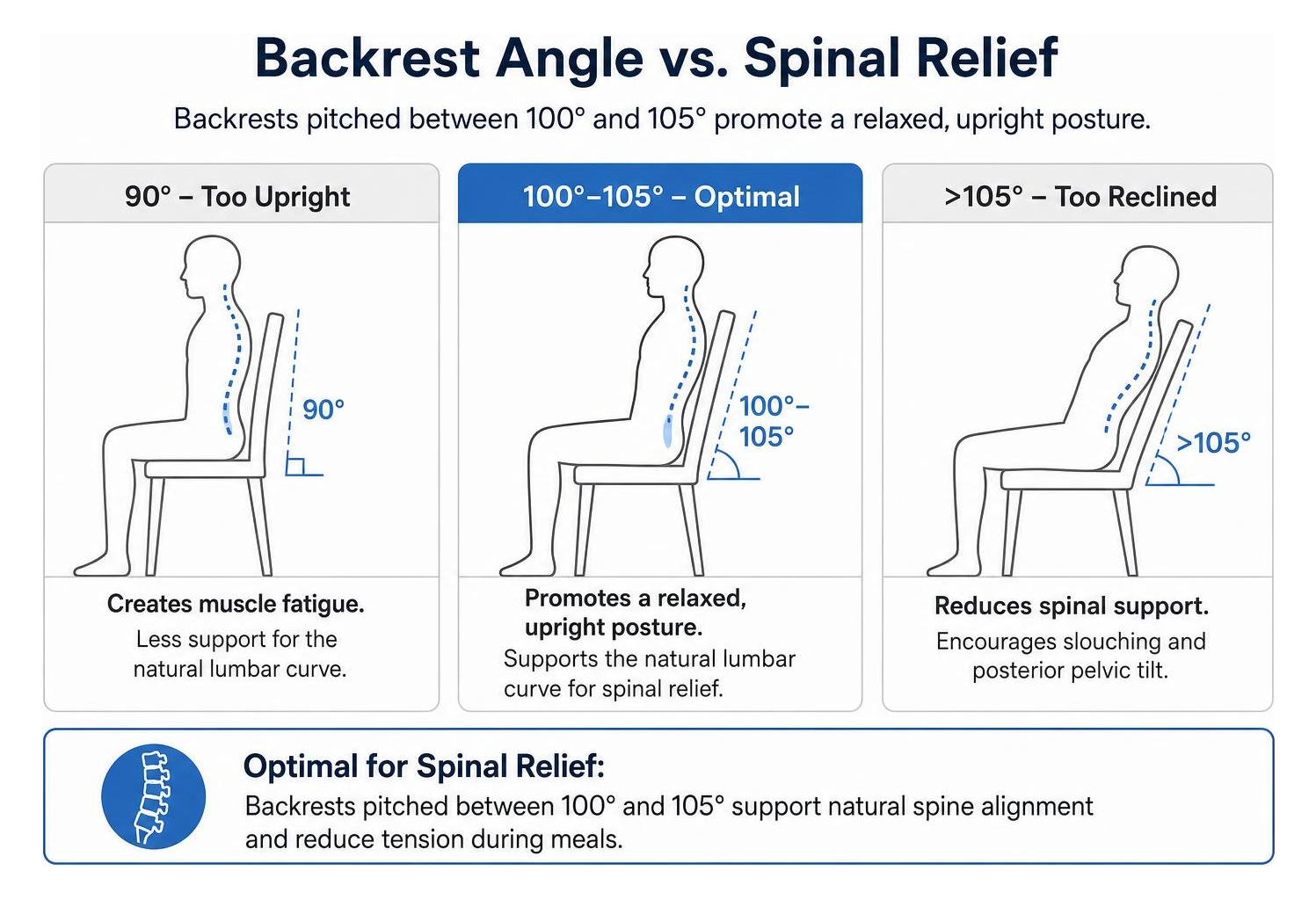
A supportive backrest should mirror the natural gentle inward curve of your lower lumbar spine. While a strictly vertical ninety-degree backrest creates muscle fatigue, a backrest pitched between 100 and 105 degrees promotes a relaxed, upright posture.
Armrests play a pivotal role in unloading stress from your upper body. Resting your forearms at a comfortable right angle removes strain from your trapezius and shoulder girdle, preventing that familiar post-dinner neck stiffness. If you enjoy lingering over dessert, our high back dining chairs with arms provide both extended thoracic support and sturdy armrests to make sitting down and standing up effortless.
Top Supportive Dining Seating Styles and Materials
The durability and comfort of an ergonomic chair depend largely on what lies beneath the surface. High-quality construction pairs resilient framing with responsive cushioning to ensure long-term pressure relief.
| Material Style | Key Ergonomic Advantage | Typical Frame Construction | Best Suited For |
|---|---|---|---|
| Solid Hardwood (FAS Oak) | Natural backrest contouring & rigid spinal stability | Mortise-and-tenon solid wood joints | Minimalist & modern transitional dining rooms |
| Upholstered Steel / Molded Foam | Targeted internal spring flex & pressure distribution | Carbon steel with integrated S-springs | Extended multi-course dinners & work-from-home tables |
| Woven Natural Rattan | Organic give, micro-flexibility & breathable airflow | Solid rattan pole frames with wrapped joints | Coastal, tropical & relaxed casual dining areas |
For those who love organic textures, comfortable rattan dining chairs offer a unique structural benefit: the natural weave has a subtle flex that cradles body contours while promoting continuous airflow during warmer seasons.
Cushion Density and Upholstery Selection
Cushioning should never feel like a soft marshmallow that bottoms out against a hard base. Instead, look for high-density molded polyurethane foam or integrated steel spring systems. Quality supportive designs often utilize an "S" shape spring system beneath molded foam to ensure long-lasting structural rebound.
When choosing fabrics, balance tactile comfort with easy maintenance:
- Top-Grain Leathers & Leatherette: Highly durable, wipe-clean surfaces that conform gently to body warmth over time.
- Performance Linens & Wools: Textured, breathable weaves that prevent heat buildup during extended dinner parties.
- Removable Slipcovers: An exceptional feature that allows you to clean or refresh your dining room chair cushions without compromising the interior padding.
Dynamic Support with Swivel and Tilt Features
Static sitting for two hours can cause pressure points in the hips and lower back. Incorporating subtle motion helps redistribute body weight and encourages healthy blood flow.
- The South Sea Rattan Antigua Swivel Tilt Caster Dining Chair combines a solid rattan frame with smooth rolling casters and a gentle tilt-and-swivel mechanism, making table entry effortless.
- For classic stationary dining with generous proportions, the WD-22 Dining Arm Chair provides a wide 29-inch frame and deep lumbar cushioning that supports relaxed conversation long after the plates are cleared.
How to Match Supportive Chairs with Standard Dining Tables
An ergonomic chair cannot perform properly if it is misaligned with your dining table. Maintaining proper vertical and horizontal ratios ensures your elbows, thighs, and spine remain in neutral alignment.
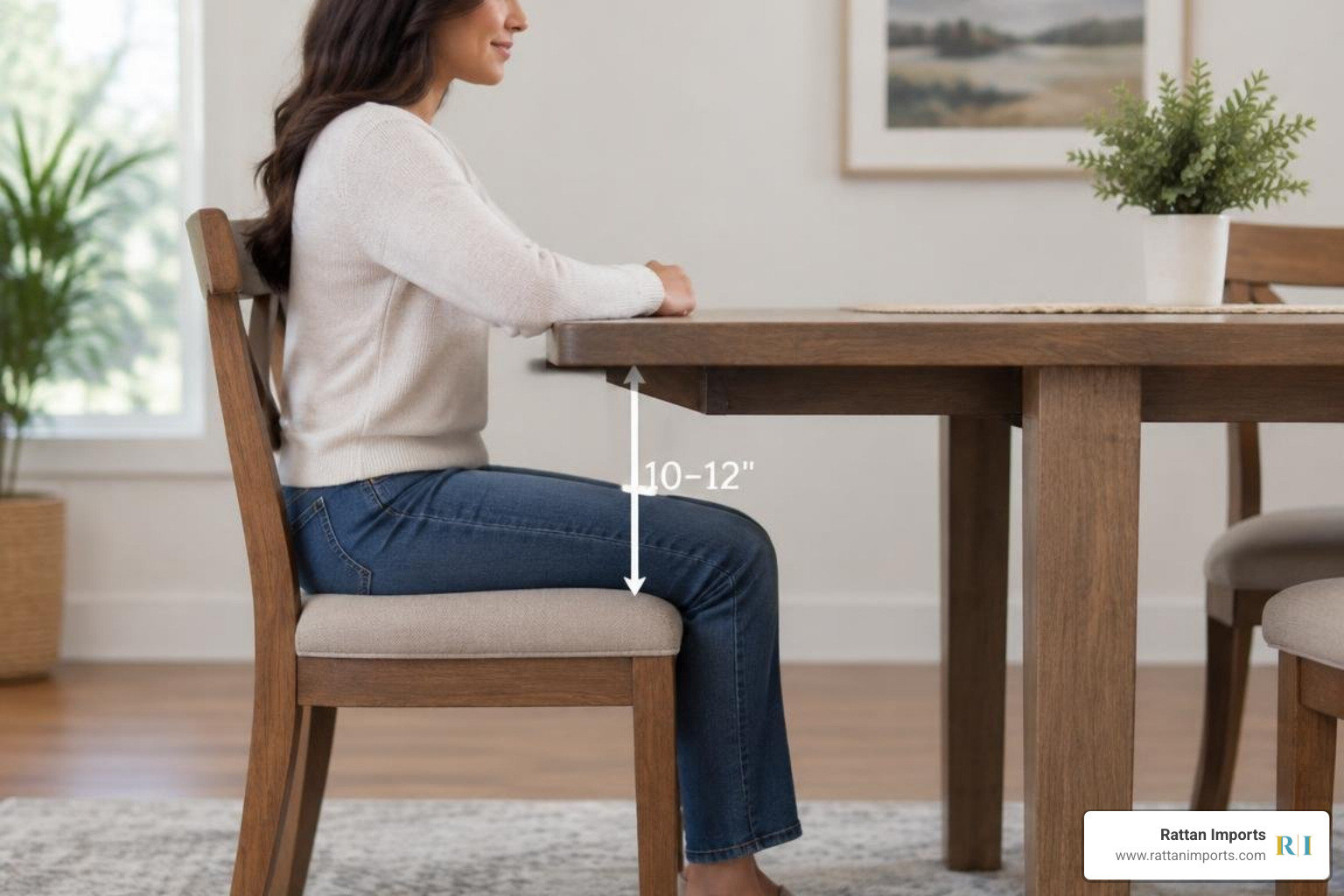
The golden rule of dining ergonomics is maintaining a 10 to 12-inch vertical gap between the top of the chair seat and the top surface of the dining table. Because most standard dining tables stand 29 to 30 inches tall, a seat height of 18 inches provides ideal thigh clearance while letting your elbows rest naturally at table height without causing your shoulders to hunch. For deeper insights on sizing combinations, explore our comprehensive dining arm chair buying guide.
Choosing the Right Ergonomic Dining Chair for Your Table Height
When outfitting your table, consider these critical spacing and clearance factors:
- Armrest Tuck-In Clearance: Ensure that the top of the armrests sits at least 1 inch below the table apron so the chair can slide neatly underneath when not in use.
- Per-Person Lateral Spacing: Allow 24 to 28 inches of table perimeter width per diner. This ensures guests have room to move their elbows without bumping into their neighbors.
- Counter-Height Considerations: If you are pairing seating with a 36-inch kitchen island or dining counter, select stools with a 24- to 26-inch seat height and an integrated footrest so your legs are never left dangling unsupported.
Buyer's Guide: Evaluating Quality, Lumbar Fit, and Longevity
Investing in supportive dining seating requires evaluating structural integrity, finish durability, and daily usability. Avoid common purchasing pitfalls by keeping this checklist in mind:
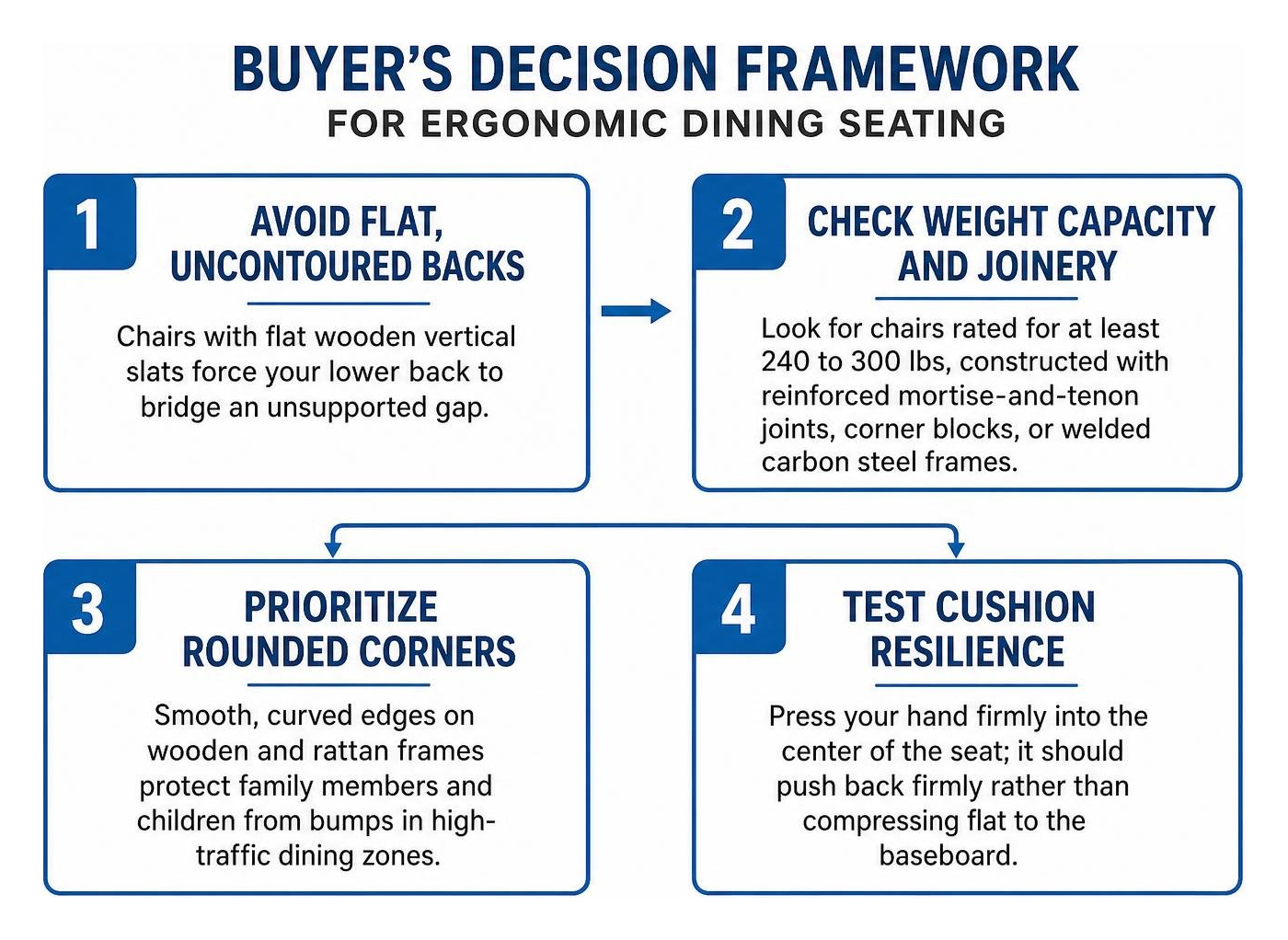
- Avoid Flat, Uncontoured Backs: Chairs with flat wooden vertical slats force your lower back to bridge an unsupported gap.
- Check Weight Capacity and Joinery: Look for chairs rated for at least 240 to 300 lbs, constructed with reinforced mortise-and-tenon joints, corner blocks, or welded carbon steel frames.
- Prioritize Rounded Corners: Smooth, curved edges on wooden and rattan frames protect family members and children from bumps in high-traffic dining zones.
- Test Cushion Resilience: Press your hand firmly into the center of the seat; it should push back firmly rather than compressing flat to the baseboard.
To explore hand-crafted styles that unite supportive design with timeless aesthetics, browse our ultimate guide to rattan wicker dining chairs.
Frequently Asked Questions About Dining Chair Ergonomics
What is the ideal seat height for supportive dining seating?
The ideal seat height for standard dining tables is between 17.5 and 18.5 inches. This height allows users of average height to keep their feet flat on the floor with knees bent at a ninety-degree angle, eliminating pressure beneath the thighs while maintaining proper table alignment.
Do dining chairs really require lower back support?
Yes. Without lower back support, seated diners naturally slouch forward as core muscles tire over the course of a meal. A chair with contoured lumbar shaping helps maintain the spine's natural inward curve, reducing stress on the lower back and neck.
Can natural materials like rattan provide ergonomic comfort?
Rattan is naturally flexible and lightweight, allowing handwoven backrests and seats to conform gently to the sitter's shape. When paired with high-density cushions and integrated armrests, natural rattan delivers outstanding comfort alongside organic style.
Conclusion
Upgrading your dining room with supportive seating transforms family meals and dinner parties from restless experiences into relaxed, comfortable gatherings. At Rattan Imports, we specialize in premium home décor and furniture sourced from Southeast Asia and assembled right here in the U.S. We take pride in delivering exceptional customer service, complete with free mainland U.S. shipping, identity theft protection, and our reassuring price guarantee. Explore our full range of handcrafted home furniture collections today to bring lasting comfort and timeless beauty to your dining space.