



What Are End Chairs in a Dining Room?

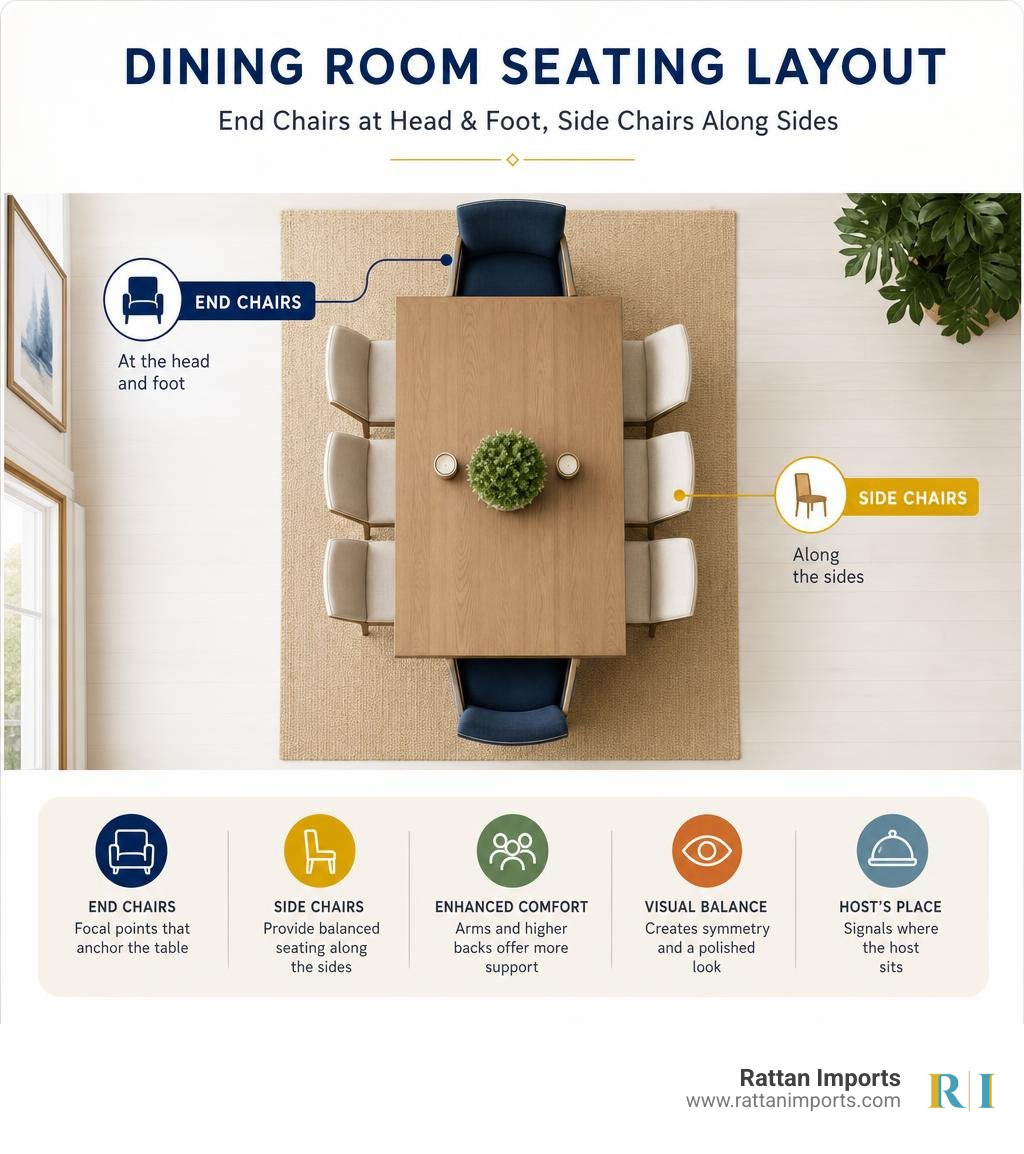
End chairs in a dining room are the armchairs placed at the head and foot of a dining table. They are also called host chairs, captain chairs, or arm chairs.
Here is a quick breakdown:
| Feature | End Chairs | Side Chairs |
|---|---|---|
| Placement | Head and foot of table | Along the sides |
| Arms | Yes | Usually no |
| Back height | Often taller | Standard |
| Visual role | Focal point, anchor | Supporting seating |
| Comfort | Higher — arms add support | More compact |
End chairs signal where the host sits, add visual balance to a long table, and bring a layer of comfort that standard side chairs simply don't offer. They are one of the most impactful — and often overlooked — upgrades you can make to a dining room.
Whether you are furnishing a formal dining room or a relaxed everyday space, the right end chairs can completely transform how the room feels and functions.
I'm Nino Russo Alesi, founder of Rattan Imports, and my background in hotel hospitality taught me how much the right seating shapes an experience — which is exactly what drives my passion for helping clients find the perfect end chairs for their dining room. In the sections ahead, I'll walk you through everything you need to know to choose, style, and size end chairs with confidence.
Must-know end chairs dining room terms:
The Role and Benefits of End Chairs Dining Room Layouts
When designing a dining room, many people default to purchasing a matching set of identical chairs. While there is nothing wrong with a perfectly uniform look, opting for distinct host chairs at the head and foot of the table elevates the entire room's design.
In any dining room layout, the table is naturally the largest object, but a long row of identical side chairs can make the space feel flat or overly commercial. Integrating specialized end chairs—often designed as comfortable armchairs—acts as a visual anchor. They bookend the table, creating a clear focal point and establishing a sense of visual hierarchy.
Beyond their aesthetic contribution, these chairs provide superior comfort and ergonomics. Because they typically feature supportive armrests and higher backrests, they are the perfect spot for lingering over long holiday meals, working from home, or enjoying a slow Sunday morning coffee. By mixing these more substantial seats with streamlined side chairs, you also gain incredible versatility. If you need extra seating in the living room or a stylish accent chair for a home office, a beautiful end chair can easily pull double duty.

| Comparison Factor | Side Chairs | End Chairs |
|---|---|---|
| Primary Comfort | Standard back support, compact footprint for active dining | High comfort, built-in armrests, ideal for long conversations |
| Space Efficiency | High; easy to tuck completely under the table apron | Moderate; requires wider clearance at the table ends |
| Design Impact | Clean, repetitive pattern that keeps the focus on the table | High impact; acts as a statement piece and anchors the room |
Defining the Host and Captain Chair
While the terms are often used interchangeably, there are subtle differences between a host chair and a captain chair. Traditionally, a host chair refers to a fully upholstered armchair, often featuring a high backrest or even a dramatic wingback design. These are staples in formal dining rooms, bringing a sense of luxury, softness, and grandeur to the space.
On the other hand, a captain chair (originally inspired by maritime seating) historically featured wooden construction with vertical spindles and curved wooden arms. In modern design, both styles serve the same purpose: they are the designated "power seats" at the table. Whether you prefer the plush, regal look of an upholstered wingback or the clean, structured lines of a wooden frame, these chairs define the head of the table.
Historical Context and Modern Evolution
The tradition of placing distinct, more comfortable chairs at the ends of the table dates back centuries. Historically, the head of the table was reserved for the head of the household or honored guests, symbolizing status and authority.
As we move through 2026, the modern evolution of this trend is less about status and more about comfort, texture, and personal expression. In open-concept spaces where the dining room flows directly into the kitchen and living area, matching dining sets can look sterile. Modern minimalist designs, coastal-inspired woven frames, and organic textures have replaced stiff, formal furniture sets. Today’s host chairs are used to break up the monotony of wood-on-wood, making a bold design statement while inviting family and friends to relax and stay a while.
How to Choose the Right Size, Height, and Materials
Selecting the perfect end chairs dining room setup requires a balance of beauty and math. Unlike side chairs, which have fewer clearance constraints, end chairs have arms and wider silhouettes that must physically fit your specific table.
To avoid the frustration of ordering beautiful chairs only to find they cannot slide under your table, you must carefully evaluate table clearance, arm height, and seat height. Additionally, choosing the right upholstery fabrics and wood finishes ensures your chairs will withstand daily life while looking stunning for years to come.
Measuring for the Perfect Fit
Before falling in love with a specific style, grab a tape measure. The most critical measurement is the clearance between the top of the chair arms and the bottom of the table apron (the wooden border beneath the tabletop).
To ensure comfortable seating and clean transitions, follow these essential guidelines:
- The 12-Inch Rule: There should be approximately 12 inches of space between the top of the seat cushion and the underside of the table. Standard dining table heights are around 30 inches, meaning your chair seat height should sit comfortably around 18 to 20 inches.
- Armrest Clearance: To allow the chair to slide under the table when not in use, ensure the arm height is at least 1 to 2 inches lower than the table apron. For tables with thick aprons or trestle bases, this is especially crucial.
- Overall Width and Spacing: Make sure the width of the end chair fits between the table legs at the head and foot. Some trestle or pedestal tables have narrow end bases that can restrict wider chairs. For detailed space planning, you can consult professional design guidelines from Architectural Digest to ensure your layout allows for proper traffic flow around the room.
Material Selection and Durability
Because end chairs are high-use pieces, material selection is everything. Solid wood frames made from premium woods like solid oak or mango wood offer unmatched structural integrity. If you opt for upholstered host chairs, look for high-performance fabrics.
In the furniture industry, high-end collections often feature specialized stain-resistant performance fabrics like Crypton (available in various colors) or heavy-duty linen blends that offer both elegance and durability. If you have children or pets, slipcovered options or high-quality leathers that develop a beautiful patina over time are excellent choices. For a comprehensive look at choosing materials that balance beauty and longevity, learn more about choosing durable materials in our ultimate guide.
Styling and Coordinating Your Dining Seating
The secret to a professionally designed dining room lies in the art of the mix. Rather than buying a matching set, mixing and matching your end chairs with your side chairs creates a curated, lived-in feel.
The goal is to create a cohesive look through thoughtful color palettes, texture contrasts, and complementary shapes. Whether your home leans toward casual coastal style, modern farmhouse, or organic modern, coordinating your seating is where the magic happens.
Coordinating Side Chairs and End Chairs
To keep your mixed seating from looking chaotic, find a common thread that ties the pieces together. This could be matching wood tones, complementary color families, or shared design lines.
For example, if your side chairs are clean-lined, dark-finished wood, you might choose upholstered end chairs with matching dark wood legs. Alternatively, you can create a striking contrast by pairing simple, neutral-upholstered side chairs with bold, sculptural end chairs. If you are looking for inspiration on how to pair classic wooden elements with refined woven details, you can explore our premium Spice Islands collection to find perfectly balanced pieces.
Incorporating Natural Textures
One of our favorite ways to bring warmth and character into a dining room is through natural textures like rattan, wicker, and woven sea grass. These materials instantly soften the hard edges of wooden or metal dining tables, bringing an organic modern style to the home.
Rattan end chairs are incredibly versatile; they fit seamlessly into a coastal chic dining room, yet look equally at home in a transitional or modern farmhouse setting. The natural variations in the vine bring unique character to every single piece, making your dining room feel warm and inviting. To see how these beautiful materials can transform your space, browse our South Sea Rattan collection.
Frequently Asked Questions about Dining Room Seating
What is the difference between side chairs and end chairs dining room setups?
The primary difference lies in their placement, design, and visual weight. Side chairs are armless, streamlined, and placed along the long sides of the dining table. End chairs are wider, feature armrests, have taller backrests, and are positioned exclusively at the head and foot of the table to anchor the room's design.
How do I choose the right arm height for end chairs dining room tables?
Measure from the floor to the lowest point of your table's underside (the apron). Your end chair's arms should ideally be 1 to 2 inches lower than this measurement. This allows the chair to slide fully under the table when not in use, saving floor space and protecting the chair arms from getting dinged.
Can I mix different materials like rattan and upholstery?
Absolutely! In fact, mixing rattan and upholstered pieces is an excellent way to create texture contrast and visual interest. A popular design combination is pairing clean, upholstered side chairs along the table with statement-making rattan armchairs at the ends. This balances soft comfort with natural, organic warmth for a beautifully designed space.
Conclusion
Upgrading your dining room is about more than just adding furniture; it is about creating a space where people want to gather, connect, and linger long after the meal is finished. By choosing the right end chairs for your dining room, you introduce a beautiful balance of comfort, style, and visual structure to your home. These investment pieces serve as the perfect finishing touch, transforming an ordinary dining area into a welcoming sanctuary.
At Rattan Imports, we are committed to helping you bring your dream home to life with premium craftsmanship, natural materials, and exceptional service. We source our high-quality pieces from Southeast Asia and assemble them with care right here in the U.S. Plus, to make your shopping experience completely seamless, we offer free shipping across the U.S. mainland and identity theft protection.
Ready to find the perfect seating for your home? Shop high-quality dining furniture at Rattan Imports today, and shop with absolute peace of mind when you check out our price guarantee.