



Why Dining End Chairs with Arms Transform Your Table Setting

Dining end chairs with arms — also called host and hostess chairs — are the armchairs placed at the two short ends of a rectangular dining table. They differ from standard side chairs in one key way: they have armrests.
Here's a quick overview to help you decide:
| Feature | End Chair (with Arms) | Side Chair (no Arms) |
|---|---|---|
| Armrests | Yes | No |
| Typical width | 23–26 inches | 18–22 inches |
| Best placement | Table ends | Table sides |
| Visual presence | Statement piece | Supporting role |
| Common use | Host/hostess seat | General seating |
The short answer: If you want to add structure, comfort, and a natural focal point to your dining room, placing armchairs at the ends of your table is one of the simplest and most effective design moves you can make.
Arm chairs anchor the table visually. They signal where the head of the table is. And practically speaking, they offer better support during long meals and gatherings.
Retailers carry over 20 distinct dining armchair models ranging from around $525 to $1,750. Budget-friendly options start closer to $200. That wide price range reflects just how much variety exists — in materials, styles, and construction quality.
Whether you're outfitting a formal dining room or a casual everyday space, choosing the right dining end chairs with arms comes down to a few key factors: size, material, style, and how well they work with the rest of your table setting.
This guide walks you through all of it — clearly and without the fluff.
I'm Nino Russo Alesi, founder of Rattan Imports, and my background in hospitality and e-commerce has given me a deep appreciation for how the right dining end chairs with arms can completely transform the feel of a shared space. In the sections ahead, I'll share everything you need to make a confident, well-informed choice.
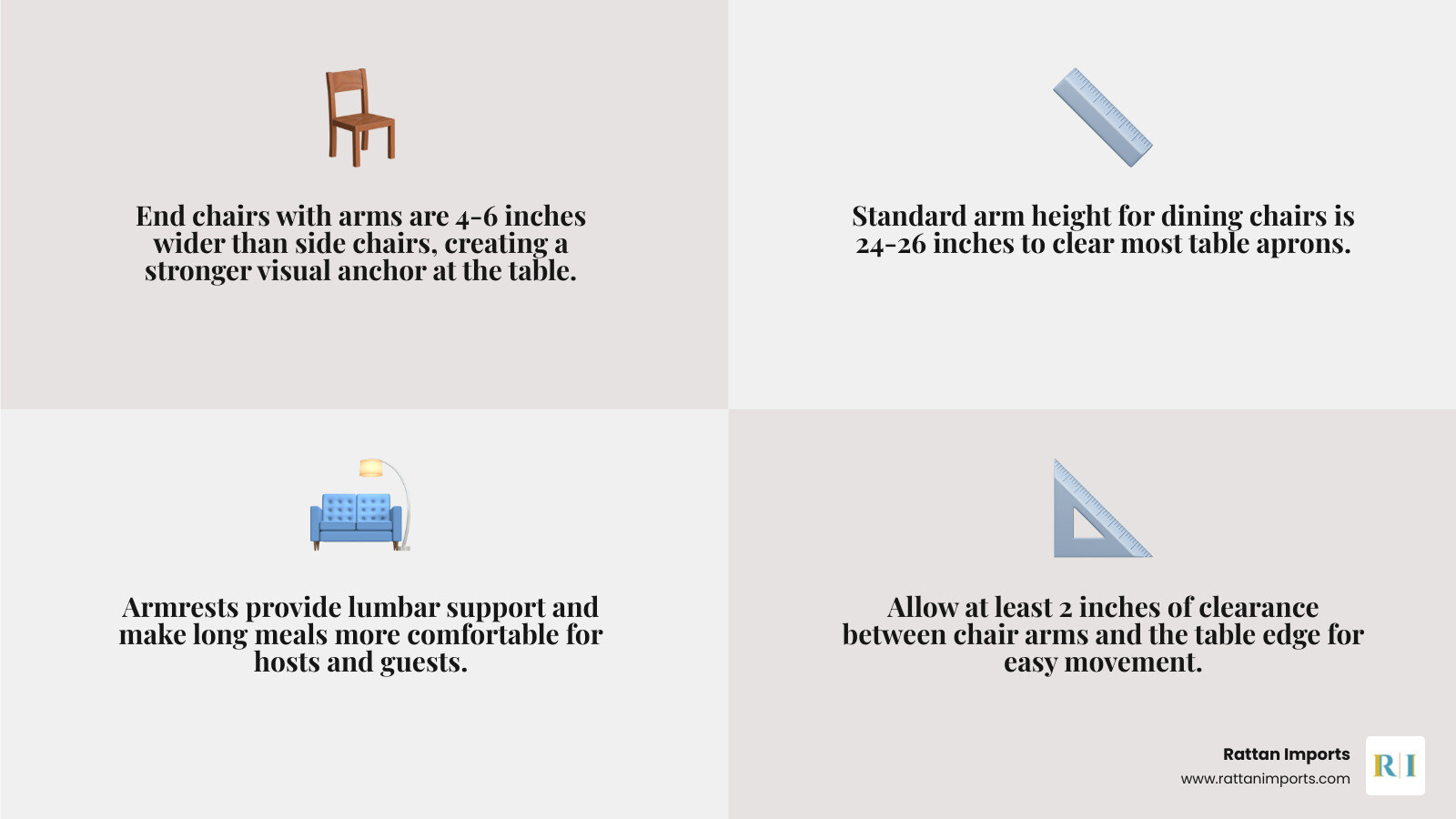
Must-know dining end chairs with arms terms:
Understanding the Role of Host and End Chairs
In interior design, we often talk about "visual weight." Every piece of furniture in a room claims a certain amount of visual attention. Without a clear hierarchy, a room can feel cluttered, flat, or uninviting. This is where dining end chairs with arms shine.
By placing slightly larger, more substantial armchairs at the head and foot of your table, you instantly create a frame. This framing effect draws the eye down the length of the table, establishing a clear focal point in the dining room. It turns a simple dining set into an intentional, architecturally balanced design.
Why Choose Dining End Chairs with Arms for Your Home?
The primary reason most of our customers upgrade to arm-equipped end chairs is simple: pure, unadulterated comfort. When you sit down for a multi-course dinner, a long holiday celebration, or a casual game night, having a place to rest your elbows changes how long you want to linger at the table.
Beyond physical support, armchairs bring a sense of structure and a formal, finished aesthetic to the space. They make the dining area feel complete, like a beautifully curated sanctuary rather than a random collection of furniture. If you want to explore how these pieces elevate comfort, check out our guide on how to Arm Yourself with Comfort: Top Dining Room Chair Picks.
Arm Chairs vs. Side Chairs: Key Differences
While side chairs are designed to tuck neatly along the sides of the table to maximize seating capacity, end chairs with arms have a completely different silhouette.
- Width and Footprint: Armchairs are generally wider (often 23 to 26 inches) compared to side chairs (typically 18 to 22 inches).
- Arm Height and Clearance: The presence of armrests means you must pay close attention to the height of your table's apron (the wooden panel below the tabletop).
- Silhouette and Presence: An armchair has a commanding, sculptural presence. It acts as a bookend for the entire dining arrangement.
Understanding these structural elements is crucial before making a purchase. You can dive deeper into these dimensional differences in our comprehensive Dining Arm Chair Buying Guide.
Material and Style Guide for End Seating

The materials you choose for your dining end chairs with arms will dictate the overall mood of your dining room. Today's design trends celebrate contrast—gone are the days when your table, side chairs, and end chairs all had to match perfectly. Instead, mixing natural textures with clean, modern lines creates an organic, high-end look that stands the test of time.
Rattan, Wicker, and Cane Options
For those who love coastal sophistication, organic modernism, or tropical warmth, woven materials are unmatched. Rattan, wicker, and cane introduce rich, natural textures that soften the hard edges of a wooden or stone dining table.
Cane back chairs with arms offer a beautiful, airy transparency that keeps a smaller dining room from feeling cramped, while fully woven wicker chairs provide a sturdy, cozy micro-environment for diners.
To find the perfect woven option for your home, explore our curated roundups:
- Discover Wicker Dining Chairs That'll Make Your Table Jealous
- Learn about our most Comfortable Rattan Dining Chairs
- See our Top Picks for Cane Back Dining Chairs with Arms
Solid Wood and Upholstered Classics
If your style leans more traditional, transitional, or mid-century modern, solid wood and upholstered classics are excellent choices. Solid hardwoods like maple, birch, and oak offer lifetime durability and classic joinery.
For maximum luxury, fully upholstered Parsons armchairs or classic slipcovered host chairs provide a soft, plush seat. When opting for upholstery in the dining room, we highly recommend selecting performance fabrics or spill- and stain-resistant treated leathers to protect your investment from accidental spills.
To compare these timeless styles, take a look at our Best Wooden Dining Chairs with Arms Guide or read about the history and versatility of the Parsons style in our article on Parsons Arm Chair: Exploring Benefits and Styles.
Sizing, Scale, and Ergonomic Considerations
Before falling in love with a specific chair style, you must pull out your measuring tape. Proportions are everything. A chair that is too large will crowd the table and block traffic, while a chair that is too small will look swallowed by the room.
To help you visualize standard proportions, here is a quick reference table comparing typical dining chair dimensions:
| Dimension | Standard Side Chair | Standard Arm Chair / End Chair |
|---|---|---|
| Overall Width | 18" – 21" | 23" – 26" |
| Overall Depth | 20" – 22" | 22" – 25" |
| Seat Height | 18" – 20" | 18" – 20" |
| Arm Height | N/A | 24" – 26.5" |
| Weight Capacity | 200 – 250 lbs | 240 – 300 lbs |
Measuring for Arm and Table Clearance
The most common mistake homeowners make is buying dining end chairs with arms that cannot slide under the dining table. To avoid this, apply the 2-inch rule: ensure there is at least 2 inches of clearance between the top of the chair’s armrests and the bottom of the table’s apron.
Additionally, check the placement of your table legs. If you have a trestle table or a table with inset legs, make sure the end chair is narrow enough to fit between those legs when pushed in. For more layout and clearance tips, read our guide on Chair-ish Your Kitchen: Best Chairs for Kitchen Tables.
Ergonomics and Comfort Features
Good dining chair design is about more than just looks; it's about how your body feels after sitting for two hours. Look for these key ergonomic features:
- Lumbar Support: A gentle curve in the backrest that cradles the lower spine.
- Seat Height: A standard 19-to-20-inch seat height works best for most adults.
- Cushion Density: High-density, CertiPUR-US certified foam wrapped in fiber ensures the seat won't sag over time.
- Accessibility: For family members with limited mobility, sturdy armrests provide crucial leverage when standing up or sitting down. Learn more about choosing accessible seating in our guide on Dining Chairs with Arms for Elderly.
Designing with Dining End Chairs with Arms: Layout and Capacity
Integrating armchairs at the ends of your table requires careful spatial planning. You need to ensure your dining room remains highly functional and comfortable to navigate, even when every seat is filled.
Spatial Planning and Seating Capacity
As a general rule of thumb, you should allow at least 36 inches of clearance between the edge of your dining table (with chairs pushed in) and the nearest wall or piece of furniture. This allows people to pull out their chairs and sit down comfortably. If the area behind the end chair is a primary walkway, increase that clearance to 48 inches.
That because dining end chairs with arms are wider than side chairs, they naturally reduce the usable space around the corners of the table. If you have a smaller dining room, look for low-profile, sloped armchairs to preserve visual openness. For more inspiration on balancing space and style, browse our Ultimate Guide to Unique Dining Chairs.
How to Style Dining End Chairs with Arms with Existing Side Chairs
You don't need a matching set to have a beautiful dining room. In fact, mismatched dining chairs are a hallmark of modern, high-end interior design. Here are three foolproof ways to coordinate your end chairs with your existing side chairs:
- The Common Thread: Keep one element consistent. If your side chairs are oak, choose end chairs with oak frames, even if the end chairs are fully upholstered.
- High Contrast: Pair simple, low-profile wooden side chairs with dramatic, fully upholstered host chairs in a contrasting color.
- Texture Play: Mix smooth materials with highly textured ones. For example, pair sleek leather side chairs with warm, woven rattan end chairs.
If you want to experiment with bold color palettes, take a look at our styling advice in Arm Yourself with Style: Top Blue Dining Chairs.
Smart Shopping: Pricing, Customization, and Value
When shopping for dining end chairs with arms, you will encounter a massive price spread. Budget-friendly mass-market options can be found for under $200, while premium, heirloom-quality custom chairs can range from $600 to upwards of $1,700 per chair. Understanding what drives these price differences will help you make a smart investment.
Budget vs. Premium Investment
The price of a dining chair is determined by its materials and manufacturing standards.
- Budget Chairs: Often utilize engineered woods (like MDF), veneer finishes, and standard polyurethane foam. They are great for light use but may need replacement after a few years.
- Premium Investment Chairs: Feature kiln-dried solid hardwoods (like oak, maple, or rubberwood), double-doweled joinery, webbed seat foundations, and high-performance, stain-resistant fabrics. These chairs are built to withstand daily use for decades.
To find high-quality options that offer the best value for your budget, check out our Best Arm Dining Chairs Sale Guide.
In-Stock vs. Custom Made-to-Order
If you need your chairs quickly, in-stock options are your best bet. However, if you have a specific design vision, custom made-to-order chairs allow you to select the exact frame finish and fabric grade.
That custom furniture typically has longer lead times—ranging from 4 to 11 weeks depending on the workshop—and is generally non-returnable. Always order fabric and finish swatches first to ensure the colors look perfect in your room’s unique lighting. For a deeper look at custom wood options, read our Ultimate Wooden Dining Chairs Guide.
Frequently Asked Questions about Dining End Chairs
Can you use arm chairs on the sides of a dining table?
Yes, but only if you have a very long table and plenty of dining room space. Because armchairs are wider, placing them along the sides of a table can crowd your guests and make it difficult to slide the chairs under the table apron. For standard-sized dining rooms, we recommend keeping armchairs strictly at the ends.
What is the standard arm height for a dining end chair?
Most dining armchairs feature an arm height between 24 and 26.5 inches. Since standard dining tables are 30 inches tall with aprons that sit around 28 inches, this standard arm height allows the chair to slide partially or fully underneath the table when not in use.
How do I clean upholstered end chairs?
For daily maintenance, vacuum upholstered chairs regularly with a soft brush attachment to remove dust and crumbs. For spills, blot immediately with a clean, damp, light-colored cloth. For larger or stubborn stains, use a professional upholstery cleaner, and always check the manufacturer’s care code (W, S, or WS) before applying any cleaning solutions.
Conclusion
At Rattan Imports, we believe that your dining room should be a warm, welcoming space where memories are made over long, comfortable meals. Sourcing premium home decor and furniture handcrafted in Southeast Asia and meticulously assembled right here in the U.S., we are dedicated to helping you create a home you love.
When you shop with us, you enjoy free shipping across the U.S. mainland, our ironclad price guarantee, and complimentary identity theft protection—all backed by our industry-leading customer service and clear, transparent communication.
Ready to find the perfect anchor pieces for your dining room? Explore our ultimate resource, Rattan & Wicker Dining Chairs: Your Ultimate Guide, and discover the perfect blend of natural texture, comfort, and timeless style for your home today.