



Why Abdul Hamid II Remains the Most Controversial Ottoman Sultan
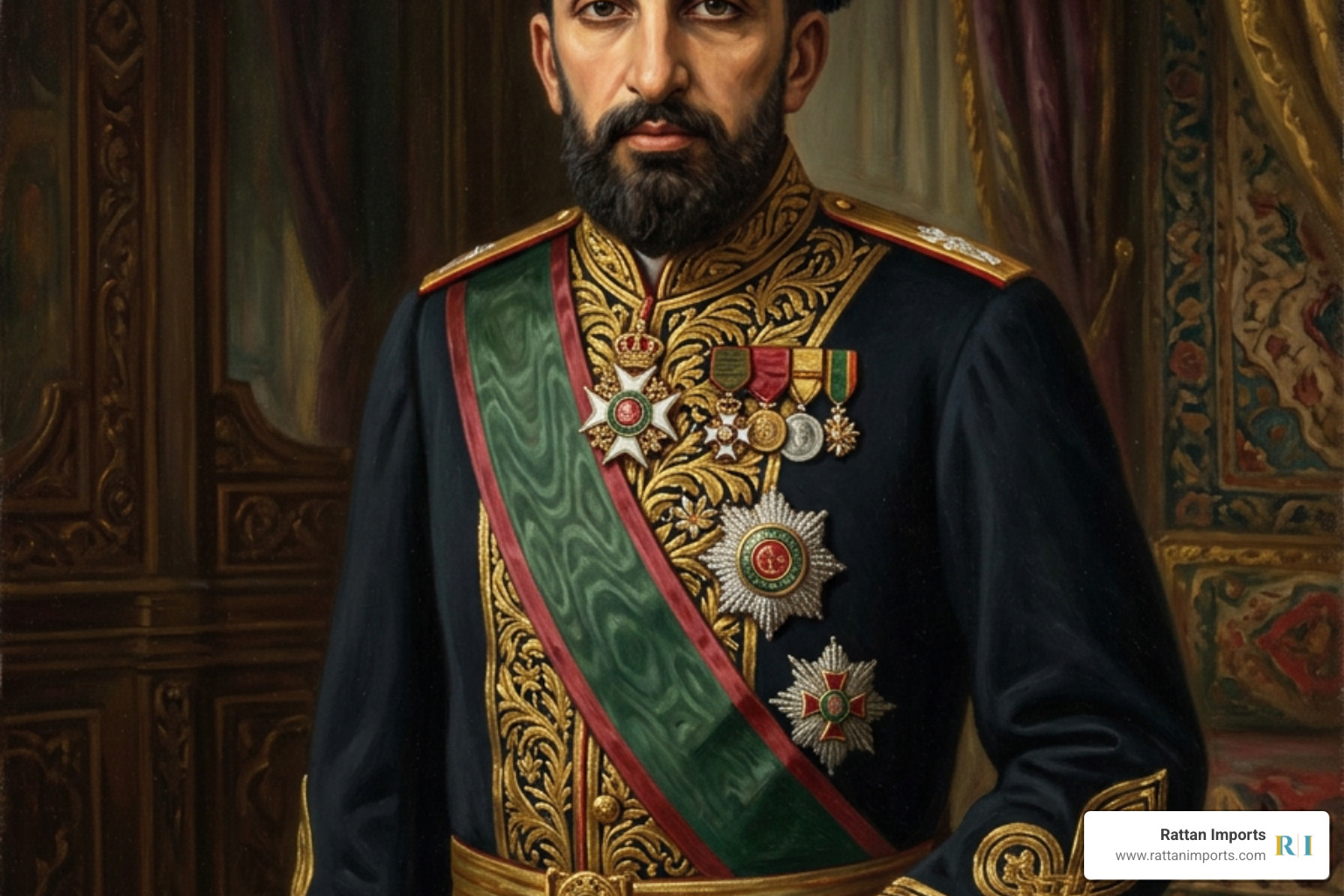
Abdul Hamid II was the 34th sultan of the Ottoman Empire, ruling from 1876 to 1909 — a reign of 33 years that left a legacy no historian can agree on.
Here is a quick snapshot of who he was:
| Fact | Detail |
|---|---|
| Born | September 21, 1842 |
| Died | February 10, 1918 |
| Reign | August 31, 1876 – April 27, 1909 |
| Title | 34th Sultan of the Ottoman Empire |
| Known as | "Red Sultan" (critics) / "Great Khan" (supporters) |
| Key acts | First Ottoman constitution (1876); Hamidian massacres; Hejaz Railway; Istanbul University |
| Deposed by | The Young Turk Revolution, April 27, 1909 |
To his critics, he was a paranoid autocrat who suspended his own constitution and presided over the massacre of an estimated 300,000 Armenians. To his defenders, he was a visionary who modernized the empire's schools, railways, and legal system while holding it together against enormous foreign pressure.
Both portraits are grounded in real history. That is exactly what makes him so difficult to judge.
On July 21, 1905, a car bomb packed with over 80 kilograms of explosives detonated outside a crowded Istanbul mosque. It killed 26 people and wounded 58. The target — Abdul Hamid II — survived only because a conversation with a religious leader made him one minute late to his carriage. That single minute captures the tension of his entire reign: a ruler operating in the shadow of constant threat, wielding enormous power, and always one step from catastrophe.
I'm Nino Russo Alesi, founder of Rattan Imports, and my background in history and global craft traditions has long drawn me to complex figures like Abdul Hamid II, whose reign shaped the cultural and architectural identity of the late Ottoman world. Understanding his legacy helps us appreciate how history, design, and identity are always intertwined.
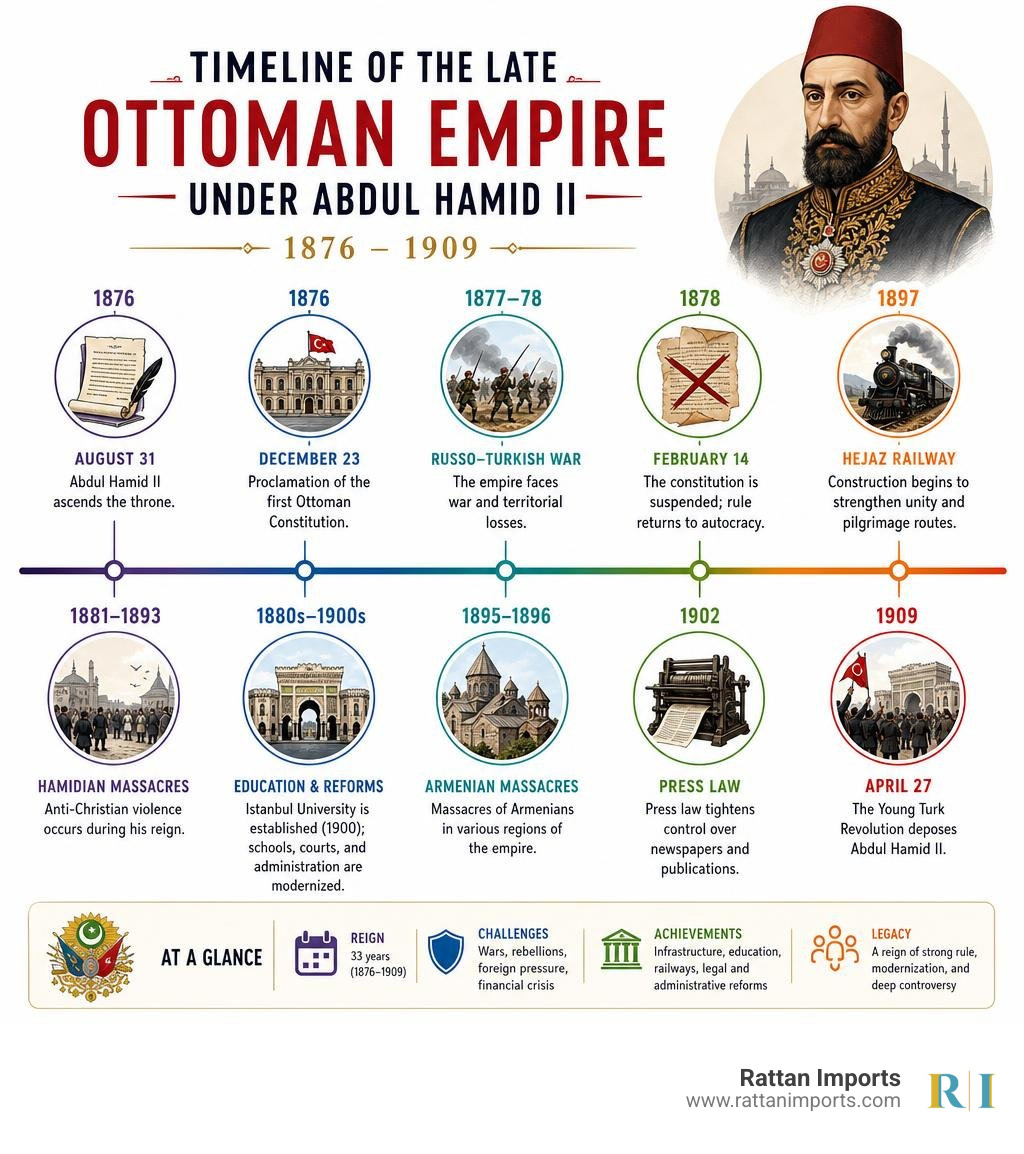
The Road to the Throne: Crisis and the Constitution of 1876
The year 1876 was one of the most chaotic in Ottoman history, often referred to as the "Year of the Three Sultans." The empire was bankrupt, having defaulted on its foreign debt in 1875. Nationalist rebellions were tearing through the Balkans, and Western powers were eagerly waiting to carve up the "Sick Man of Europe."
In the midst of this crisis, Sultan Abdülaziz was deposed and died under mysterious circumstances. He was succeeded by his nephew, Murad V, who suffered a severe nervous breakdown and was declared mentally unfit to rule after just 93 days.
The crown then fell to abdul hamid ii on August 31, 1876. To secure the throne, he had to cut a deal with the "Young Ottomans"—a group of reform-minded intellectuals and bureaucrats led by the grand vizier, Midhat Pasha. The young sultan promised to do something no Ottoman ruler had ever done: share his power.
On December 23, 1876, abdul hamid ii promulgated the Kanun-i Esasi, the empire's very first constitution. This historic document established a bicameral parliament, consisting of 115 elected deputies and 26 appointed senators. It was a remarkably diverse body, featuring 69 Muslim and 46 non-Muslim representatives.
However, this move toward constitutionalism was not entirely born of democratic passion. It was a brilliant, strategic diplomatic maneuver. By showcasing a shiny new constitutional system, the Sultan hoped to ward off imminent foreign intervention from Western powers who were meeting at the Constantinople Conference to dictate terms to the empire.
To explore more about the initial political maneuvering of his reign, you can read about his early life on the Abdul Hamid II - New World Encyclopedia.
The Dual Legacy of Abdul Hamid II: Modernizer or Tyrant?

The First Constitutional Era was short-lived. In 1877, Russia declared war on the Ottoman Empire. By early 1878, Russian forces had advanced within 20 kilometers of the imperial palaces in Istanbul. Using the wartime emergency as a pretext, abdul hamid ii suspended the constitution, dissolved parliament, and ushered in three decades of absolute, centralized rule known as the İstibdad (the autocracy).
Yet, this autocratic period was far from an era of simple stagnation. In fact, it represented the administrative climax of the Tanzimat (Reorganization) reform movement. The Sultan realized that if the empire was to survive, it had to modernize its infrastructure, education, and legal systems.
His domestic achievements were monumental:
- Education: He established a massive network of primary, secondary, and professional schools. Between 1882 and 1894, his administration constructed 51 secondary schools. In 1900, he founded the Darülfünûn-u Şahâne (now known as Istanbul University), alongside 18 other professional schools specializing in law, engineering, medicine, and fine arts.
- Infrastructure: He oversaw the rapid expansion of the telegraph system, allowing instant communication across vast territories. He also spearheaded massive railway projects, most notably the Hejaz Railway connecting Damascus to Medina, and the Baghdad Railway, built with German financial and technical assistance.
- Photography as Governance: Paranoid about assassination and reluctant to travel, the Sultan commissioned thousands of photographs to visually monitor his realm. The Library of Congress holds 1,819 of these photographs across 51 large-format albums dating from 1880 to 1893, documenting state-of-the-art hospitals, schools, factories, and military units.
To understand the difference between the earlier Tanzimat era and the modernization under abdul hamid ii, consider this comparison:
| Feature | Tanzimat Era (1839–1876) | Hamidian Era (1876–1909) |
|---|---|---|
| Primary Goal | Westernization of political institutions and equal citizenship. | Centralization of state authority and preservation of the empire. |
| Ideological Focus | Ottomanism (secular, multi-ethnic empire-wide identity). | Pan-Islamism (religious solidarity centered on the Caliphate). |
| Education | Growth of private and foreign-run Westernized schools. | Vast state-sponsored public school system to foster loyalty. |
| Infrastructure | Localized road and port improvements. | Empire-wide telegraph networks and massive strategic railways. |
Pan-Islamism and the Geopolitics of State Survival
Faced with massive territorial losses in the Balkans, Egypt, and Cyprus, abdul hamid ii shifted the empire’s ideological anchor. Rather than chasing the secular, multi-ethnic "Ottomanism" of the Tanzimat era, he embraced Pan-Islamism.
Sultans had claimed the title of Caliph since 1517, but it had remained a largely passive title. abdul hamid ii actively revived and politicized it. By positioning himself as the spiritual leader of all Muslims worldwide, he created a powerful diplomatic shield. He warned European colonial powers—who ruled over millions of Muslim subjects in India, North Africa, and Central Asia—that if they pushed the Ottoman Empire too far, he could call for a global holy war.
This strategy yielded fascinating geopolitical results:
- The Moro Rebellion: At the request of the United States government, which was struggling to pacify the Sulu Sultanate in the Philippines during the Spanish-American War, the Sultan used his authority as Caliph. He wrote a letter advising the Sulu Muslims not to resist American military rule, successfully preventing a massive and costly conflict for the U.S.
- The Boxer Rebellion: At the request of German Kaiser Wilhelm II, who was allied with the Ottomans, the Sultan sent an envoy to China in 1901 to urge Chinese Muslim troops (the Kansu Braves) to avoid fighting Western coalition forces.
- Zionist Negotiations: When Zionist leader Theodor Herzl offered 150 million pounds sterling in gold to pay down the crushing Ottoman public debt in exchange for a charter in Palestine, the Sultan famously refused. He declared, "As long as I am alive, I will not have our body divided; only our corpse they can divide."
You can read more about his global diplomatic maneuvers and his use of the Caliphate on Abdul Hamid II.
The Darker Years: Repression, Paranoia, and the Hamidian Massacres
Despite his modernizing efforts, the Sultan's reign was defined by deep personal paranoia and systematic repression. He rarely left the highly fortified Yıldız Palace. He established a vast network of spies (jurnals) who reported on the private conversations of citizens, and he implemented a brutal system of press censorship that banned even the most mundane words from public print.
His paranoia also extended to the military. Fearing that his own naval officers might turn their guns on his palace, he locked the Ottoman Navy—which had been the world's third-largest fleet under his predecessor—inside the Golden Horn, where the warships literally rusted in place for decades.
The darkest stain on his legacy, however, is the Armenian Question. As nationalist sentiments grew among the empire's Armenian population, and as Western powers used the plight of Christian minorities as an excuse to intervene in Ottoman domestic affairs, the state responded with extreme violence.
The Sultan established the Hamidiye regiments—irregular Kurdish cavalry units loyal directly to the crown. Between 1894 and 1896, these forces, alongside local mobs, carried out what became known as the Hamidian massacres. An estimated 300,000 Armenians were killed, and countless others were displaced. These atrocities earned the Sultan the infamous monikers "Red Sultan" and "Bloody Sultan" in European press rooms.
The Fall of the Absolute Monarchy
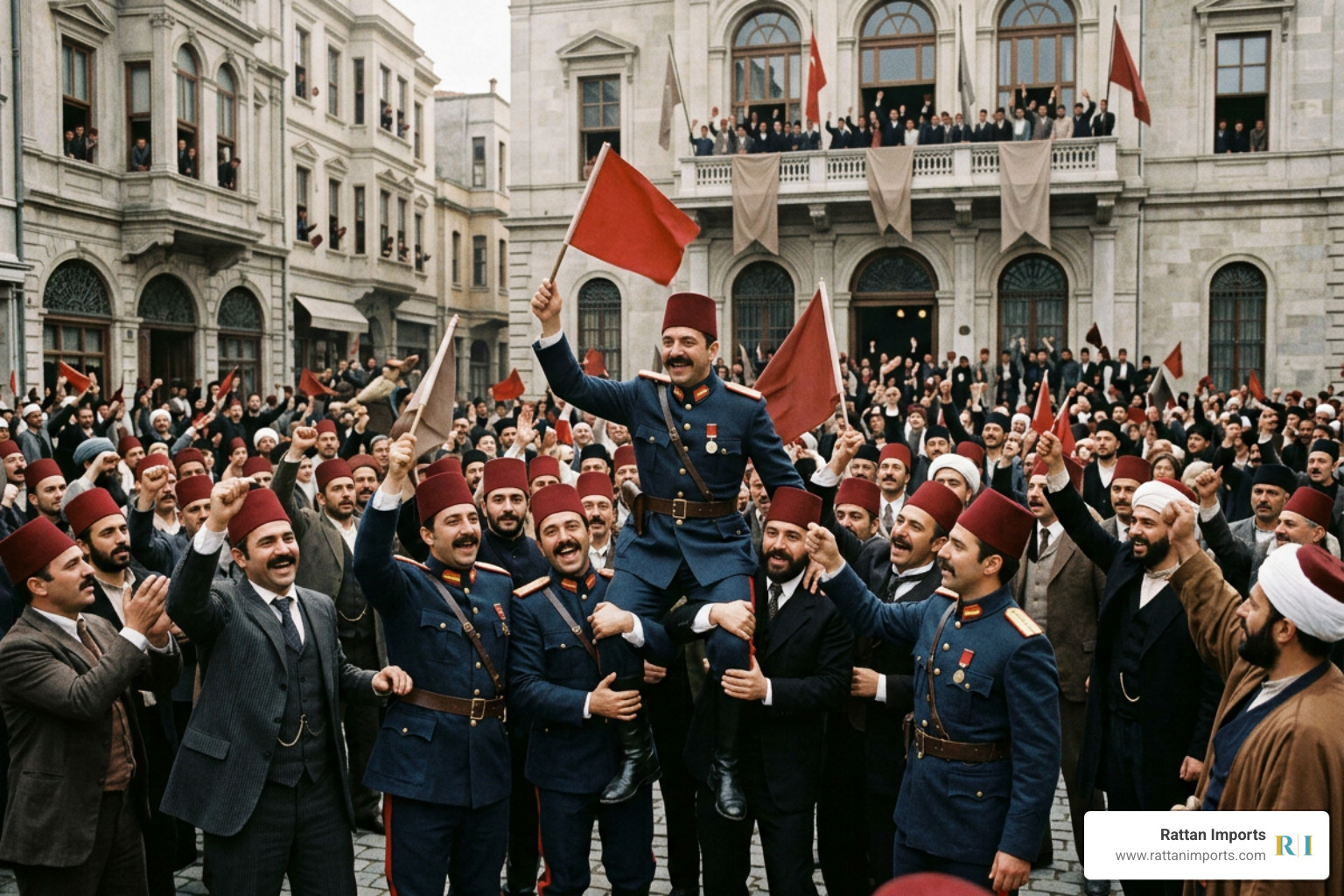
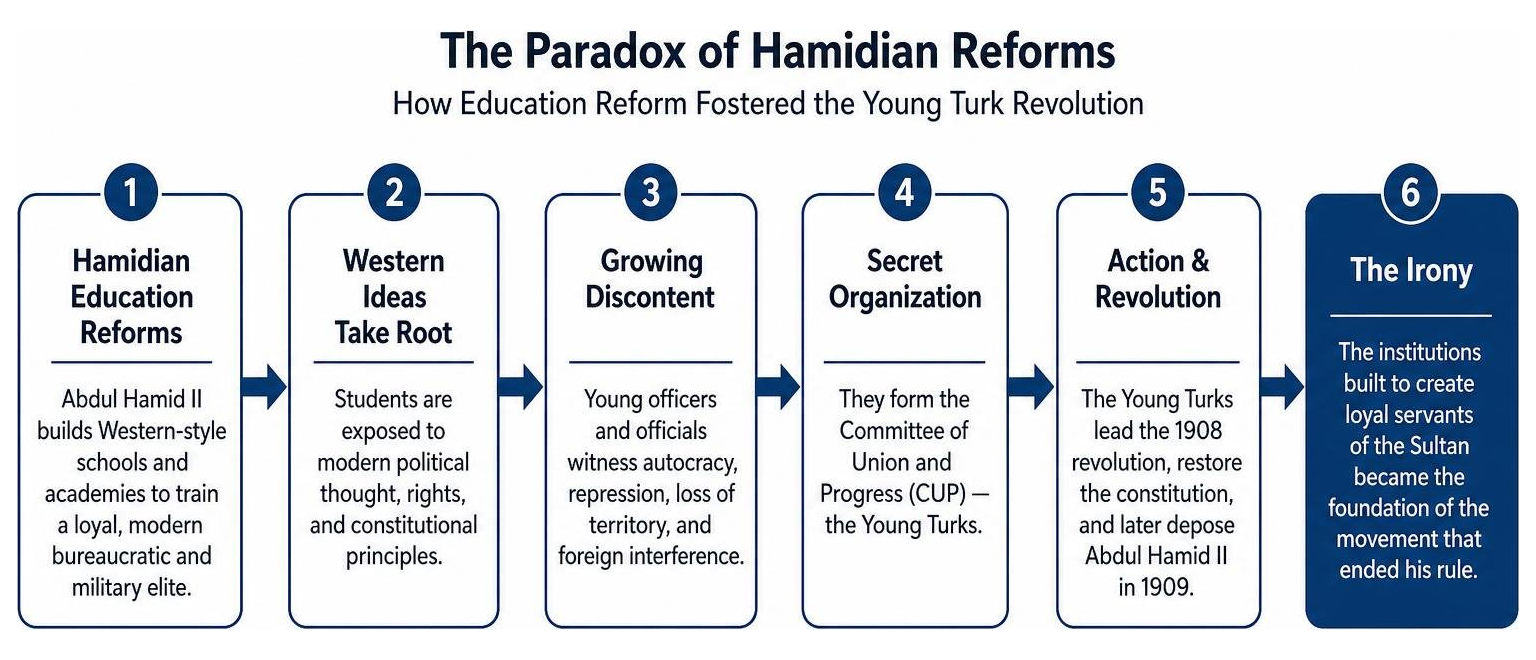
The heavy-handed repression of the İstibdad era could not hold back the tide of modern political thought forever. Ironically, the very schools that abdul hamid ii built to train a loyal, modern bureaucratic elite became the breeding grounds for his eventual downfall.
The Rise of the Young Turks and the Deposition of Abdul Hamid II
Young military officers and state officials, educated in modern Western-style academies, grew deeply frustrated by the Sultan’s autocracy, the loss of imperial territories, and the constant humiliation of foreign intervention. They organized a secret coalition known as the Committee of Union and Progress (CUP), more commonly referred to as the Young Turks.
In July 1908, a military mutiny broke out in Macedonia. Facing a full-scale revolution, the Sultan was forced to restore the constitution of 1876 and reconvene parliament, marking the start of the Second Constitutional Era.
However, the peace was temporary. In April 1909, a conservative countercoup attempted to dismantle the new constitutional order and restore absolute power to the Sultan. This uprising, known as the 31 March Incident, was quickly crushed by an army loyal to the Young Turks.
On April 27, 1909, parliament officially voted to depose abdul hamid ii. He was sent into exile in Salonica (now Thessaloniki, Greece), and was succeeded by his younger brother, Mehmed V. The last absolute monarch of the Ottoman Empire spent his final years in confinement, dying in 1918 just as the empire itself was collapsing in the wake of World War I.
The paradox of his domestic policies can be visualized in this cause-and-effect chain:
The Battle for History: From the "Red Sultan" to the "Great Khan"
Following the collapse of the Ottoman Empire, the newly founded Republic of Turkey, led by Mustafa Kemal Atatürk, embraced a strictly secular, nationalist path. In this new narrative, abdul hamid ii was long remembered as a reactionary tyrant who held the nation back from European-style modernization.
However, in recent decades, his legacy has undergone a massive reinterpretation.
Reinterpreting Abdul Hamid II in Modern Turkish Politics
Under the political narrative of the modern Justice and Development Party (AKP), the image of abdul hamid ii has been thoroughly rehabilitated. He is now celebrated as the Ulu Hakan (the "Great Khan")—a heroic defender of traditional Turkish-Islamic identity who stood tall against Western imperialism.
This cultural shift is highly visible in modern media. The state-sponsored television series Payitaht: Abdülhamid, which ran for 154 episodes between 2017 and 2021 on TRT 1, portrayed the Sultan as a wise, pious, and strong leader protecting his people from internal traitors and foreign conspiracies. Critics view this media representation as a form of historical revisionism designed to validate modern political narratives, while supporters see it as a long-overdue correction to decades of Western-biased history.
Frequently Asked Questions about Abdul Hamid II
Why was Abdul Hamid II called the "Red Sultan"?
He was given the nickname "Red Sultan" (or "Bloody Sultan") by the Western press due to the state-sanctioned violence and "benign neglect" that led to the Hamidian massacres of 1894–1896, which resulted in the deaths of approximately 300,000 Armenians.
What were the major achievements of Abdul Hamid II?
His major achievements include the massive expansion of the empire's primary and secondary school systems, the establishment of Istanbul University, the rapid expansion of the telegraph network, and the construction of the Hejaz and Baghdad railways.
How did Abdul Hamid II's reign end?
His absolute rule was first curtailed by the Young Turk Revolution of 1908. Following a failed conservative countercoup in 1909 (the 31 March Incident), he was officially deposed by parliament on April 27, 1909, and sent into exile.
Conclusion
Sultan abdul hamid ii remains a historical paradox. He was a ruler who used the tools of modern progress to enforce absolute autocracy. He built the very schools that produced his political executioners, and he used a global religious identity to navigate the treacherous waters of late 19th-century imperialism.
Beyond his complex political maneuvers, the Sultan was also a man of deep personal passions. He was an introverted soul who loved Western opera, translated classic plays into Turkish, and was a highly skilled, master carpenter. In the quietest hours of his tumultuous reign, he personally hand-crafted exquisite wooden furniture, much of which is still preserved in Istanbul's Yıldız and Beylerbeyi Palaces today.
At Rattan Imports, we share that deep appreciation for timeless craftsmanship and the enduring beauty of hand-assembled designs. Just as the artisans of the late Ottoman palaces poured their souls into creating furniture that could withstand the test of time, we source our premium home decor from the finest traditions of Southeast Asia, assembling every piece with care right here in the United States.
Whether you are looking to bring a touch of classic elegance or modern warmth to your living space, we invite you to explore our curated collections. We are proud to offer free shipping across the U.S. mainland, a price guarantee, and exceptional customer communication to ensure your home is as beautiful as the history that inspires us.